Pallet reuse, honestly framed
Reuse helps, within limits
Reusing a pallet avoids building a new one. That is the whole claim. This page explains what sits behind it and where it stops.
Looking for a home for used pallets?
Tell us what you have and where it is. A partner supplier in our network follows up.
Short answer
Reusing a pallet avoids building a new one. A pallet that is inspected, repaired where needed and returned to service replaces a purchase of new timber and manufacturing. The benefit depends on the pallet, the distance it travels and whether it truly displaces a new one. RePallet Market is a referral service that connects requests with partner suppliers; it does not publish environmental figures of its own.
The order of preference
For a wooden pallet, a sensible order is: reuse it as it is, repair it, rebuild it from salvaged components, take it apart for reclaimed lumber, and only then grind it for mulch or fuel. Each step down gets less out of the wood. The recycling guide walks through the sequence.
Where the benefit is real
Reuse displaces timber harvest and the energy used to saw, dry and assemble a new pallet. It also keeps a low-value material in circulation instead of in a dumpster. Combining delivery with collection can cut empty miles, which matters because freight is a large share of the cost of a low-value product.
Where it is weaker than it sounds
The counterfactual. Reuse only avoids a new pallet if a new pallet would otherwise have been bought. In a tight core market some demand would simply go unmet.
Distance. A pallet hauled a long way to be reused can give back much of what it saves.
Treatment and repair. Heat treatment, replacement boards and handling all carry their own footprint.
If you need numbers
Neither RePallet Market nor this page can supply measured figures. If you report on waste or emissions, ask the partner supplier handling your request which records it keeps, and ask for the method behind any percentage it quotes, including whether it is by weight or by unit count. See also used vs new pallets.
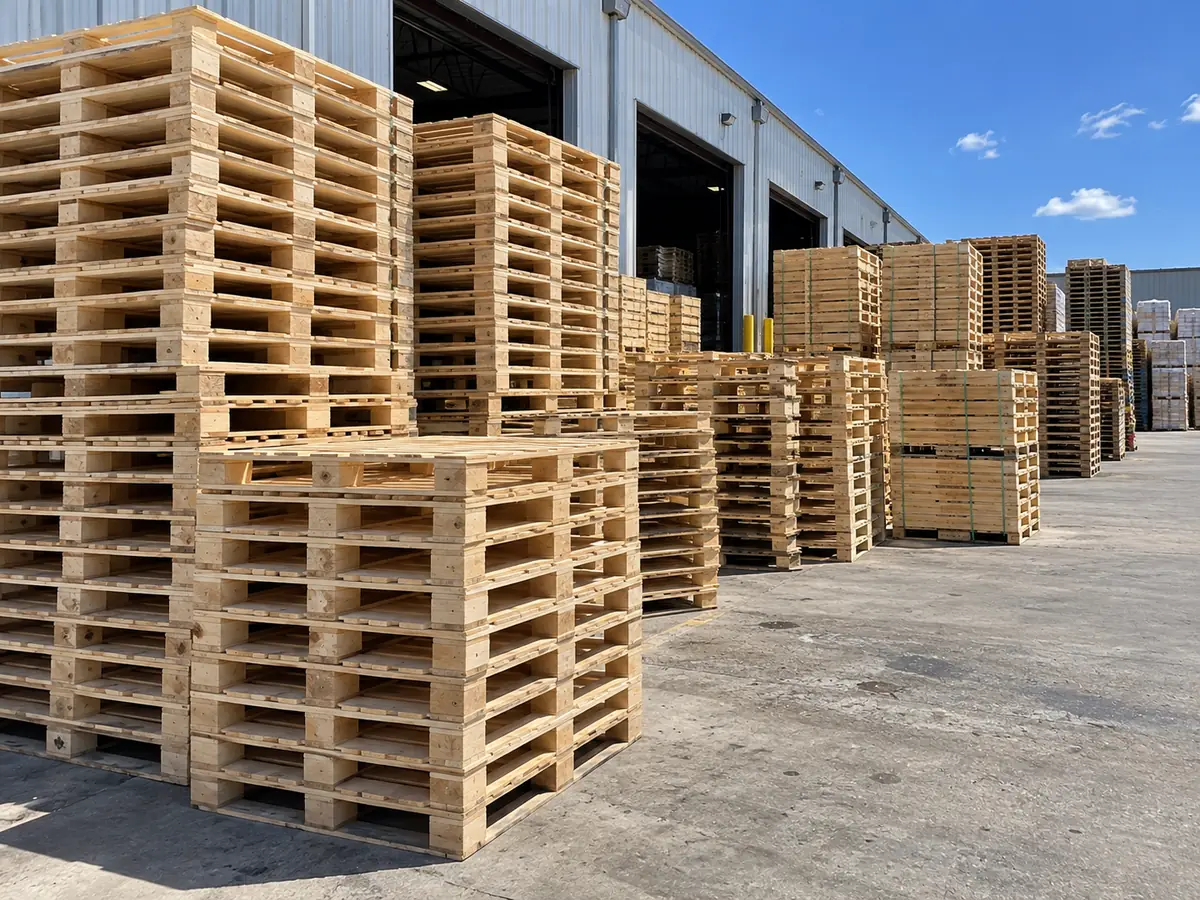
Reuse
Reusing a pallet avoids building a new one
The size of the benefit depends on the pallet, the haul and what it replaces.
FAQ
Questions people ask
Is a reused pallet better than a new one?
Reusing a pallet avoids building a new one, which saves the timber and the manufacturing that a new pallet needs. How much that matters depends on how far the pallet travels, how many more trips it can make and whether it really displaces a new purchase. Sometimes a new pallet is the right call; see used vs new pallets.
Does RePallet Market publish carbon figures?
No. RePallet Market is a referral service and does not measure pallets, trucks or facilities, so it publishes no carbon, diversion or landfill figures. If you need figures for reporting, ask the partner supplier what records it can provide.
Is energy recovery the same as recycling?
No. Burning wood for heat or power recovers energy and keeps it out of landfill, but it is not recycling. Anyone quoting a recycling rate should say whether energy recovery is included.
Avoid
Claims to be wary of
"Carbon neutral"
Trucks, treatment and handling all have an impact. Neutrality needs offsets and a method; ask for both.
"Fully recycled"
Some wood goes to energy recovery, which keeps it out of landfill but is not recycling.
Unqualified diversion percentages
By weight or by unit count changes the answer. Ask for the basis.
Certificates as evidence
Ask for the underlying records rather than a badge.
Savings with no counterfactual
A reuse benefit assumes a new pallet would otherwise have been bought. Ask whether that assumption holds.
Terms
Reporting vocabulary
- Disposition route
- Where a given quantity of material actually went. Auditors usually want the split, not a blended percentage.
- Diversion rate
- Recovered quantity divided by received quantity. Ask whether it is by weight or by count.
- Energy recovery
- Combustion for heat or power at a permitted facility. Diverted from landfill; not recycling.
- Counterfactual
- What would have happened without the intervention. The weakest assumption in any avoided-impact claim.
- Boundary
- Which sites, streams and period a figure covers. The commonest source of inconsistency between years.
- Primary evidence
- Records generated by the activity itself, such as weigh tickets, rather than derived estimates.
Give used pallets another trip.
Request a free, no-obligation quote and a partner supplier in the network follows up.