Service · Compliance
Heat treatment (ISPM 15)
If solid wood packaging is crossing a border, it needs a stamp, and that stamp needs a treatment record behind it. Heat-treated pallets are available through partner suppliers, and some may offer treatment of your own wood packaging.
Start a quote
Tell us the footprint, grade and volume. A partner supplier follows up with a quote.
Short answer
ISPM 15 is the international phytosanitary standard requiring solid wood packaging to be heat treated to a core temperature of 56 °C for 30 continuous minutes, then marked with an IPPC stamp. RePallet Market does not operate a treatment chamber. Submit a free, no-obligation request, and a partner supplier in our network follows up on heat-treated pallets and crates. Ask the partner supplier for treatment documentation.
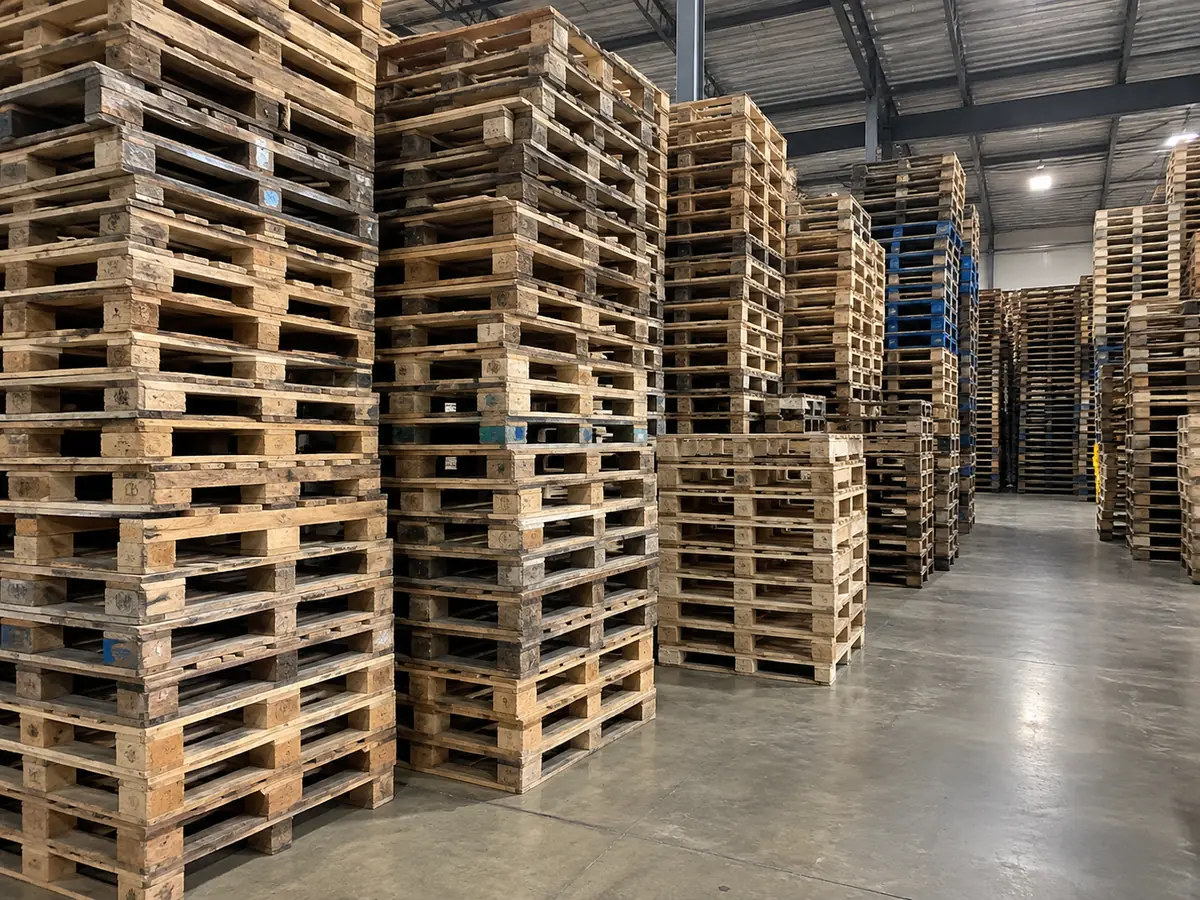
Stamped after treatment
Which is what the standard requires and what inspectors check. Marks applied before treatment are non-compliant.
Suppliers differ
Treatment is carried out under a supplier's own programme and facility code. Ask which one applies to your order.
Records matter
A border query is answered by the treatment record behind the mark. Ask what the supplier can provide.
What ISPM 15 actually requires
ISPM 15, the International Standard for Phytosanitary Measures No. 15, exists because wood-boring insects travel extremely well inside pallets. It applies to solid wood packaging material over 6 mm thick: pallets, skids, crates, boxes, collars, dunnage, blocking and bracing.
The approved heat treatment schedule is a core wood temperature of 56 °C sustained for 30 continuous minutes. Not surface temperature: core. That is why a chamber cycle is long. Most of it is getting heat into the middle of a thick stringer in the centre of a large stack.
The alternative approved treatment is methyl bromide fumigation, marked MB. It is being phased out, it is an ozone-depleting substance, and MB-stamped material is typically excluded from reuse streams.
The mark, and how to read it
A compliant IPPC mark carries four elements: the IPPC wheat symbol, a two-letter ISO country code, a facility registration number issued by the national plant protection organisation, and the treatment code: HT for heat treatment, DB for debarked where applicable.
Two details matter for compliance and are frequently got wrong. The mark must be applied after treatment, not before. And it must appear on at least two opposing sides of the item, legibly and permanently.
What is exempt
- Engineered wood: plywood, OSB, particleboard, veneer, LVL
- Wood thinner than 6 mm
- Sawdust, wood wool and shavings
- Plastic, metal and corrugated packaging
This is why many export crates use a solid frame with sheet panels. It minimises the volume requiring treatment.
Treating wood you already own
Some treatment providers will treat and stamp pallets, crates or dunnage you supply, under their own facility code, with the batch logged. It is common for buyers who bought untreated packaging domestically and then won an export order. Whether a partner supplier offers it, and how long it takes, is part of its follow-up.
Heat treatment is not kiln drying
This confuses almost everybody. Heat treatment kills insects; kiln drying removes moisture. A pallet can be HT without being dry, and kiln-dried without being certified HT. KD-HT means both, and costs more than either. If your product is moisture-sensitive, you want KD-HT and you should say so explicitly. Full explanation →
At a glance
- StandardISPM 15 (IPPC), heat treatment schedule
- Schedule56 °C core, 30 continuous minutes
- MarkIPPC stamp: symbol, country code, facility code, treatment code
- RecordsAsk the partner supplier for treatment documentation
- Also coversCrates, collars, dunnage, blocking
- Handled byPartner suppliers that hold their own treatment programme
Next steps
Reference
Reference table
| Item / code | In scope? | Meaning | Note |
|---|---|---|---|
| Pallets, skids | Yes | Solid wood packaging over 6 mm | Treat and mark on two opposing faces |
| Crates, boxes | Yes | Solid components only | Panels of plywood/OSB are exempt |
| Collars, lids | Yes | Solid wood packaging | Frequently forgotten |
| Dunnage, blocking, bracing | Yes | Solid wood in the container | The most commonly missed category |
| Plywood, OSB, LVL, veneer | No | Engineered: the process destroys pests | Why frames + sheet panels are efficient |
| Wood under 6 mm | No | Below the thickness threshold | — |
| Sawdust, wood wool, shavings | No | Exempt by form | — |
| Plastic, metal, corrugated | No | Not wood | No treatment, no mark |
| HT | — | Heat treated to 56 °C core for 30 min | The most common treatment |
| MB | — | Methyl bromide fumigation | Being phased out; typically excluded from reuse |
| DB | — | Debarked | May appear alongside HT |
| DH | — | Dielectric heating | A newer approved method |
Applications
Where this gets used
Export orders
Pallets and crates for export can be treated and stamped before dispatch. Ask the partner supplier for treatment documentation.
Treating your own wood packaging
Some providers will treat pallets, crates, collars or dunnage you supply. Whether a partner supplier offers it is part of its follow-up.
Re-treating repaired export pallets
A repair with untreated components invalidates the mark. The pallet has to be re-treated and re-stamped.
Crate and dunnage packages
Solid components treated, engineered panels exempt: designed that way deliberately to cut cycle time.
Inside the chamber
Why a 30-minute requirement takes hours
The standard is one sentence: 56 °C at the core for 30 continuous minutes. Everything else is the engineering of making that reliably true at the worst point in a large stack of pallets.
Heat travels slowly into wood
A thick stringer in the centre of a tightly stacked load is a long way from moving air, thermally as well as physically. Wood is a poor conductor, one of the reasons pallets are made from it, and the moisture in it absorbs a great deal of energy changing phase before the temperature moves at all.
So the cycle is a long ramp, a short hold once the coldest monitored point reaches temperature, and a controlled cooldown. The 30-minute hold is a small fraction of the total.
Stack geometry is the invisible variable
Pallets must be stacked so air can move through the load. Too tight and the centre becomes a dead zone that will not reach temperature in any sensible time. Too loose and you are heating air rather than wood, which costs fuel and cycle time.
Orientation matters too: pallets stacked face to face present a flat surface to the airflow and shield everything behind them. Aligned to the air path, the same load heats considerably faster.
Thermocouple placement is what auditors examine
Probes go into the core of sample pieces at the *least favourable* positions, typically the geometric centre and a low corner away from the air path.
The point is to measure the worst case. A probe near an inlet shows 56 °C long before the centre gets there, and a facility monitoring only the easy positions produces compliant-looking records for non-compliant loads.
The mark goes on afterwards
Always, and this is one of the most common compliance failures in the industry. A facility that stamps blanks and then treats them cannot demonstrate that any particular item went through a chamber.
In practice it means a marking station on the outbound side of the chamber and a discipline that unmarked stock never leaves the treatment area.
Records
A good record includes date, time, load identification, chamber, target and achieved temperatures, the time-temperature trace from every probe, hold duration and operator, indexed so it can be found quickly.
The value is not that the record exists. It is that it can be found promptly when a border queries a shipment. Ask the partner supplier what it retains.
Treatment is not drying
A pallet can complete a fully compliant cycle at a high moisture content, go into a sealed container and grow mould during a long transit. The shipment gets rejected and the pallet was legally perfect throughout.
If your product is moisture-sensitive or the transit is long, you need KD-HT and you have to ask for it by name. The full explanation, and the expensive version of the story.
Process
How it runs, step by step
Decide whether you actually need it
ISPM 15 applies to international movement. Domestic HT requirements are common and usually unjustified.
Decide HT or KD-HT
Moisture-sensitive product or long ocean transit means KD-HT. Say it explicitly; the stamp will not tell you.
Say so in your quote request
Mention the destination, quantity and timing. A partner supplier follows up on what it can supply.
Check treat-then-mark
Marks should be applied after the cycle, on at least two opposing faces.
Keep the paperwork reference
Note the batch reference on your shipping file so that, if a border queries it, the supplier can produce the record.
Decision rules
If this, then that
- If the shipment is domesticThen do not specify HT. It costs money for no benefit.
- If the shipment is international and the product is robustThen HT is sufficient.
- If the product is moisture-sensitive or the transit is longThen specify KD-HT explicitly.
- If an export pallet has been repaired with untreated woodThen re-treat and re-stamp. The original mark is no longer valid.
Avoid
Common mistakes
Stamping before treating
Non-compliant and one of the most common failures at audit. The mark must follow the cycle.
Marking one face only
The standard requires at least two opposing sides. An inspector who has to unstack a container to find a mark will not be generous.
Assuming HT means dry
It does not. Heat treatment is pest control; kiln drying is moisture control. Different processes, different problems.
Forgetting dunnage and blocking
Solid wood bracing inside a container falls under ISPM 15 exactly like the pallet does. It is the most commonly missed category.
Terms
Vocabulary for this page
- ISPM 15
- International Standard for Phytosanitary Measures No. 15: the rules for treating and marking solid wood packaging in international trade.
- IPPC mark
- The compliance stamp: wheat symbol, country code, facility number and treatment code.
- HT
- Heat treatment to a 56 °C core for 30 continuous minutes. A physical process, so the wood remains chemically untreated.
- MB
- Methyl bromide fumigation. An ozone-depleting chemical treatment being phased out.
- Thermocouple
- The temperature probe placed in the core of a sample piece at the least favourable position in the load.
- Toll treatment
- Treating wood packaging you own under a provider's facility code, with the batch logged.
The wider reference is in the pallet glossary.
Questions
Before you order
How long does an ISPM 15 mark remain valid?
The treatment does not expire. A correctly stamped pallet remains compliant, provided the wood has not been repaired with untreated material. Repairs with untreated components invalidate the mark, which is why repaired export pallets must be re-treated and re-stamped.
Can pallets I already own be re-treated?
In principle yes, if a treatment provider will take them. Ask the partner supplier in your request whether it, or a provider it works with, offers treatment of customer-owned wood.
Does every country require ISPM 15?
A very large number of countries have adopted it, including most major trading partners of the United States. Requirements for shipments between Canada and the US have differed from those for other destinations, so check current regulations for your route. If in doubt, treat: the cost is small compared with a rejected container.
What happens if a shipment arrives without a valid mark?
Outcomes range from mandatory on-arrival treatment at your expense, through re-export, to destruction of the packaging and sometimes the goods. It is one of the cheapest compliance risks to eliminate and one of the most expensive to get wrong.
How much does heat treatment add to a pallet?
It is by quote from the partner supplier. Ask for it as a separate line so you can see what it costs, and allow for scheduling, since chamber time is a limited resource.
Can I bring a part load for treatment?
Possibly. Part loads usually wait for chamber availability. Ask the partner supplier whether it takes them.
Does the mark ever need renewing?
The treatment does not expire. The mark becomes invalid only if the item is repaired with untreated components or the stamp becomes illegible.
What happens if a container is held over packaging?
Give the supplier the facility number and date from the mark and ask for the batch record. Outcomes without one range from treatment on arrival at your cost to destruction of the packaging.
Ready to put a number on it?
Send the footprint, the grade and the volume. We'll come back with price per unit and the first window we can hold.