Reference
Pallet grades, decoded
There is no enforced national grading standard for recycled pallets in the United States. “Grade A” means whatever the seller says it means. Here is what the grades commonly mean — and what you should ask any supplier.
Not sure which grade you need?
Tell us where the pallets go and who sees them in a free, no-obligation quote request. A partner supplier in our network follows up.
Short answer
Pallet grades describe appearance and permitted repairs, not strength. Grade A pallets are square, clean and repair-free. Grade B pallets are structurally sound but carry visible repairs such as companion stringers or replaced boards. Remanufactured pallets are assembled from salvaged components. All three carry the same rated load for their construction when structurally sound — Grade A is priced above Grade B.
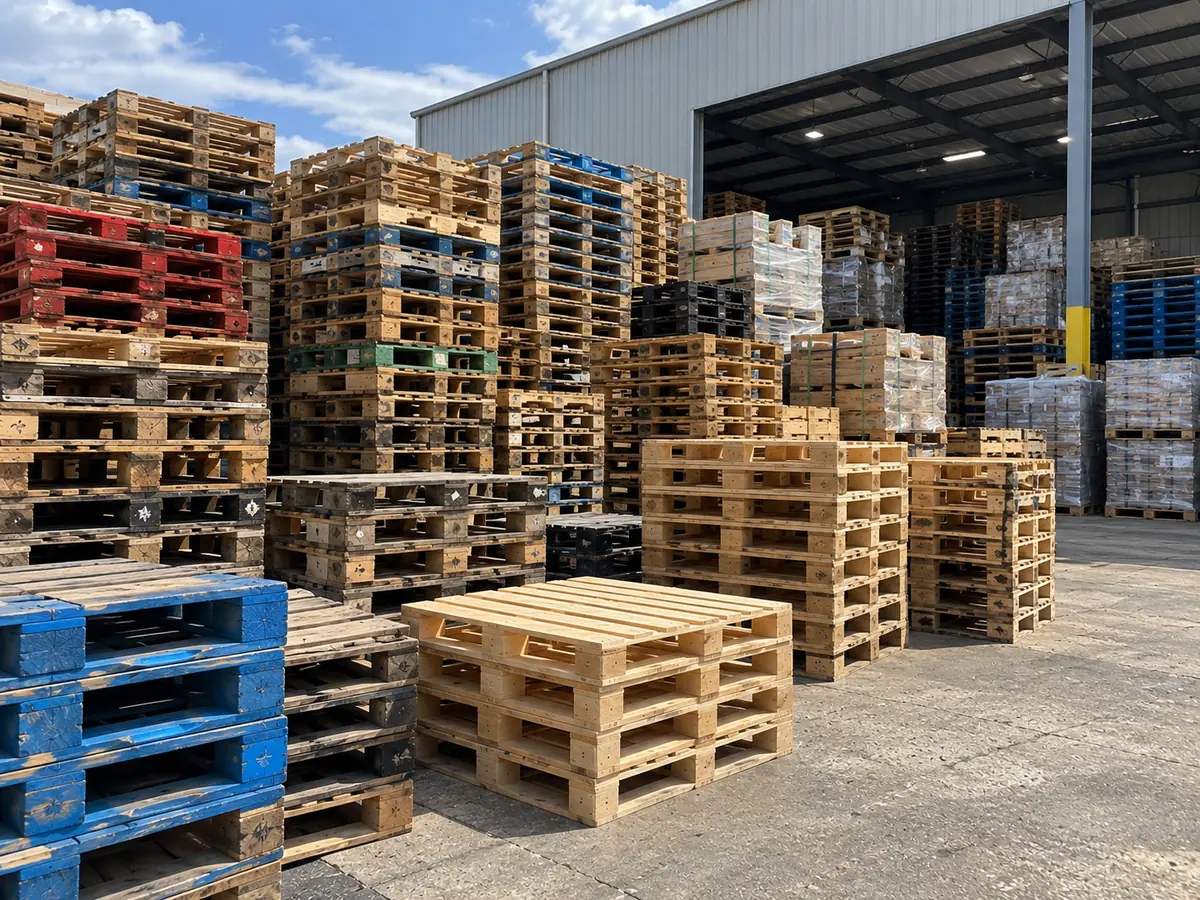
Same load, different grades
Grade describes appearance, not strength
Sound pallets in different grades can carry the same rated load. What differs is appearance, permitted repairs and price.
The scale
Six levels, side by side
| Grade | Appearance | Repairs permitted | Relative price | Best for |
|---|---|---|---|---|
| Grade A (Premium) | Uniform colour, square, clean, no plugs or companion stringers | None visible | Highest | Retail-facing loads, automated storage, customer shipments, audited sites |
| Grade A (Standard) | Square and clean; minor colour variation acceptable | At most one replaced deck board | High | Rack storage, general customer shipments |
| Grade B | Visible repairs, colour variation, staining acceptable | Companion stringers, replaced boards, plugs | Mid — below Grade A | Internal movement, warehouse-to-warehouse, one-way freight |
| Remanufactured | Mixed components, mixed colour, visibly rebuilt | Built entirely from salvaged parts | Low | Internal use, static storage, one-way and scrap-bound loads |
| Combo / Mixed | A deliberate blend of A and B in agreed proportion | Mixed | Between A and B | High-volume accounts that do not need a single consistent grade |
| Reject / Core | Broken, unsafe, or contaminated | Beyond economic repair | Scrap / raw material value | Teardown into lumber, or grinding |
By application
Which grade for which job
| Application | Grade | Why |
|---|---|---|
| Retail floor display | Premium A | The pallet is part of the display |
| Customer-facing shipments | Standard A | Condition reads as a proxy for care |
| Automated storage (AS/RS) | Grade A + tolerances | Height and squareness, not appearance |
| Audited production areas | Standard A | Housekeeping optics at audit |
| Standard selective racking | Grade B | Rated load is identical; fit wire deck for heavy |
| Warehouse-to-warehouse | Grade B | Nobody outside the building sees it |
| Inter-site transfer | Grade B or combo | Returns to you; appearance irrelevant |
| One-way domestic freight | Grade B | Pay for structure, not looks |
| Empty tote / bin movement | Remanufactured | Lowest cost, lowest carbon, internal only |
| Export, any application | Any grade + ISPM 15 | Grade is irrelevant to compliance |
The decision
Three questions, and you have your grade
Most facilities buy one grade for everything, and that grade is almost always higher than it needs to be. These three questions split the buy properly.
Who sees the pallet?
A pallet that ends up in a retail aisle, in front of an auditor, or on a customer’s receiving dock is doing communication work as well as structural work. Buy Grade A. A pallet that never leaves your building is seen only by people who care whether it holds the load. Buy Grade B and keep the difference.
Same
Rated load, Grade A and Grade BWhere does it sit?
Automated storage and retrieval systems are unforgiving about height variance and squareness. So are tight rack bays and conveyor transfers. Those environments want Grade A for dimensional consistency rather than for looks. Floor stacking and standard selective racking do not care — see the load capacity guide for what actually matters there.
1/4"
Grade A height and squareness toleranceWhat is the load worth?
A pallet failure costs the pallet plus the product plus the clean-up plus the delay. If the load on top is worth thousands, the money saved on a grade is not a saving. If the load is empty totes moving between two buildings, remanufactured is the honest answer and it is typically the lowest-priced option.
0
New lumber in a remanufactured palletSide by side
What each grade looks like on the ground
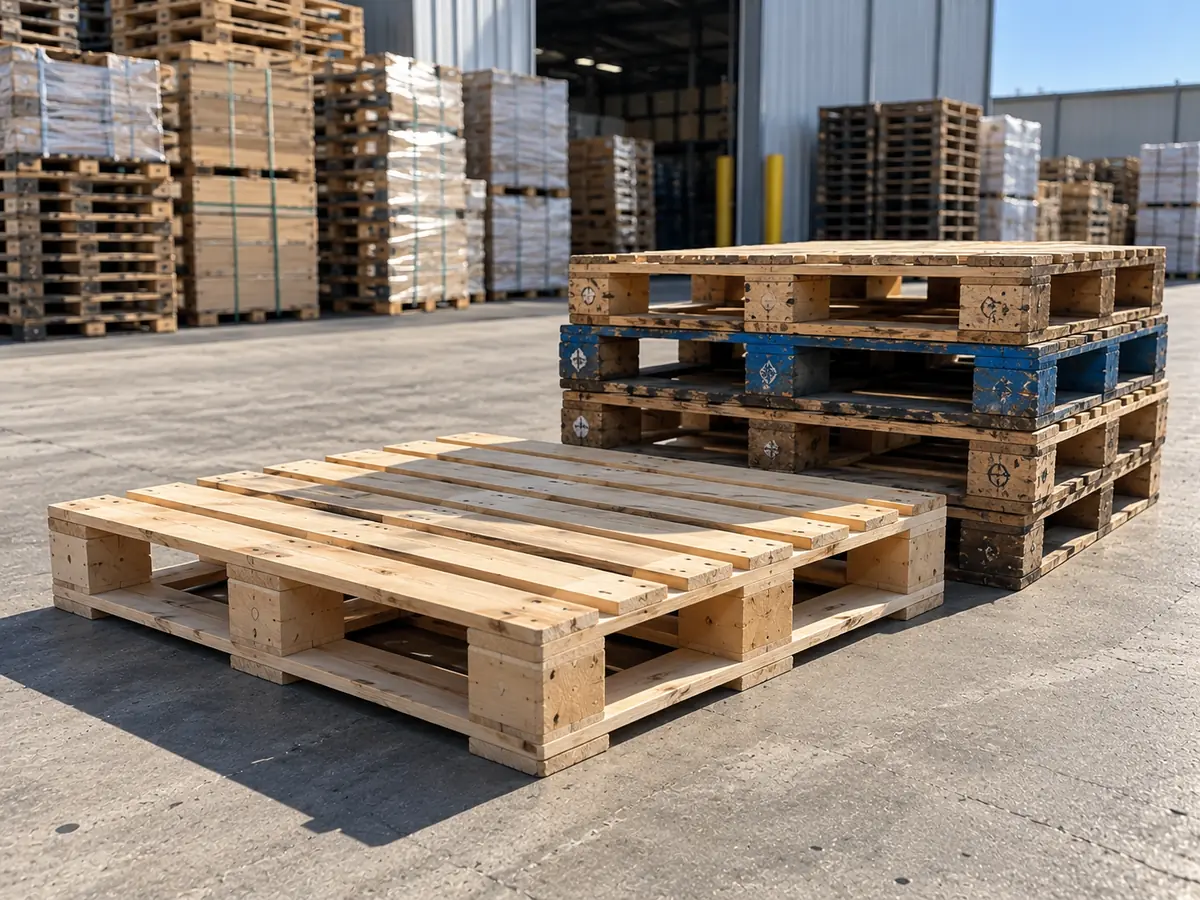
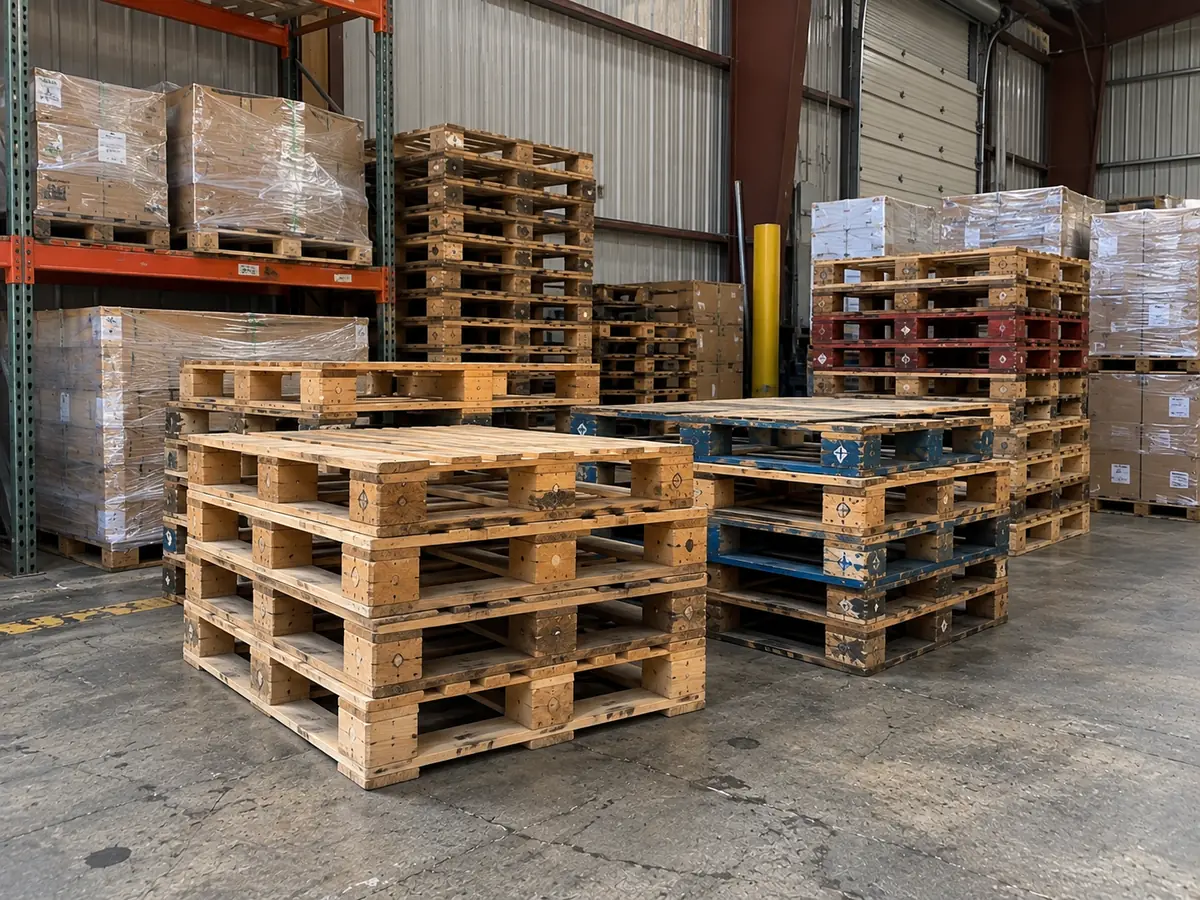
Decision rules
If this, then that
- If the pallet reaches a retail floor or an auditorThen buy Premium Grade A — appearance is genuinely the requirement.
- If the pallet runs through an AS/RS or conveyorThen buy Grade A against written dimensional tolerances, not the letter alone.
- If the pallet never leaves your buildingThen buy Grade B and keep the difference. The rated load is identical.
- If the load is empty totes or internal transferThen buy remanufactured — typically the lowest-priced structurally sound wooden pallet.
- If your split is hard to predictThen order a combo load at an agreed A:B ratio, priced between the two.
- If a customer specifies a grade contractuallyThen meet it. Arguing costs more than the pallets do.
Avoid
Common grading mistakes
Buying one grade for everything
Almost every site over-specifies because nobody was ever criticised for buying the better one. Splitting the buy can reduce pallet spend with no operational change at all.
Assuming Grade B is structurally inferior
It should pass the same structural check. The difference is cosmetic tolerance and permitted repairs, not strength. A full-length companion stringer restores the original rated load.
Accepting a grade label without a standard behind it
There is no enforced national standard. Ask any supplier for their grading criteria in writing — and if the answer is a paragraph of adjectives, you are buying somebody's mood.
Ordering 'Grade A' without a sub-grade
Premium A carries no repairs at all; Standard A permits one colour-matched replaced board. They differ in price and visibly in appearance.
Using the grade letter as an automation specification
Grade correlates with dimensional consistency; it does not guarantee it. If you run an AS/RS, write the height, squareness, chamfer and fastener tolerances explicitly.
Grading pallets while they are wet
Moisture masks defects. A damp stringer sounds different when flexed and a wet board looks sound when it is not. Wet stock should be dried before it is graded, not graded around.
Go deeper
Grade pages
Grade A pallets
What Grade A recycled pallets are: the specification, the two sub-grades, how they compare with Grade B, and the four uses that genuinely need them.
Open →Grade B pallets
Grade B recycled pallets explained: which repairs are allowed, how the load rating compares to Grade A, and when B is the right choice.
Open →Remanufactured pallets
Remanufactured pallets explained: how they are rebuilt from salvaged components, how they perform and when they are the right choice.
Open →How pallets are inspected
The structural checks a recycled pallet should pass before it is graded: stringer, deck, fastener and dimensional checks plus rejection criteria.
Open →Terms
Grading vocabulary
- Grade
- A statement about appearance and permitted repairs, assigned on top of a structural pass. It is not a strength rating.
- Premium A
- No repairs of any kind — original boards and stringers, uniform weathering.
- Standard A
- At most one replaced deck board, colour-matched as closely as stock allows.
- Companion stringer
- A full-length second stringer nailed alongside a cracked one. Restores rated capacity and defines Grade B.
- Plug
- A fitted block filling damage in a stringer face or notch. Always drops a pallet to B or below.
- Combo load
- A deliberate blend of A and B in an agreed proportion, priced between the two.
- Core
- A used pallet bought for reprocessing — the raw material of the recycled market.
- Structural rejection
- A defect that removes a pallet from service at any grade: cracked stringer, missing board, twist, contamination.
The full reference is in the pallet glossary.
FAQ
Grading questions
What is the difference between Grade A and Grade B pallets?
Grade A pallets are square, clean and free of visible repairs. Grade B pallets are structurally sound but carry visible repairs — a companion stringer, replaced deck boards, a plugged notch — and may show colour variation. Both carry the same rated load for their construction. The price difference reflects appearance and dimensional consistency, not strength.
Are pallet grades a formal industry standard?
No — and this is the central problem. There is no enforced national grading standard for recycled pallets in the United States. “Grade A” means whatever the supplier selling it says it means. That is why it helps to read how pallets are inspected and to ask any supplier for their criteria in writing.
Which grade should I buy?
Grade A if the pallet is seen by a customer, an auditor, or an automated storage system. Grade B for everything else — which is most things. Splitting your buy between the two is one of the easiest pallet cost reductions available to most facilities.
Does a repaired pallet carry less load?
No. A full-length companion stringer restores the pallet to its original rated capacity — there are now two boards where there was one. What changes is appearance. See the load capacity guide.
What is a combo load?
A deliberate blend of Grade A and Grade B in an agreed proportion, priced between the two. It is priced below straight Grade A because it requires less sorting, and it suits high-volume accounts that do not need a single consistent grade across every pallet.
Can I audit a supplier's grading?
Ask. Partner suppliers in our network run their own processes, so what they allow depends on the supplier. Request their grading criteria in writing before you order, and check a sample against them on arrival.
Tell us where the pallets go.
Send a free, no-obligation quote request. A partner supplier in our network follows up, and a good supplier will say so when the cheaper grade is the right answer.