Products
Pallet products you can request
Seven families of product, and most of them started life as something else. Sorted, graded, repaired and — where possible — built from wood that has already worked for a living. Request a quote and we pass it to partner suppliers.
Ask for stock and pricing
Tell us the footprint, grade and volume. We pass your request to partner suppliers, who follow up with availability and a quote.
Short answer
RePallet Market supplies recycled and new wooden pallets, plastic pallets, custom-built pallets, pallet collars and accessories, reclaimed lumber, and crates and skids. RePallet Market is a referral service: we pass your free, no-obligation request to partner suppliers, and availability and pricing come from them.
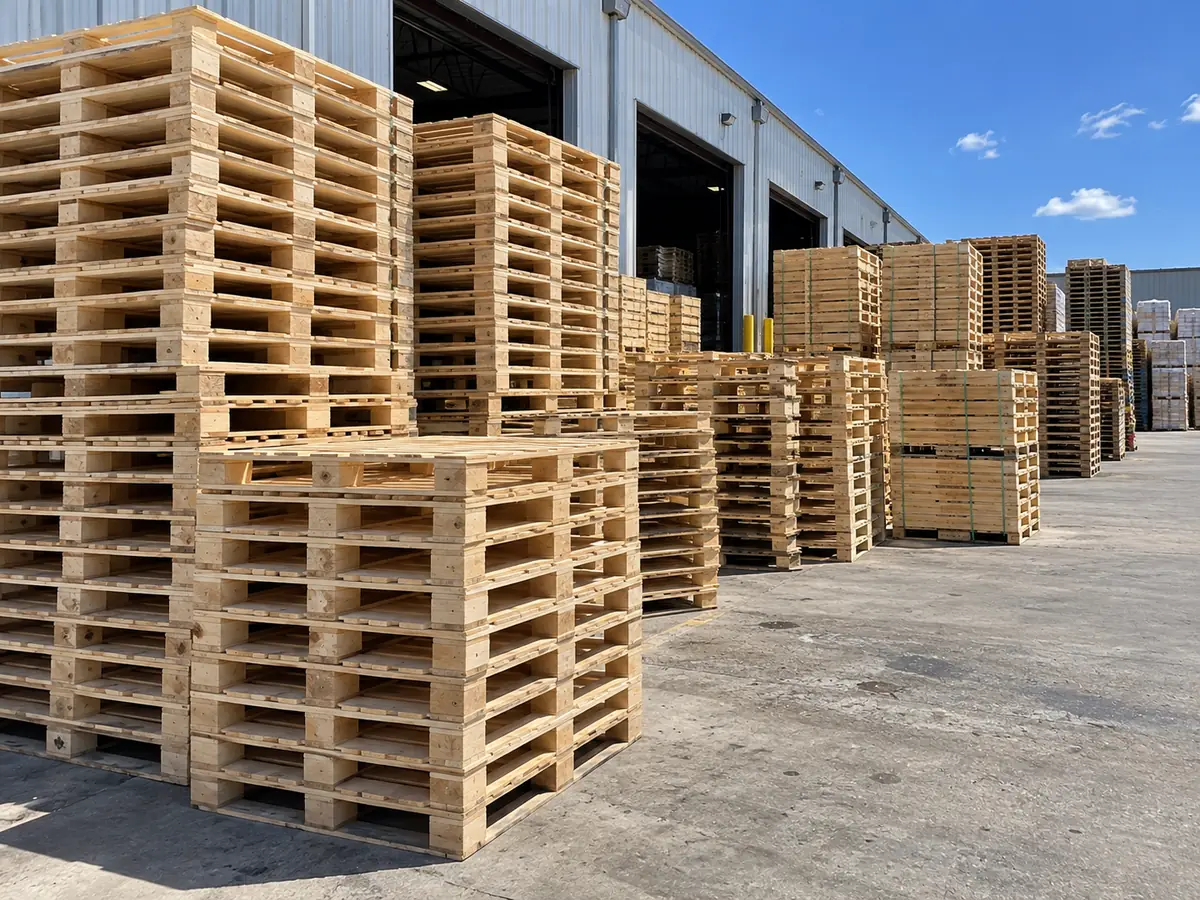
Graded stock
Good pallets are graded before they are quoted
Ask any supplier which grade you are being quoted, and what that grade means in writing.
The catalogue
Seven families
- Recycled wood palletsThe backbone of the used-pallet market. Pallets that were built once, used hard, inspected board by board, repaired where it mattered, and sent back out to work — at a lower cost and a fraction of the embodied carbon of new.View
- New wood palletsSometimes reuse genuinely is not the answer — a regulated environment, a one-way export, a load that has to be dimensionally perfect. When that is the case, a new pallet built from known lumber is the right call, and it costs more in both money and embodied carbon.View
- Plastic palletsWood is not always the answer. Washdown environments, hygiene-sensitive production and tightly closed loops sometimes want a pallet that can be steam-cleaned and counted on for years. A second-hand plastic pallet is the plastic option with the most defensible environmental story.View
- Custom-built palletsMost pallets are a compromise between what the load needs and what the market stocks. Custom removes the compromise — and, built from reclaimed deck boards and stringers, it can cost less than people expect.View
- Pallet collars & accessoriesA pallet is a floor. Everything that turns that floor into a box — collars, caps, corner board, film — is what actually keeps the load intact between the dock and the destination.View
- Reclaimed lumberThe wood that cannot be a pallet again is still extremely good wood. It has already dried, already moved, already settled. De-nailed and sorted by species and thickness, it is sold by the bundle by suppliers who handle it.View
- Crates, boxes & skidsWhen the thing you are shipping is expensive, fragile, oddly shaped or all three, a pallet is not enough. Crates are where good design pays off most — and where reclaimed lumber does its most useful job.View
How to choose
Three questions that narrow it down fast
One
Does it come back?
If the pallet returns to you, spend more per unit — plastic and custom builds amortise across trips. If it is one-way, buy the cheapest thing that will survive the journey: usually a Grade B recycled pallet.
Two
Who sees it?
A pallet that ends up on a retail floor or in front of an auditor needs to look the part — that is Grade A. A pallet that lives in a warehouse does not, and you should not pay for appearance you will never use.
Three
Does it leave the country?
Solid wood crossing a border needs ISPM 15 heat treatment. Plastic and engineered wood do not. This single question changes the specification more than any other.
Examples
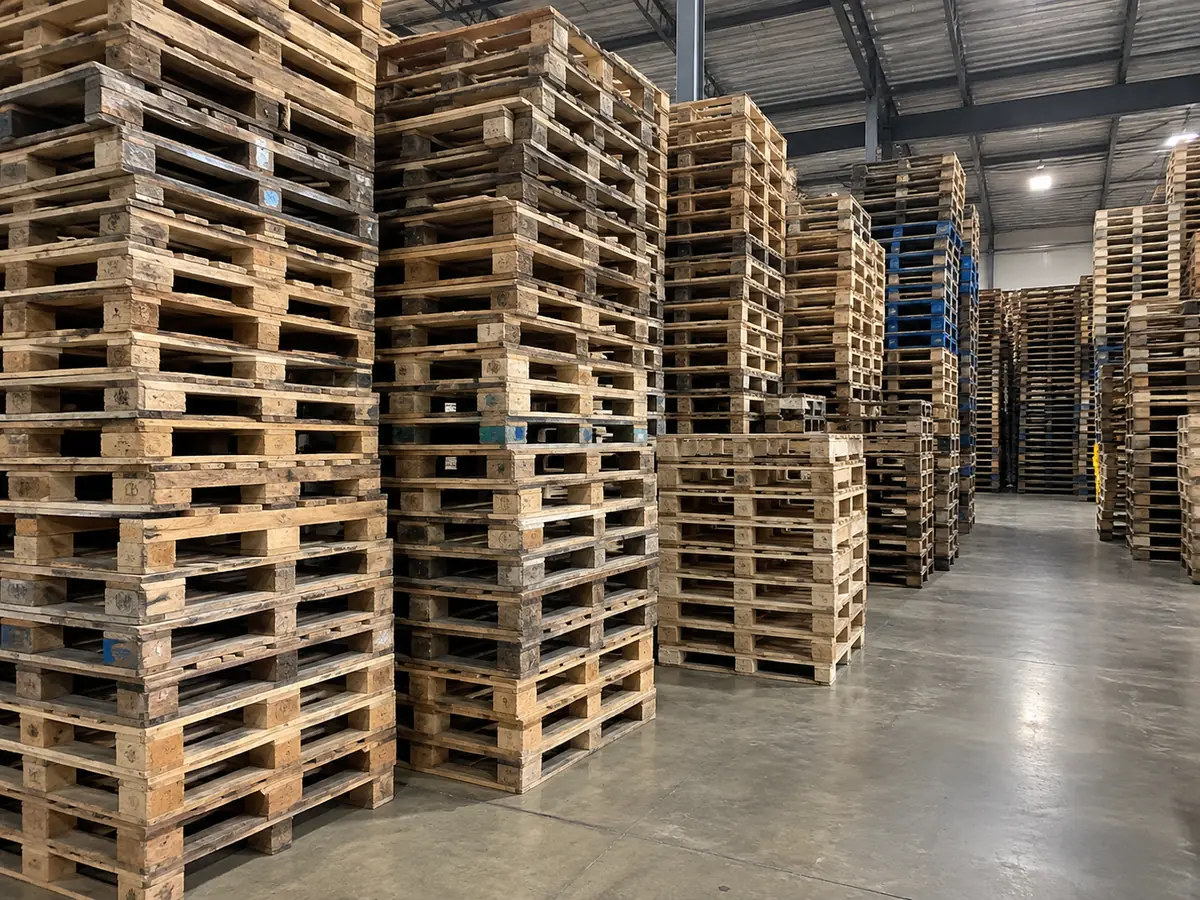
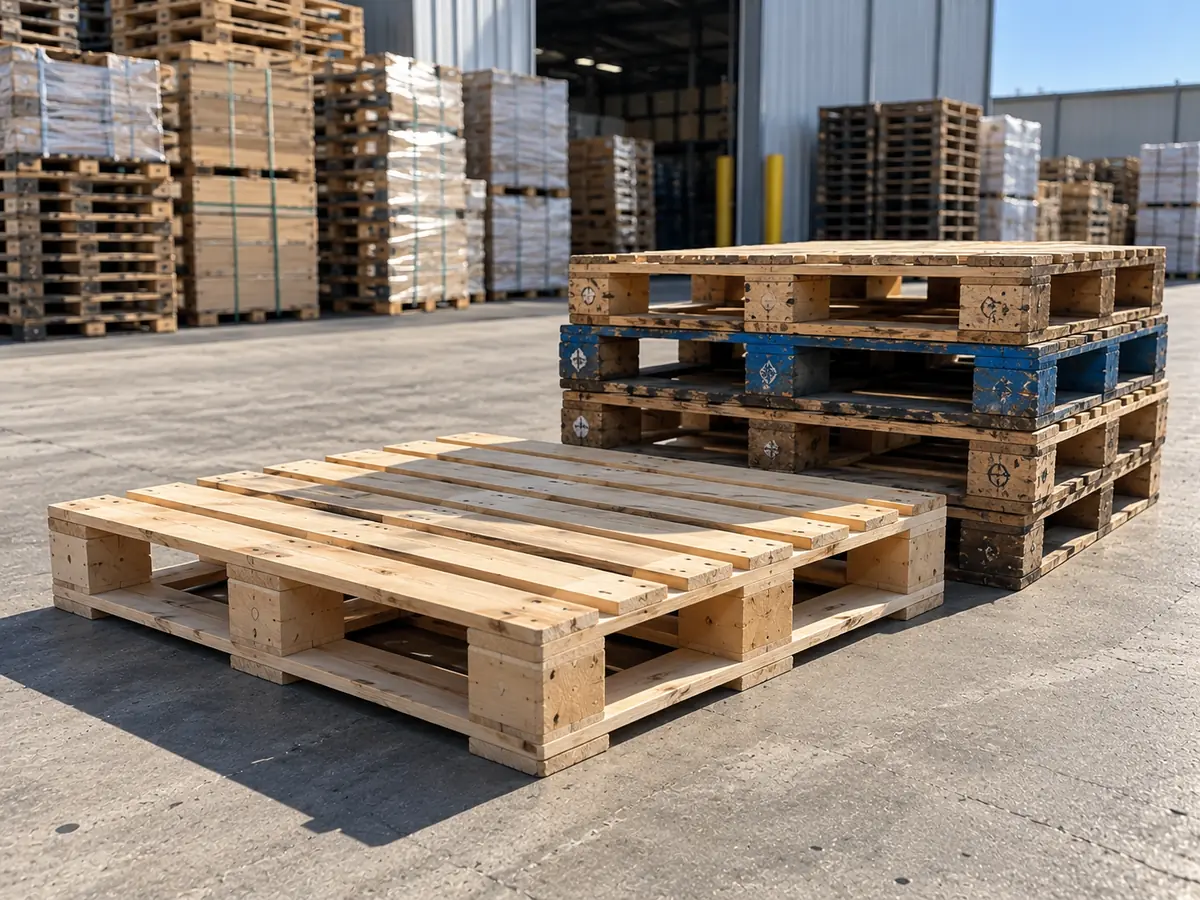
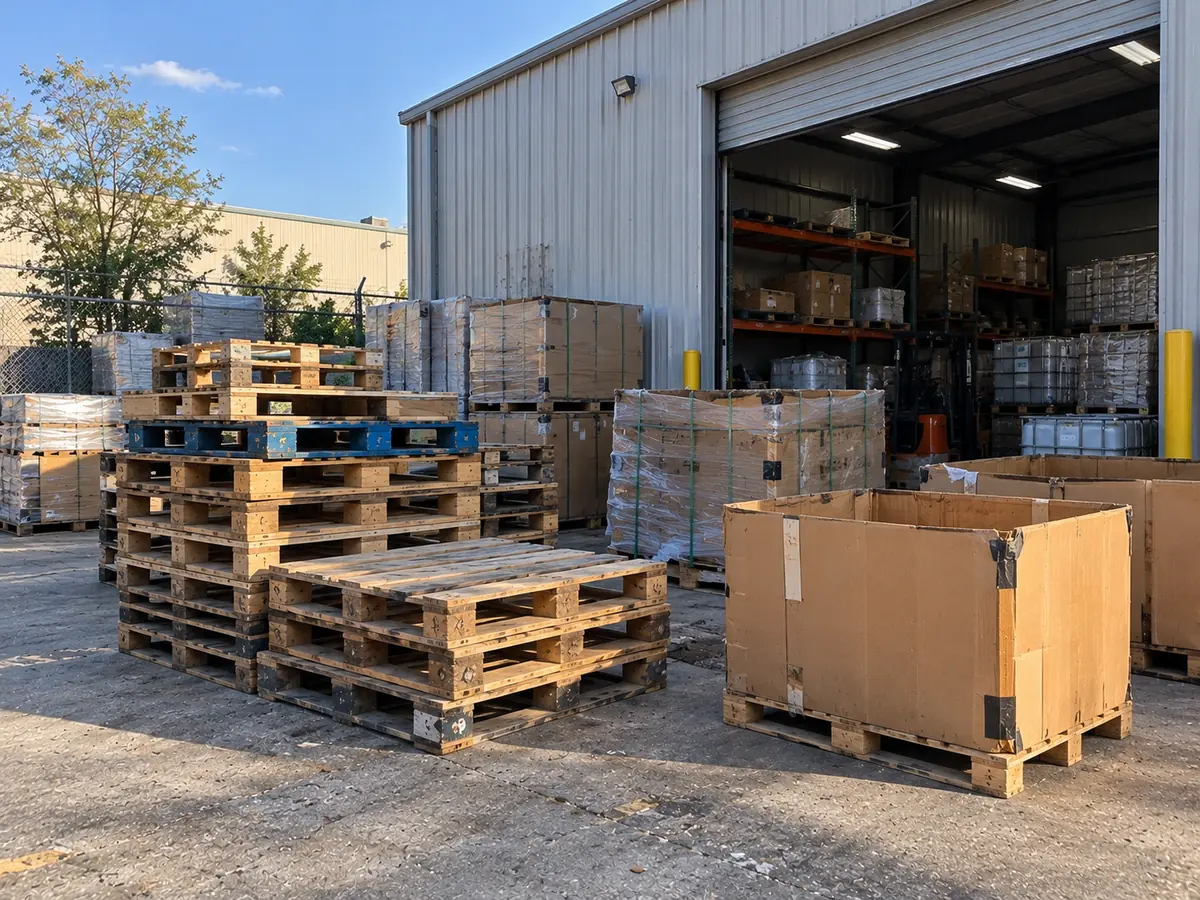
What the stock looks like
Product facts
A few numbers worth knowing
Compare
Every product family, side by side
| Family | Typical use | Pricing |
|---|---|---|
| Recycled wood pallets | General distribution, 3PL, food, retail | By quote |
| New wood pallets | Regulated, one-way export, critical automation | By quote |
| Custom-built pallets | Odd footprints, heavy loads, branded assets | By quote |
| Plastic pallets | Washdown, hygiene-critical, closed loops | By quote |
| Collars & accessories | Returnable containers, unit-load stability | By quote |
| Reclaimed lumber | Furniture, cladding, crating, dunnage | By quote |
| Crates, boxes & skids | Machinery, export, project cargo | By quote |
| Mulch & biomass | Landscaping, bedding, energy recovery | By quote |
Ordering
How a product request runs
Send footprint, grade and volume
Length first, width second. Unsure of the grade is a perfectly good answer — say so and the supplier can recommend one.
A partner supplier follows up
We pass your request to partner suppliers; availability and pricing come from them, not from a catalogue.
First article on anything custom
Ask for one unit to be built and shipped for approval before a full run.
Treatment if it crosses a border
ISPM 15 treatment, marked after treatment. Ask the partner supplier for treatment documentation.
Delivery, pickup, or both directions
Arranged with the partner supplier. If you generate cores, ask whether they can be collected on the same trip.
Decision rules
If this, then that
- If the pallet returns to you reliablyThen spend more per unit — durability is realised. Block construction or reclaimed plastic.
- If the pallet is one-wayThen buy the cheapest structurally adequate option: Grade B recycled.
- If a customer, auditor or camera sees itThen buy Grade A. This is the one case where appearance is the requirement.
- If product overhangs by more than two inchesThen stop forcing it — custom footprint.
- If the environment is wet or regulatedThen plastic is worth considering; recycled wood is rarely the right substitute.
- If solid wood crosses a borderThen heat treat — and KD-HT if the product is moisture-sensitive.
Avoid
Common ordering mistakes
Dimensions written backwards
40x48 is not 48x40. On a stringer pallet the first number is the stringer direction, which decides which faces have true fork openings.
One grade for the whole site
Many facilities over-specify. Splitting the buy can reduce spend with no operational change.
Heat treatment on domestic orders
ISPM 15 applies to international movement. Domestic HT lines are common, expensive and usually copied from a spec nobody has reviewed.
Assuming four-way means pallet-jack access
A notched stringer pallet is four-way for forklifts and two-way for manual jacks. If you run jacks, you need block construction.
Ordering below the economic run size
At small custom quantities, setup dominates the price. A capped standard pallet is often better.
Buying without a written grading standard
There is no enforced national standard. Ask any supplier for theirs — see how pallets are inspected.
Terms
Vocabulary you will meet on a quote
- Core
- A used pallet bought for reprocessing — the raw material of the recycled market.
- Grade
- A statement about appearance and permitted repairs, assigned on top of a structural pass. Not a strength rating.
- Footprint
- Length by width, length first. On a stringer pallet, length is the stringer direction.
- Stringer / block
- The two construction types. Stringer gives notched four-way entry; block gives true four-way for jacks as well.
- HT / KD-HT
- Heat treated for pests; kiln dried for moisture. KD-HT is both, and moisture-sensitive exports need it.
- First article
- A single production-representative unit shipped for approval before a custom run.
- Combo load
- An agreed blend of Grade A and Grade B, priced between the two and cheaper than straight A.
- Reserve stock
- A supplier setting aside your footprint and grade for a standing arrangement. Not every supplier offers it.
Questions
Common questions
What products can I request through RePallet Market?
Recycled and new wood pallets, plastic pallets, custom-built pallets, collars and accessories, reclaimed lumber, and crates and skids. Supply comes from partner suppliers in our network, who respond to your quote request.
Which pallet sizes can I ask for?
The 48x40 GMA is the most common request, and partner suppliers can discuss other footprints. The full list of common sizes is in the pallet size chart.
How long does a custom or new pallet order take?
That is set by the partner supplier and depends on the specification, materials and quantity. Say what you need and by when in your request.
Are recycled pallets cheaper than new ones?
Usually, and reusing a pallet avoids building a new one. New is still the right answer in some cases, such as pharmaceutical audits, one-way exports and dimensionally critical loads. Used vs new pallets.
How do I choose between wood and plastic pallets?
Ask whether the pallet comes back, who sees it and whether it leaves the country. Closed loops and washdown areas favour plastic; one-way and export loads favour heat-treated recycled wood.
Not sure which product you need?
Describe the load, the destination and whether the pallet comes back. Request a free, no-obligation quote and a partner supplier will follow up.