A pallet quote referral service
Every pallet has a second life in it.
Send one request to buy, sell or recycle pallets, and a partner supplier in our network follows up with a quote. Used pallets that still have trips left, matched with people who would rather not build a new one for a one-way trip.
Get a pallet quote
Free and no obligation. Buying or selling — this is the same form, and a partner supplier follows up.
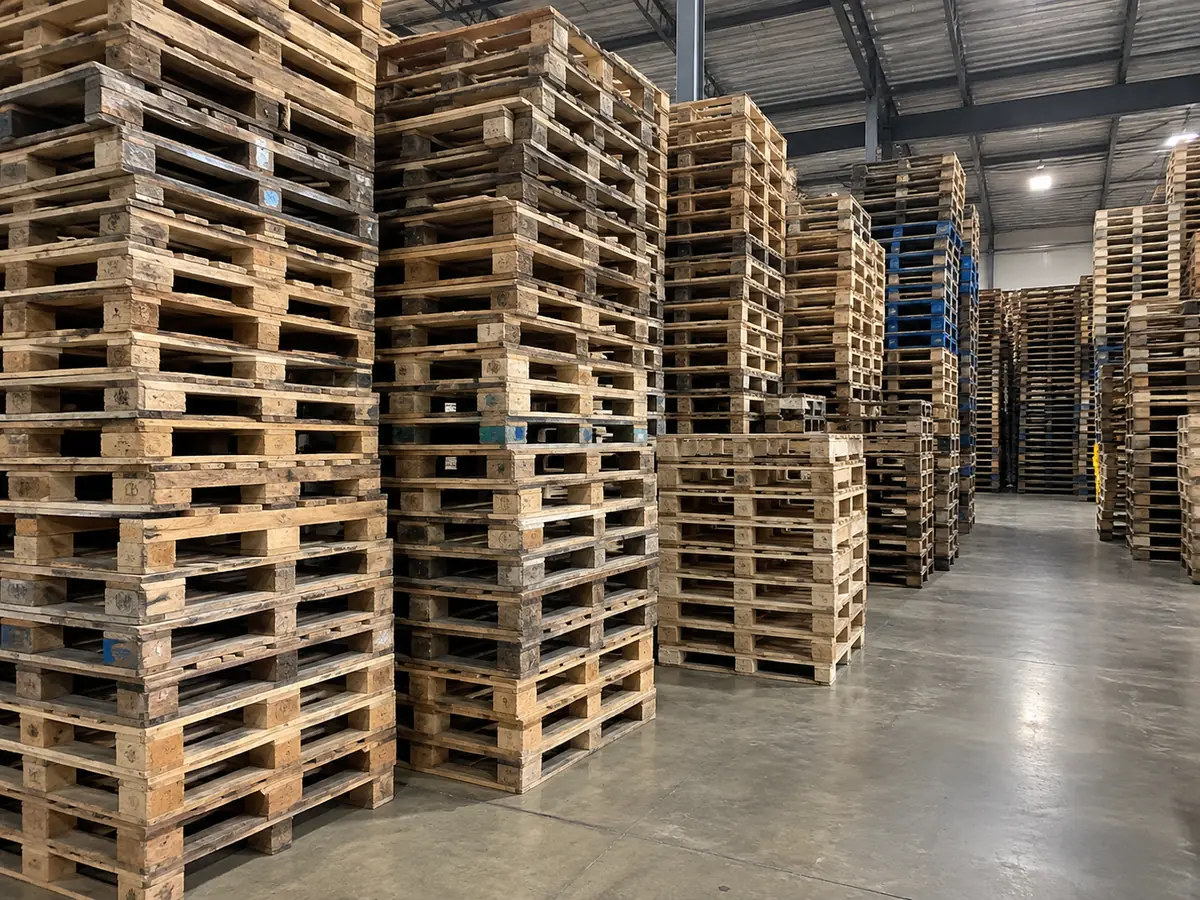
Requests from across the US
Sorted, graded wood has a second life
Used pallets are commonly inspected, sorted by footprint and grade, repaired where needed and returned to service. Partner suppliers handle that work; availability depends on the supplier.
How it works
One request, handled by a supplier
RePallet Market is a referral service. It does not hold stock or run trucks; it passes your request to partner suppliers who do. Here is the life a pallet typically has once a supplier is involved.
Recover
Used pallets, called cores, are collected from distribution centres, breweries, grocers and 3PLs. Pickup terms are agreed with the partner supplier.
Sort & grade
A typical check looks at stringer integrity, deck board condition, nail protrusion, moisture, stamp legibility and squareness. The pallet is then graded A, B, repair or teardown.
Repair & rebuild
Common repairs are companion stringers and deck board swaps. Pallets too far gone can be remanufactured from salvaged components.
Sell
Graded stock, custom builds and new lumber pallets are quoted by partner suppliers, depending on what a spec genuinely demands.
Reclaim
What cannot be a pallet again can become deck boards, stringers, garden lumber or crate material.
Recycle the rest
Wood that cannot be reused is commonly ground into mulch or used as fuel. Reusing a pallet avoids building a new one; this is the last step, not the first.
Products
What partner suppliers can quote
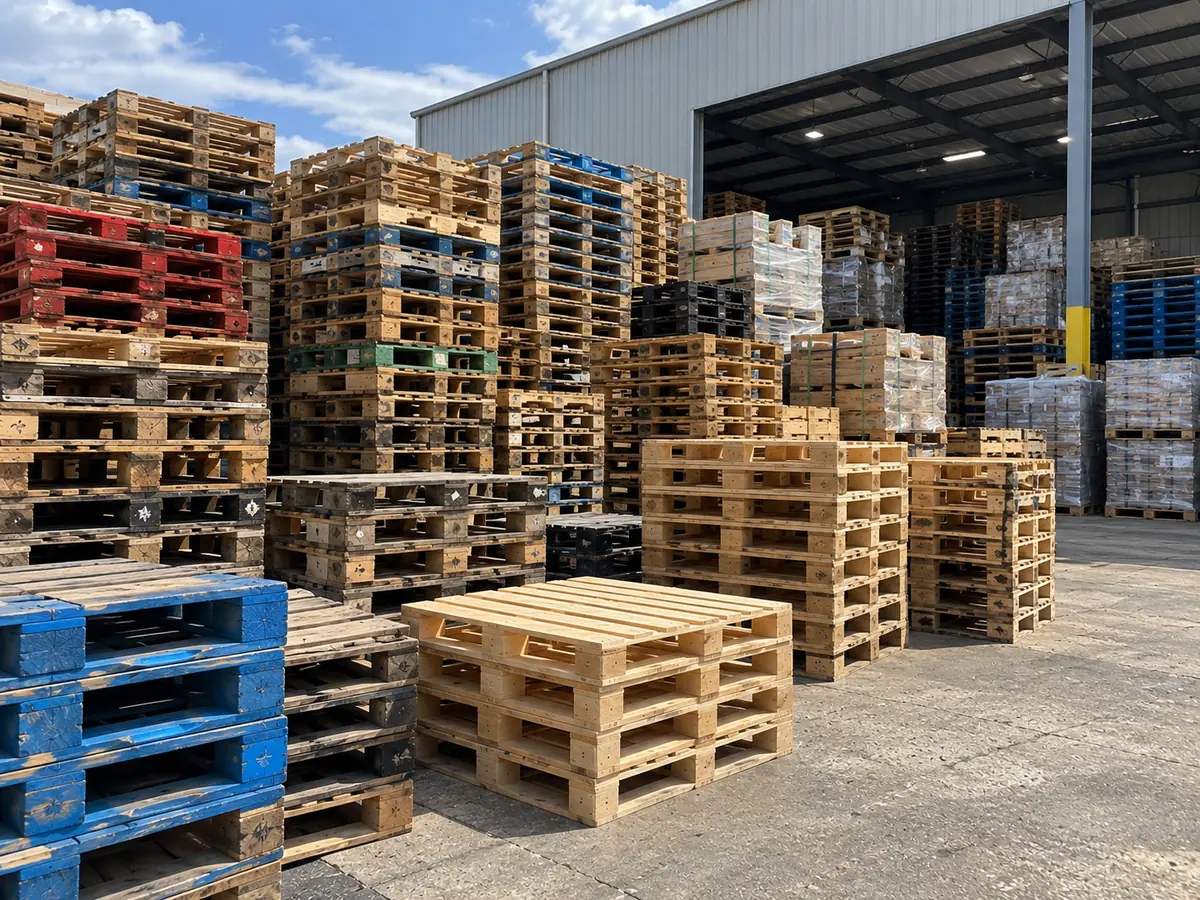
Most of these started life as something else.
Recycled wood pallets
Graded 48x40 GMA and other footprints, quoted by partner suppliers.
Open →Custom-built pallets
Odd footprints, heavy loads, tight tolerances. Built from reclaimed or new lumber.
Open →Collars & accessories
Folding collars, top caps, slip sheets, corner board, banding and stretch film.
Open →Plastic pallets
HDPE pallets for hygiene-critical and closed-loop applications.
Open →Reclaimed lumber
De-nailed, re-sawn deck boards and stringers for building and making.
Open →Crates, boxes & skids
Wooden packaging for heavy, awkward or export loads.
Open →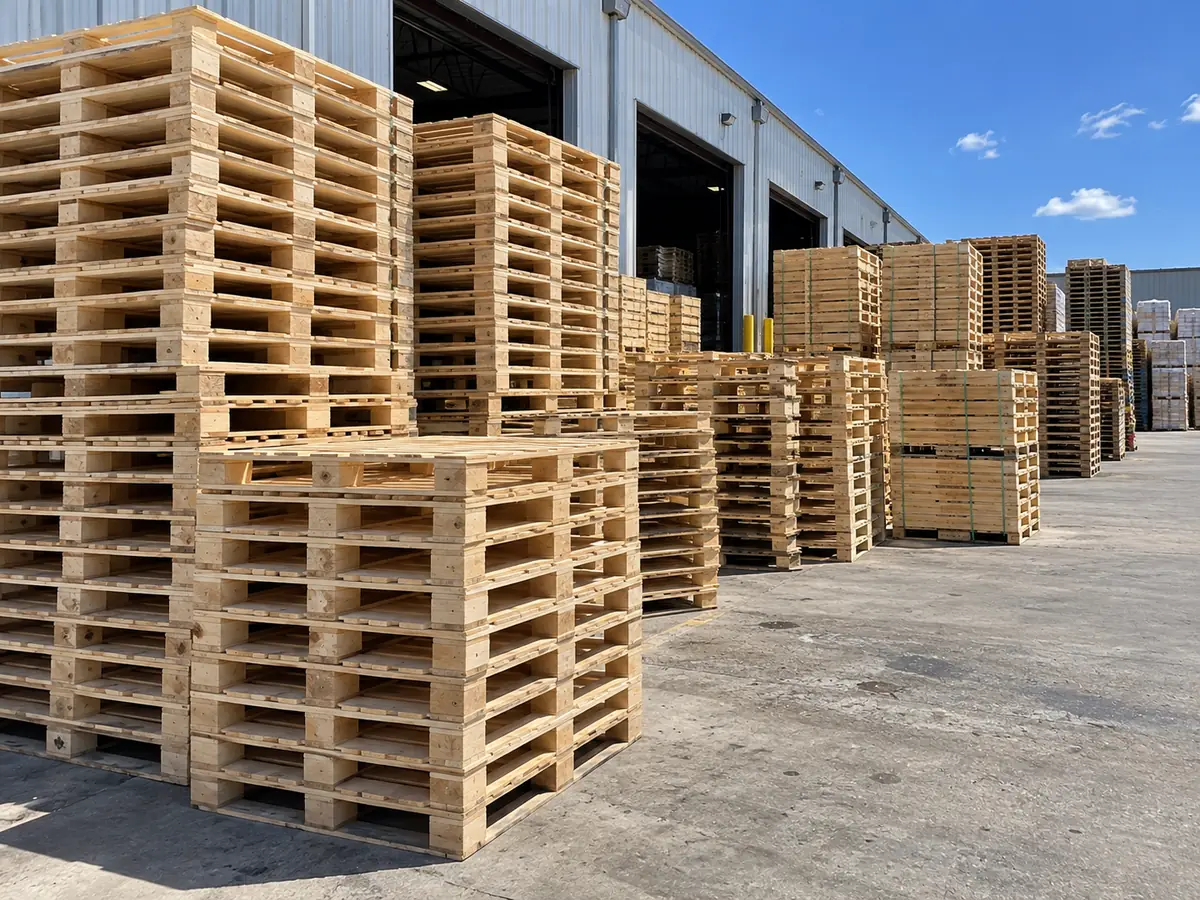
Services
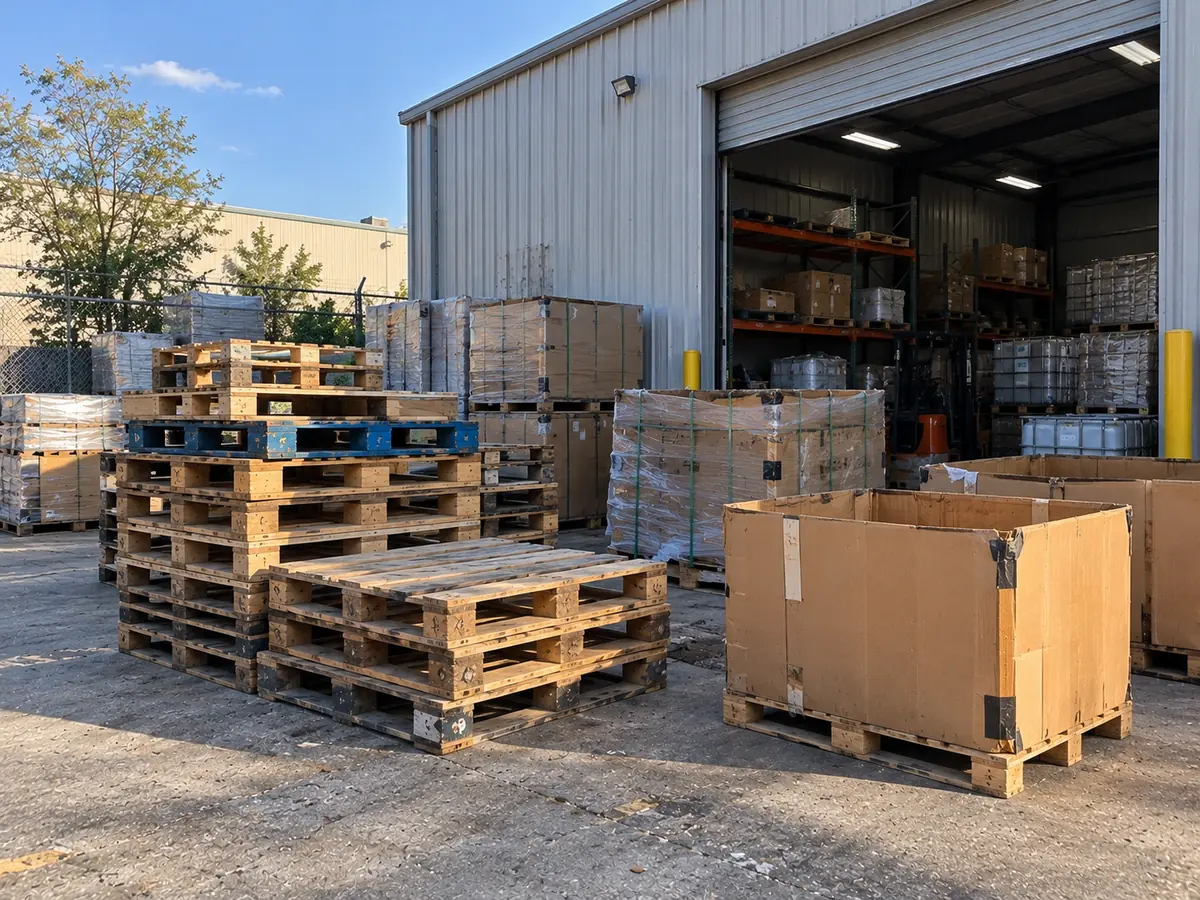
Everything around the wood
Pallet removal & pickup
Standing collections or one-off cleanouts, arranged through partner suppliers.
Open →Pallet delivery
Delivery arranged by the partner supplier; terms depend on where you are.
Open →Heat treatment (ISPM 15)
What export pallets need, and what to ask a supplier for.
Open →Pallet repair
Stringer repair, board swaps and re-grading through partner suppliers.
Open →Pallet recycling
Find a home for used pallets, from reuse down to mulch.
Open →Custom pallets
Cut to your footprint and load, quoted by a partner supplier.
Open →Know before you order
Sizes, grades and the things that trip people up
Many quote requests specify the wrong footprint or the wrong grade. These two references fix that in a few minutes.
Reference
The pallet size chart
Common footprints with dimensions in inches and millimetres, deck configurations, typical industries and load ratings — plus the six ISO standards and what to do when none of them fit.
Open the chart →
Reference
Grading, decoded
A, B, remanufactured, combo, and the informal grades nobody agrees on. What each one is honestly good for, and what a typical pallet inspection looks at.
Compare grades →
Delivery and collection together
One visit can deliver pallets and take the broken ones away
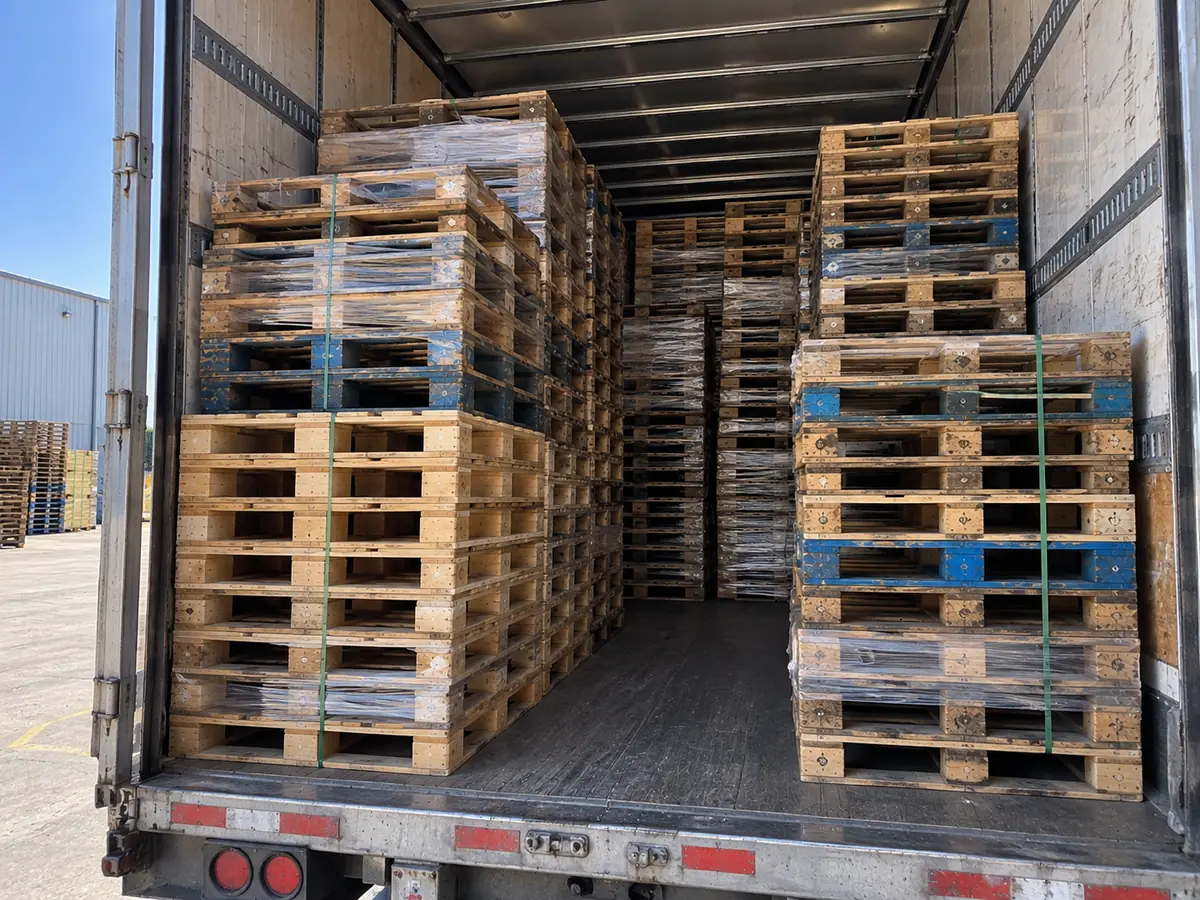
Combining delivery and collection can cut miles and remove a scheduling conversation. If you want it, say so in your request; whether it is available depends on the partner supplier.
Resources
Plain-English guides
No gated PDFs. Just the answers to common pallet questions.
Everything, briefly
The whole service in one table
| What you need | Where to go | Include in the request |
|---|---|---|
| Pallets to buy | Recycled wood pallets | Footprint, grade, quantity, postcode |
| Pallets to sell | Sell your pallets | Count, photographs, condition |
| A footprint nobody stocks | Custom pallets | Dimensions, load, entry type |
| Machinery packaging | Crates, boxes & skids | Weight, dimensions, transport mode |
| Export compliance | ISPM 15 heat treatment | Quantity, destination, required date |
| A dock cleared regularly | Pallet removal | Volume per week, dock access |
| Wood to build with | Reclaimed lumber | Species preference, quantity |
| Somewhere for waste wood | Pallet recycling | Type and quantity of material |
Straight answers
If this, then that
- If the pallet never leaves your buildingThen consider Grade B. It is commonly the cheaper option for the same job.
- If a customer, auditor or camera sees itThen consider Grade A — the one case where appearance is genuinely the requirement.
- If product overhangs the deckThen stop forcing it. Overhang costs more in damage than the pallet costs.
- If manual pallet jacks need side entryThen you need block construction, not notches.
- If solid wood crosses a borderThen heat treat — and specify KD-HT if the product is moisture-sensitive.
- If you buy pallets and dispose of them separatelyThen ask whether one supplier can do both. Combining delivery and collection can cut miles.
- If you are very far from any partner supplierThen expect freight to dominate the cost, and say so in the request.
Avoid
Six expensive pallet mistakes
Writing dimensions backwards
40x48 is not 48x40. On a stringer pallet the first number is the stringer direction, which decides which faces have true fork openings.
Buying one grade for everything
Many sites over-specify. Splitting the buy by application can cut spend with no operational change.
Racking a pallet at its static rating
Racking capacity is well below the static rating, and the wrong orientation reduces it again. Why.
Believing HT means dry
Heat treatment is pest control. A compliant pallet can leave treatment damp and grow mould in a sealed container.
Storing cores outdoors
Wet pallets weigh noticeably more and are worth less. Covered staging usually pays back.
Selling pooled pallets
CHEP, PECO and iGPS pallets remain the pooling company's property. Legitimate buyers refuse them.
Vocabulary
Words that come up on every quote
- Core
- A used pallet bought for reprocessing — the raw material of the recycled market, and the thing whose supply sets prices.
- Grade
- A statement about appearance and permitted repairs, assigned on top of a structural pass. Not a strength rating.
- GMA
- The 48x40 inch North American standard, named for the association that defined it.
- Stringer
- A board on edge running the length of a pallet and carrying the deck. Three is standard on a 48x40.
- Companion stringer
- A full-length second stringer nailed alongside a cracked one. Restores capacity and typically defines Grade B.
- Block pallet
- Built on blocks rather than stringers, giving true four-way entry for pallet jacks as well as forks.
- HT / KD-HT
- Heat treated for pests; kiln dried for moisture. KD-HT is both — what moisture-sensitive exports need.
- IPPC mark
- The ISPM 15 compliance stamp: wheat symbol, country code, producer number, treatment code.
- Racking load
- Capacity spanning rack beams with no deck support. Well below the static rating.
- Overhang
- Load extending past the pallet edge. Reduces carton compression strength.
- Combo load
- An agreed blend of Grade A and Grade B, priced between the two.
- Diversion rate
- Recovered quantity divided by received quantity. Ask which basis any supplier is using.
The full reference is in the pallet glossary.
FAQ
Common questions
Do you buy used pallets, or only sell them?
RePallet Market is a referral service, so it does neither itself. You can request a quote to buy pallets or to sell them, and partner suppliers in our network follow up. For sellers, a count and a few photographs are enough to start; reusable 48x40 GMA cores are generally the easiest to place, and mixed or damaged loads are usually quoted as a lot.
How much does a used 48x40 pallet cost?
Pricing comes from the partner supplier’s quote. It depends on grade, volume, whether you take delivery or pick up, and how tight core supply is at the time. Grade A carries a premium; Grade B and remanufactured generally sit lower. The pricing guide breaks down the variables that move the number.
What is the difference between Grade A and Grade B pallets?
As the terms are commonly used, Grade A pallets are structurally sound, square and cosmetically clean, with few visible repairs. Grade B pallets carry repairs: a companion stringer, a replaced deck board, some staining. Grade describes appearance and permitted repairs rather than strength, so confirm the supplier’s definition. Full detail on the grading page.
Is pallet removal free?
That is up to the partner supplier and depends on the load. Sorted, reusable stock with good access is the most likely to be collected on favourable terms; loads that are mostly broken, wet or contaminated, or that need special equipment, are more likely to carry a fee. Ask for the terms in writing before agreeing.
Where do you take requests from?
Requests from across the US. Availability depends on whether a partner supplier serves your area, and delivery or pickup terms are agreed with that supplier. See service areas.
Are pallets heat treated for export?
Export pallets generally need to be ISPM 15 compliant, which means heat treatment to a core temperature of 56 °C for 30 minutes (or an approved alternative) and an IPPC mark. A partner supplier may offer this; ask for treatment documentation. Read the process →
Send a count and a footprint.
Requesting a quote is free and carries no obligation. A partner supplier in the network follows up with a price and what is available.