Playbook
How to sell used pallets
Most sellers leave value on the dock because of decisions made before they ever contacted a buyer. None of those decisions are difficult.
Start a quote
Tell us the footprint, grade and volume. A partner supplier follows up with a quote.
Short answer
To sell used pallets for the best price: sort by footprint, stack uniformly to a consistent height, keep them dry and under cover, count accurately, photograph the stack from several angles, and separate any pooled pallets (CHEP, PECO) which you do not own. Sorted single-footprint loads of 48x40 are typically the easiest to place at a good price. Quotes come from partner suppliers.
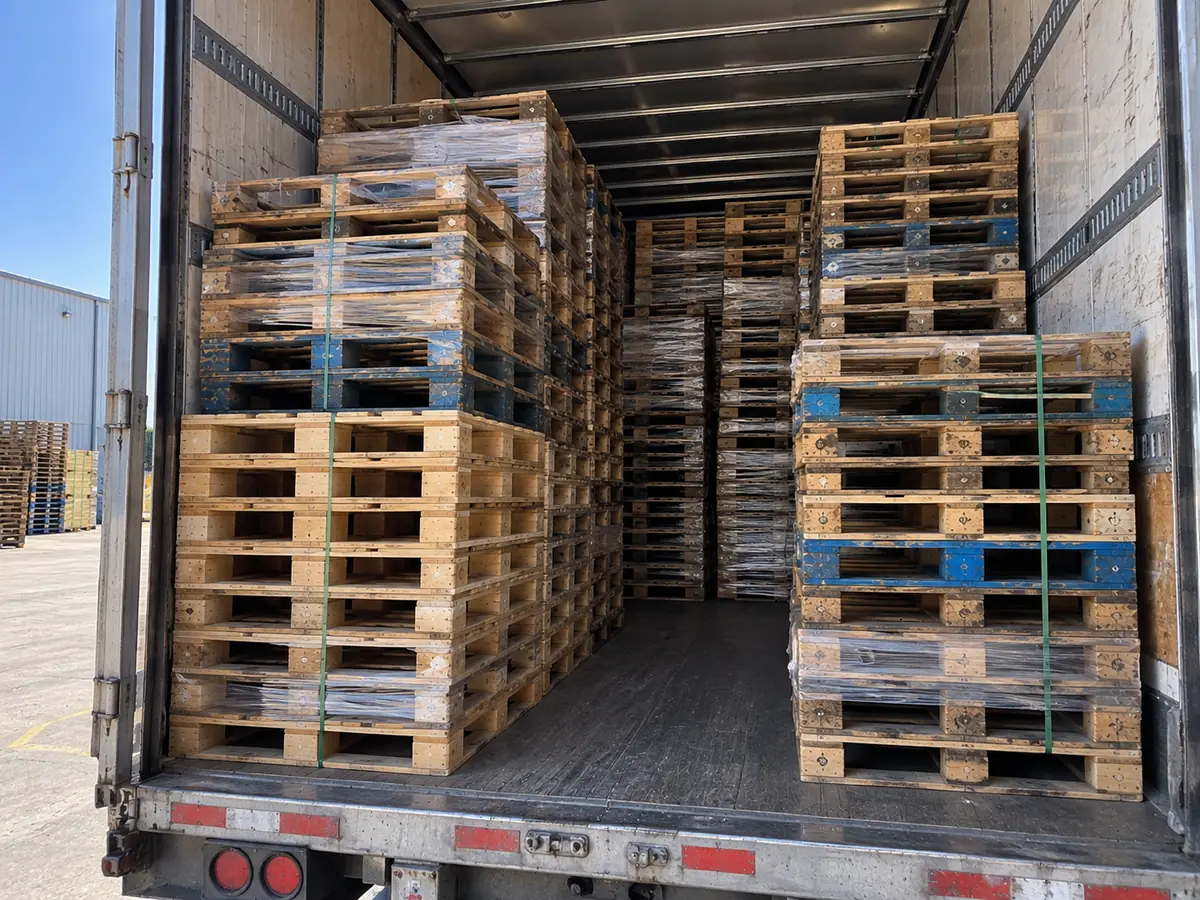
Sorting is the biggest lever
An hour of your team's time makes a load easier to quote and more attractive to a buyer.
Photos beat descriptions
"Mostly good" means something different on every dock. A photograph does not.
Never sell blue
CHEP, PECO and other pooled pallets are not yours to sell. Set them aside.
Step 1: separate what is not yours
Before anything else. Pooled pallets, such as CHEP blue, PECO red and iGPS black plastic, remain the property of the pooling company. Selling them is not a grey area; it is selling somebody else's asset, and both the pooler and the buyer take it seriously.
Set them aside and contact the pooler for collection. Any legitimate buyer will refuse them, and a buyer who does not refuse them is telling you something about how they operate.
Step 2: sort by footprint
This is where the money is. A stack of identical 48x40 pallets is worth more per unit than the same number of assorted pallets, because the buyer does not have to pay someone to sort them.
You do not need to grade them, because the buyer does that. You only need to separate footprints: 48x40 in one stack, everything else in another. If you have meaningful quantities of a second footprint, give it its own stack.
Step 3: stack properly
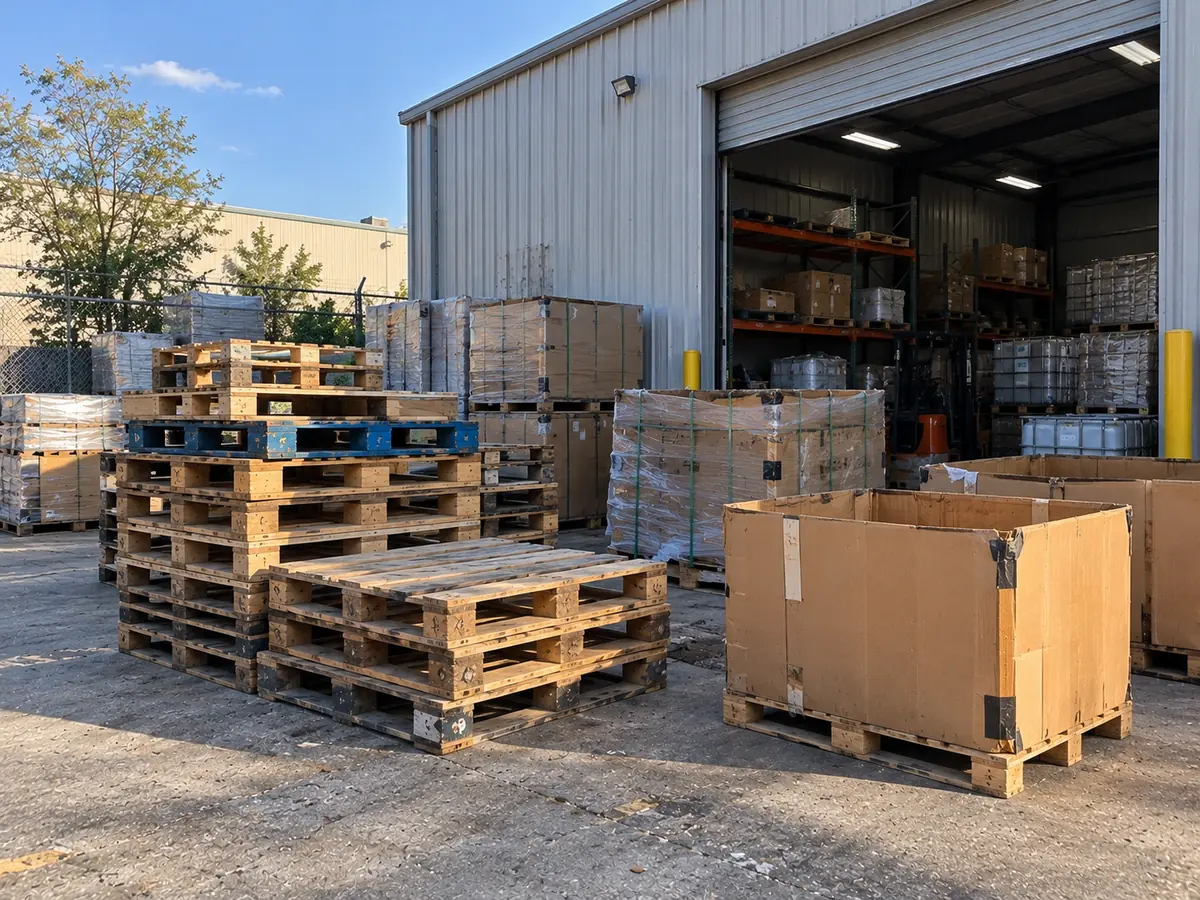
Uniform stacks, consistent height, squared up, on level ground. Do not band the stacks, because banding has to be cut, which costs time and risks damage.
Leave forklift access on at least two sides. A stack jammed against a wall in a corner makes a load slower to collect, and that time tends to come out of what you are paid.
Step 4: keep them dry
Wet pallets are worth less and weigh noticeably more. If a load has to sit outdoors, cover it. If it has already been rained on, say so: a wet load can still be worth buying, but describing it as dry and delivering it wet damages the relationship.
Pallets that have sat in standing water are a separate category. They generally cannot enter the reuse stream at all.
Step 5: count accurately
Count the stacks, count a representative stack, multiply. Do not estimate. Quotes are given per unit, and a load arriving short of the stated count is a common cause of disputed invoices in this industry.
Step 6: photograph
Four photographs make a quote far easier: the stack from the front, the stack from the side, one close-up of a typical pallet showing deck and stringer condition, and one of the dock or gate the truck will use.
That last one matters more than people expect. Access constraints, such as low clearance, a gate that needs a permit or a yard a 53-foot trailer cannot turn in, are a very common cause of a failed collection.
What raises and lowers the price
- Raises: sorted footprints, dry, reusable condition, high volume, easy access, flexible timing
- Lowers: mixed footprints, wet, heavily broken, banded stacks, restricted access, tight collection windows, small volumes
Getting a quote
Send the count, the footprint mix and the four photographs through the request form. We pass it to partner suppliers in our network, and one follows up with a per-core or per-lot price and a collection plan. Requests are free and carry no obligation.
If you have a recurring volume, say so on the form; a standing arrangement is a different conversation from a one-off. Pallet removal service →
At a glance
- Most in-demand footprint48x40 GMA in reusable condition
- SortingSorted loads are easier to quote and place
- WeatherWet pallets lose value and weigh more
- PaymentSet by the partner supplier; per core, or as a lot for mixed loads
- What to sendCount, footprint mix and four photographs
Next steps
Reference
Reference table
| Action | Effect | Effort |
|---|---|---|
| Sort by footprint | Raises | About an hour for a large load |
| Store under cover | Raises | A canopy or a corner of a building |
| Stack uniformly, unbanded | Raises | Minutes |
| Provide forklift access on two sides | Raises | Layout decision |
| Offer flexible collection timing | Raises | Scheduling only |
| Accurate count | Avoids disputes | Ten minutes |
| Leave outdoors in rain | Lowers | — |
| Mix footprints | Lowers | — |
| Band the stacks | Lowers | — |
| Include pooled pallets | Load refused | — |
Applications
Where this gets used
Recurring generation
A standing pickup can price better than one-off collections and removes scheduling. Say so in the request.
One-off cleanout
The corner of the site nobody wants to deal with. Photographs help a partner supplier respond with a view on it.
Seasonal peaks
Post-holiday and post-campaign volumes. Worth mentioning your dates in the request.
Site closure or relocation
Large one-time volumes with a deadline. Give the date in the request so a partner supplier can say whether it can help.
Photography
The four photographs that make a quote easier
Quotes for collections go wrong, almost always, because of something a photograph would have shown and did not.
Shot 1 — the stack from the front
Stand back far enough to get the whole stack in frame. A buyer is counting: how many stacks, how high, roughly how many pallets.
The common failure is a photograph taken from four feet away showing two pallets in glorious detail and nothing about quantity.
Shot 2 — the stack from the side
Depth. A stack photographed only from the front could be one deep or six. This shot also shows whether stacks are even: uniform stacks mean a faster load; leaning stacks with pallets laid flat on top mean extra handling.
Shot 3 — one typical pallet, close up
"Typical" is the important word. Not the best one. Get the whole pallet in frame and close enough that a cracked stringer would be visible.
People photograph their best pallet. Understandable and counterproductive: the quote is issued against that pallet and revised at the gate, which is a worse conversation than an accurate quote would have been.
If the load is genuinely mixed, send three condition samples and say so. A mixed load is usually quoted as a lot, which is the right answer for it anyway.
Shot 4 — the dock or gate
The one people leave out, and the one that prevents the most failed collections. Can a 53-foot trailer get in and turn? Is there a dock or does this need a lift gate? Is there forklift access to the stacks? Any height restriction, gate, barrier or bollard?
None of these are problems. All of them are problems at seven in the morning without warning.
What to write alongside
Four lines: actual count (not an estimate), footprint mix, where the pallets have been stored, and access notes including dock details and any gate procedure.
And the thing worth doing first
Separate pooled pallets. CHEP blue, PECO red, iGPS black. They remain the pooling company's property; selling them is selling somebody else's asset. Any legitimate buyer will refuse them, and a buyer who does not is telling you something about how they operate.
Process
How it runs, step by step
Set aside pooled pallets
CHEP, PECO, iGPS and similar. Contact the pooler for collection; they are not yours to sell.
Sort into two stacks
48x40 and everything else. An hour of work that makes the load easier to place.
Stack uniformly and do not band
Squared up, forklift access on two sides.
Count properly
Count the stacks, count a representative stack, multiply. Do not estimate.
Send four photographs and four lines
Front, side, typical pallet, dock. Count, mix, storage, access.
Decision rules
If this, then that
- If you have only a small number of palletsThen say so in the request. Availability depends on partner suppliers near you.
- If the load has been rained onThen say so. A wet load can still be worth buying; a wet load described as dry damages the relationship.
- If you generate this volume regularlyThen ask about a standing pickup, which can price better and removes scheduling.
- If the load is genuinely mixedThen ask for a lot price rather than a per-unit rate.
Avoid
Common mistakes
Photographing your best pallet
The quote is issued against it and revised at the gate. Send a typical one.
Estimating the count
A common cause of a disputed invoice in this industry, and it takes ten minutes to avoid.
Omitting the access photograph
It prevents more failed collections than the other three combined.
Selling pooled pallets
Not a grey area. They belong to the pooling company and legitimate buyers will refuse them.
Terms
Vocabulary for this page
- Core
- A used pallet bought for reprocessing. Reusable 48x40 cores are typically the most in demand.
- Lot price
- A single price for a mixed load rather than a per-unit rate. The honest way to quote genuinely mixed stock.
- Pooled pallet
- A rental pallet belonging to a pooling company — CHEP, PECO, iGPS. Never yours to sell.
- Standing pickup
- A recurring scheduled collection. Can price better than one-off trips and removes scheduling.
- Condition sample
- A close-up photograph of a representative pallet, used to grade a load remotely.
- Access constraint
- Anything that slows a truck: turning room, gate procedure, dock height, forklift availability.
The wider reference is in the pallet glossary.
Questions
Before you order
How much are used pallets worth?
Reusable 48x40 GMA cores are usually the most in demand; other standard footprints less; damaged and odd-size pallets are usually quoted as a lot. Values move with local core supply, so ask for a current quote rather than relying on a published number.
Do buyers take broken pallets?
Some do. Broken pallets are raw material for reclaimed lumber and mulch. They are worth less than reusable cores but not nothing, and they should not be going in a dumpster by default.
Can I sell CHEP pallets?
No. CHEP, PECO and similar pooled pallets remain the property of the pooling company. Set them aside and arrange collection with the pooler. No legitimate buyer will take them.
How quickly can a load be collected?
That depends on the partner supplier near you, the size of the load and access. Describe your location in the request. Service areas →
How quickly will I hear back?
A partner supplier in our network follows up on your request. Timing depends on the supplier and your location, and clear photographs help.
Can I sell pallets from a residential address?
You can ask, but small volumes rarely justify a truck, so availability depends on partner suppliers near you.
What if I only have broken pallets?
Say so in the request. They are raw material for reclaimed lumber and remanufacture. Worth less than reusable cores, but not nothing, and they do not belong in a dumpster by default.
Ready to put a number on it?
Send the footprint, the grade and the volume. We'll come back with price per unit and the first window we can hold.