Grade
Grade A pallets
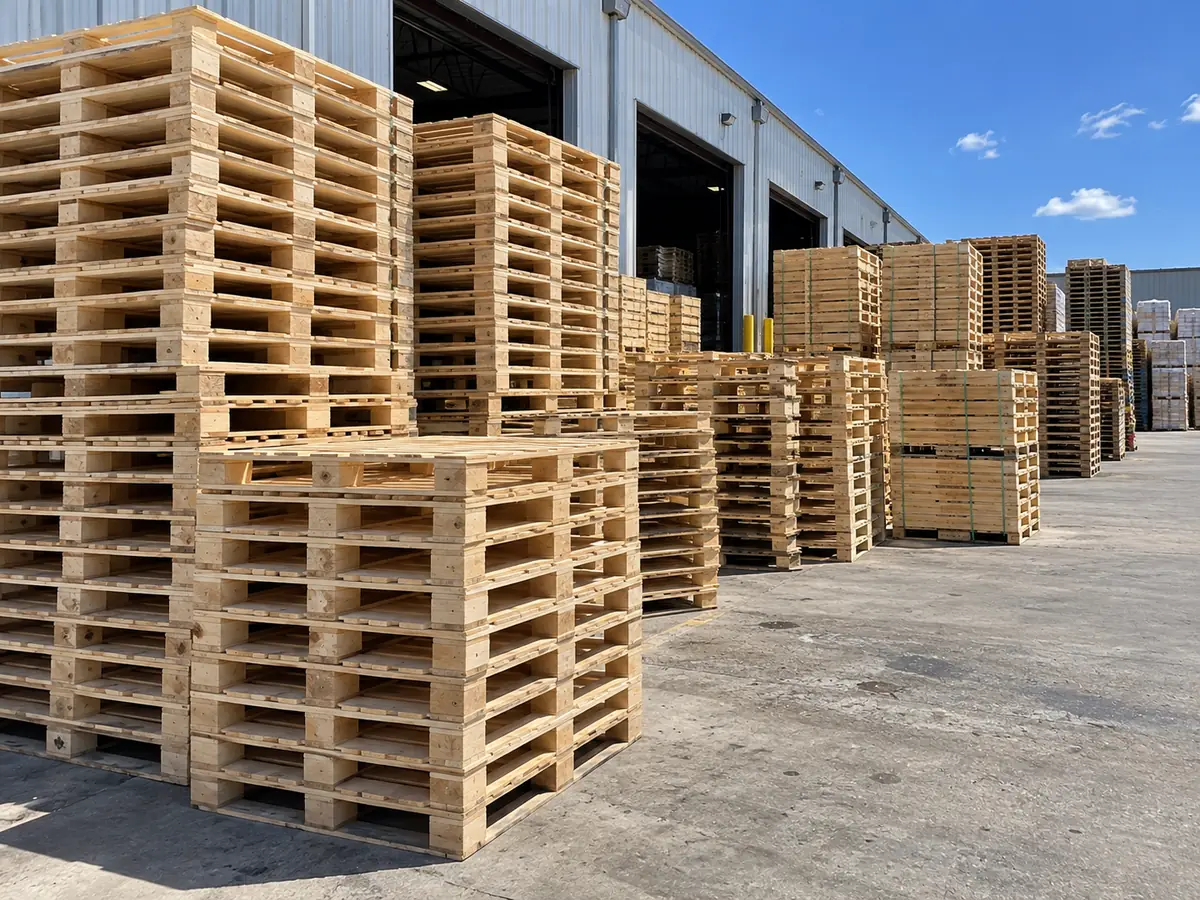
Clean, square, presentation-ready and free of visible repair. Grade A is what you ask for when somebody outside your building is going to look at the pallet.
Start a quote
Tell us the footprint, grade and volume. A partner supplier follows up with a quote.
Short answer
A Grade A recycled pallet is structurally sound, dimensionally square, free of visible repairs such as companion stringers or plugs, and consistent in colour. It carries the same load rating as any sound pallet of its construction — the premium buys appearance and dimensional consistency, not strength. Grade A is priced above Grade B; partner suppliers quote on request.
Two sub-grades
Premium A (no repairs at all) and Standard A (up to one replaced board). Specify which you mean.
Automation-friendly
Tight height and squareness tolerance is why AS/RS installations specify A.
Same load rating
You are buying appearance and consistency. Load ratings →
The specification
A Grade A pallet has original, uncracked stringers — no companion stringers nailed alongside, no plugs filling notches. Its deck is complete, with at most one replaced board on the standard sub-grade and none at all on premium. It sits square within a quarter inch measured across the diagonals, and its overall height varies by no more than a quarter inch from the nominal.
Colour is part of the grade. A pallet with one bright new board among six weathered ones is dimensionally perfect and still not Grade A, because the visual inconsistency is exactly what the grade exists to prevent.
The two sub-grades, and why you should specify
'Grade A' means slightly different things at different suppliers, which is a persistent industry annoyance. Two sub-grades are commonly used, and it helps to state which one on every request.
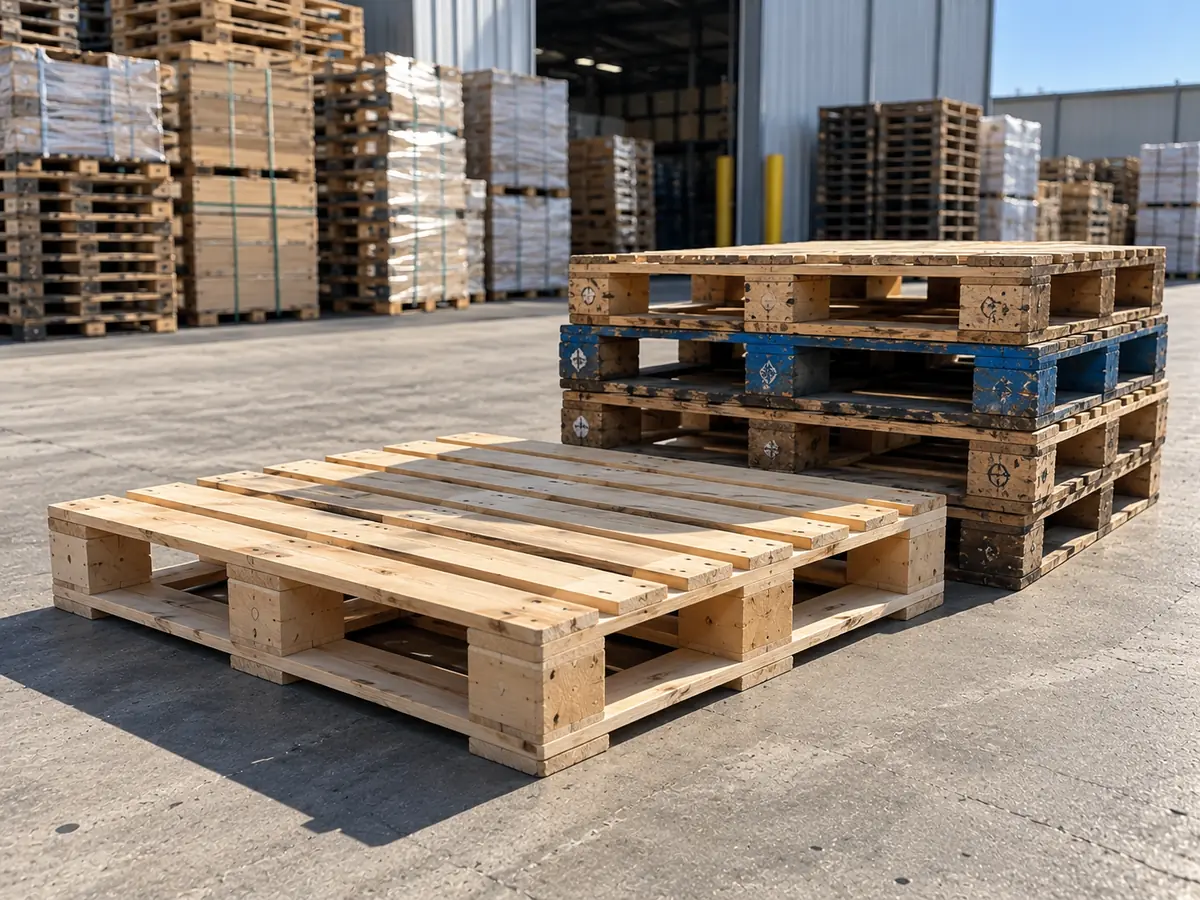
Premium A — no repairs of any kind. Original boards, original stringers, uniform weathering. This is what retail display and customer-facing shipments need.
Standard A — at most one replaced deck board, matched for colour as closely as stock allows. Structurally identical, visually near-identical, and usually priced lower.
If you are buying from anyone, ask which one they mean. If they cannot tell you, that is informative.
The four applications that genuinely need A
- Retail floor. The pallet is part of the display. Nobody puts product on a scarred pallet in a store.
- Automated storage and retrieval. Height and squareness tolerance matters far more than appearance here, and A is the reliable way to get it.
- Audited environments. Some food, pharmaceutical and customer audits treat pallet condition as a proxy for general housekeeping.
- Customer-facing shipments. Fair or not, a beaten pallet at a receiving dock reflects on the sender.
Outside these four, Grade B does the same job for less.
What Grade A does not buy you
Strength. A Grade B pallet with a properly fitted full-length companion stringer carries its original rated load. The companion stringer is a repair, not a weakness — it is two boards where there was one.
Longevity, necessarily. A Grade A pallet with original stringers that are twelve years old and dry may have less service life left than a Grade B pallet repaired last month with fresh lumber. Grade describes present appearance, not remaining life.
How grades are assigned
A good supplier puts every pallet through the same structural inspection regardless of the grade it lands in. The inspection determines structural acceptance; the grade is then assigned on appearance and consistency criteria on top of that. A pallet that fails the structural check does not become a lower grade — it goes to repair or teardown.
At a glance
- StringersOriginal, no cracks, no companion stringers
- Deck boardsFull count, at most one replaced (standard A)
- PlugsNone
- ColourUniform; no heavy staining
- SquareWithin 1/4" across diagonals
- Height varianceWithin 1/4"
- PriceAbove Grade B; by quote
Next steps
Reference
Reference table
| Criterion | Premium A | Standard A | Why it matters |
|---|---|---|---|
| Replaced deck boards | None | At most one, colour-matched | Visual consistency at the point of sale |
| Companion stringers | None | None | Both sub-grades exclude visible stringer repair |
| Plugs | None | None | A plug always drops a pallet to B or below |
| Colour | Uniform | Minor variation accepted | Retail display and audit optics |
| Square (diagonals) | Within 1/4 in | Within 1/4 in | Rack seating and automation |
| Height variance | Within 1/4 in | Within 1/4 in | Conveyor transfers and AS/RS |
| Stamp legibility | Clear | Clear | Export rejection risk |
| Relative price | Highest | Slightly lower | Specify which you mean on the PO |
Applications
Where this gets used
Retail floor display
The pallet is part of the display. Nobody puts product on a scarred pallet in a store.
Automated storage and retrieval
Height and squareness tolerance matters more than appearance here — and Grade A is the reliable route to it.
Audited environments
Some food, pharmaceutical and customer audits treat pallet condition as a proxy for general housekeeping.
Customer-facing shipments
Fair or not, a beaten pallet at a receiving dock reflects on the sender.
What you are buying
Grade A is a tolerance specification wearing a cosmetic label
For most buyers Grade A is 'the good-looking one'. That is a fair description of why retail customers buy it and it is beside the point for anybody running automation.
What automation is sensitive to
Overall height, within about a quarter inch of the 5.5 in nominal. Squareness across the diagonals. Bottom-board profile — chamfered boards roll onto a conveyor, square-edged ones catch. Protruding fasteners, which snag belts and tear photo-eye targets. And bottom deck layout, because some conveyor types need specific board positions to bridge rollers.
None of that appears on a grade card, because grade descriptions evolved for a market where the buyer was a person with a forklift.
So specify beyond the letter
If you run automation, write the tolerances rather than trusting the grade: height 5.5 in ± 1/4 in; square within 1/4 in across diagonals; no plugs, no companion stringers; bottom boards chamfered; no protruding fasteners either face; standard three-board bottom deck.
Seven lines that turn a grade into a specification. Include them in your quote request. More on automation tolerances.
What Grade A does not buy
Strength. A Grade B pallet with a properly fitted full-length companion stringer carries its original rated load — there are now two boards where there was one.
Remaining service life, necessarily. A Grade A pallet with entirely original components that are twelve years old and dry may have less life left than a Grade B pallet repaired last month with fresh lumber. Grade describes present appearance, not future performance.
Why two sub-grades
'Grade A' means different things at different suppliers, which is a persistent industry annoyance. Two sub-grades are commonly used: Premium A (no repairs at all) and Standard A (at most one replaced deck board, colour-matched). It helps to state which one on every request.
If you are buying from anyone, ask which they mean. If they cannot tell you, that is informative.
Availability, honestly
Grade A depth outside 48x40 is genuinely limited. It is a function of what arrives, and premium-condition stock in an unusual footprint is rare. For consistent supply in an odd footprint, a custom build is usually the better answer than waiting.
Process
How it runs, step by step
Decide whether you need appearance or tolerance
They travel together but they are different requirements, and only one of them is on the grade card.
Specify the sub-grade
Premium A or Standard A. Put it on the purchase order, not just in conversation.
Add dimensional tolerances if automated
Height, square, chamfer, fastener protrusion, bottom deck layout.
Split the rest of your buy
Grade A outbound and customer-facing; Grade B for everything internal.
Check availability in your footprint
48x40 is deep. Everything else is thinner, and a custom build may beat waiting.
Decision rules
If this, then that
- If the pallet reaches a shop floor or an auditorThen Premium A. This is the one case where cosmetics are the requirement.
- If the pallet runs through an AS/RS or conveyorThen Grade A specified against written tolerances, not the letter alone.
- If the pallet lives in your warehouseThen Grade B. Same rated load, lower price.
- If you cannot get Grade A in your footprintThen ask about a custom build rather than accepting a long wait.
Avoid
Common mistakes
Ordering 'Grade A' with no sub-grade
Premium and Standard differ in price and visibly in appearance. Specify.
Assuming Grade A means dimensionally guaranteed
It correlates with consistency; it does not guarantee it. Write the tolerances if they matter.
Buying Grade A for the whole site
A common over-specification in the industry, and one of the easiest to fix.
Expecting Grade A depth in unusual footprints
It is a function of what arrives. Ask before you plan around it.
Terms
Vocabulary for this page
- Premium A
- No repairs of any kind — original boards and stringers, uniform weathering.
- Standard A
- At most one replaced deck board, colour-matched as closely as stock allows.
- Plug
- A fitted block filling damage in a stringer. Always drops a pallet to B or below.
- Squareness
- Measured across the diagonals. Within 1/4 in for Grade A, 1/2 in for Grade B.
- Height variance
- Deviation from the 5.5 in nominal on a 48x40. Beyond 1/4 in it causes problems in automation.
- Colour match
- Selecting a replacement board close in tone to the surrounding deck. The difference between Standard A and Grade B on many pallets.
The wider reference is in the pallet glossary.
Questions
Before you order
How much more does Grade A cost?
Grade A is priced above Grade B for the same footprint, with the gap depending on footprint, quantity, location and freight. Partner suppliers quote on request; the form is free and carries no obligation.
Is Grade A stronger than Grade B?
No. Both carry the load rating of their construction when structurally sound. Grade A costs more for uniform appearance and tighter dimensional consistency — which matters enormously for automation and not at all for a forklift.
Is Grade A available in non-standard footprints?
Sometimes, depending on what a partner supplier has on hand. Grade A depth outside 48x40 is genuinely limited — for consistent supply in an odd footprint, a custom build is usually the better answer.
Can dimensional tolerances be guaranteed on recycled Grade A?
That depends on the supplier. Write the tolerances into your quote request and ask the partner supplier whether it can sample-check against them. Rejecting pallets that are good but outside your band means more sorting, which can affect price.
Is Grade A worth it for export?
Only if the pallet is seen or handled automatically at the far end. For export the thing that actually matters is ISPM 15 compliance and a legible stamp, which any grade can carry.
How much Grade A is available?
In 48x40, usually the most. In other footprints it fluctuates with what partner suppliers take in. Send the footprint and quantity and the supplier will say what is on hand.
Ready to put a number on it?
Send the footprint, the grade and the volume. We'll come back with price per unit and the first window we can hold.