Service · Flagship
Pallet recycling
Recycling a pallet almost never means shredding it. It means finding the highest-value thing the wood can still do, and doing that instead. A good recovery cascade has six steps and the grinder is the last one.
Start a quote
Tell us the footprint, grade and volume. A partner supplier follows up with a quote.
Short answer
Pallet recycling is the recovery, sorting, repair and reprocessing of used pallets so the wood re-enters service at the highest value it can still support. RePallet Market is a referral service: you send a free, no-obligation quote request, and a partner supplier in our network follows up with what it can take, how it would collect it and how it would be priced.
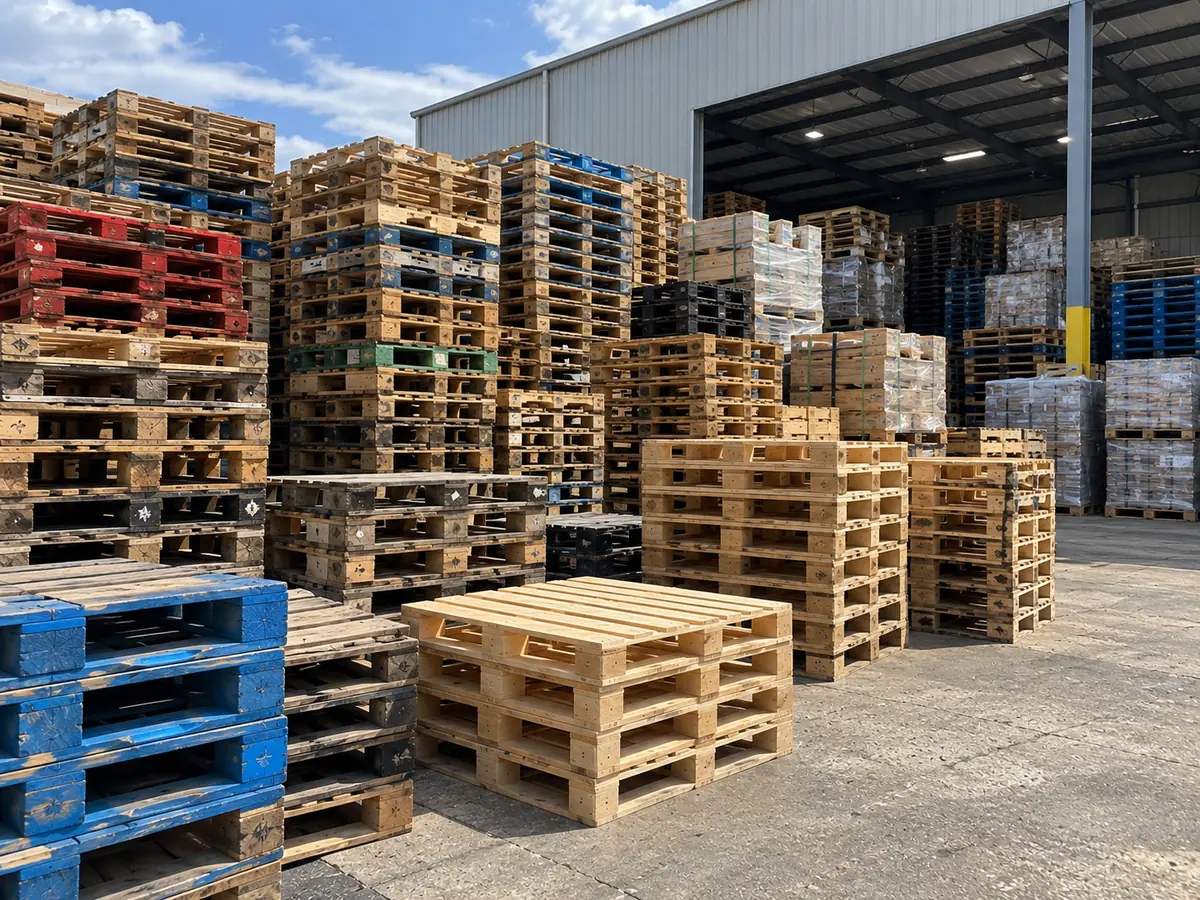
Reusable cores have value
Sound pallets are a material with a market. Depending on condition and the supplier, a quote may be a payment, a no-charge removal or a service fee.
Ask about records
If your sustainability team needs tonnage or diversion reporting, raise it in your request so the partner supplier can say what it provides.
Delivery and removal together
Where a partner supplier delivers pallets to you, it may be able to take the broken ones away on the same visit. Ask.
The cascade
In a well-run recycling operation, every incoming pallet is assessed against a simple question: what is the highest-value thing this wood can still do? The answer determines where it goes, and the sensible approach is to work down the list rather than jumping to the bottom.
- 1. Reuse as-is. Sound, square, no repair needed. Cleaned, graded and put back into circulation.
- 2. Repair. One or two failures, such as a cracked stringer or a missing deck board. Goes to a repair bench.
- 3. Remanufacture. Too far gone to repair, but full of good components. Torn down and rebuilt as a remanufactured pallet.
- 4. Reclaim as lumber. Boards and stringers salvaged for reclaimed lumber and crate stock.
- 5. Grind to mulch. Landscape mulch and animal bedding from wood that cannot be reused in any other form.
- 6. Biomass fuel. Nail-contaminated fines to a permitted energy recovery facility.
What a programme can look like
Many sites start with a single cleanout: a corner of the yard or dock that has accumulated a few hundred pallets nobody wanted to deal with. A partner supplier can quote it, collect it and, depending on condition, pay for what is reusable. If that goes well, it can become a standing arrangement.
From there the shape is typically a container or a marked staging area on your dock and either on-call or scheduled pickup. For higher volumes, some suppliers will leave a trailer and swap it when full, which removes scheduling from the equation. What a given partner supplier offers varies, so describe your volume in the request.
Documentation
Recyclers that weigh loads can issue a ticket per load showing gross, tare, net and a material classification, and can roll those up into periodic reporting. Not every supplier does, and it is not something RePallet Market itself produces. If you report on waste diversion, say so in your request and ask the partner supplier what records it can provide.
When you do get a diversion figure, ask how it was calculated. A number without a method is a marketing claim.
What recyclers typically cannot take
The limits are usually about contamination rather than damage. Recyclers generally decline pallets that have carried hazardous material spills, pallets with visible mould growth, pallets that have been in standing floodwater, and pallets stamped MB (methyl bromide fumigation). Painted pallets and pallets with heavy adhesive residue may be accepted but typically go straight to the reclaim or grind stream rather than back into service. Each supplier sets its own rules.
If you are not sure, include photographs with your request. A quick look saves a wasted trip.
At a glance
- How it worksRequest a quote; a partner supplier follows up
- Handled byPartner suppliers in our network
- Typical stagesReuse, repair, remanufacture, reclaim, grind, energy recovery
- DocumentationAsk the partner supplier what records it provides
- PricingBy quote from the partner supplier
- CoverageRequests from across the US; availability depends on partner suppliers
Next steps
Reference
Reference table
| Step | What happens | Output | Carbon effect |
|---|---|---|---|
| 1. Reuse as-is | Inspected, graded, stacked, resold | Grade A / B pallets | Best: the embodied impact is spread over more trips |
| 2. Repair | Companion stringer, board swap, re-nail, square | Grade B pallets | Near-best: repair materials only |
| 3. Remanufacture | Teardown, component sort, rebuild on a jig | Remanufactured pallets | Reuses most of the original wood |
| 4. Reclaim as lumber | Dismantle, de-nail, sort, bundle | Reclaimed lumber, crate stock | Displaces new timber |
| 5. Grind to mulch | Grind, magnet-separate, screen | Mulch, animal bedding | Carbon retained in soil for a time |
| 6. Energy recovery | Fines to a permitted biomass facility | Boiler fuel | Stored carbon released; should be reported separately |
| Material | Usually accepted? | Reason | Where it should go |
|---|---|---|---|
| MB-stamped pallets | No | Methyl bromide fumigated: an ozone-depleting chemical treatment | Check current regulations for disposal |
| Chemically contaminated | No | Spill residue cannot be characterised or removed | Your hazardous waste contractor |
| Visible mould growth | No | Cleaning is not possible; spores contaminate the reuse stream | Energy recovery via a permitted facility |
| Flood-exposed | No | Standing water carries contaminants of unknown type | Permitted disposal |
| Pressure-treated (CCA/ACQ) | No | Contaminates both mulch and biomass streams | Treated-timber disposal; check current regulations |
| Painted pallets | Restricted | Coating excludes reuse and mulch | Reclaim or energy recovery |
| Adhesive residue | Restricted | Cannot enter mulch | Reclaim as lumber |
| Broken / teardown grade | Usually yes | Raw material for lumber and remanufacture | A supplier's dismantling line |
Applications
Where this gets used
Distribution centres
High inbound volume, low outbound reuse. Standing pickups or a dropped trailer, with reporting if the supplier offers it.
Food manufacturing
Hygiene-sensitive intake benefits from covered staging, quicker collection cycles and clear rejection criteria.
Construction sites
One-way inbound pallets from building products, with no long-term storage. Usually suited to one-off cleanouts rather than standing arrangements.
Retail back-of-house
Mixed footprints, limited space and awkward access. Usually solved with smaller equipment on a tighter cycle.
3PL and cross-dock
Multiple pallet owners moving through one dock. Reconciliation matters more than volume. Clear identification helps, as does grading.
Manufacturing plants
Consistent footprints and predictable volume, and frequently an opportunity to repair rather than scrap.
Governance
What auditable recycling actually looks like
Any recycler can quote a diversion percentage. The value of the number is entirely in whether it can be reconstructed from documents somebody else can inspect.
Weight, not unit count
Diversion is best calculated by weight: recovered tonnage divided by received tonnage. Counting by unit tends to inflate the figure, because the pallets that cannot be reused are the wet, broken, heavy ones. Unit counting gives every pallet the same weight regardless of its actual mass.
Energy recovery is not recycling
Some residual material goes to a permitted biomass facility as boiler fuel. It is diverted from landfill. It is not recycled, because the stored carbon is released and the material leaves the product system.
A trustworthy report shows it on its own line. Folding it into a recycling percentage is common and misleading.
The paper trail
A recycler that weighs loads on a certified scale can record gross, tare, net, material classification, date, time and a load reference on each ticket. Outbound material is weighed the same way. Those tickets can then be aggregated into periodic reporting.
Whether a given partner supplier provides this varies. Ask, and say in your request if you need it.
What auditors typically ask for
In rough order of frequency: tonnage by disposition route; the calculation method with its emission factors; primary evidence such as scale tickets for loads they choose; how energy recovery is treated; and the reporting boundary, meaning which sites, which streams, which period.
Sustainability statements and logos carry far less weight than records that can be traced to individual loads.
Three questions to ask any recycler
Is the diversion figure by weight or by unit count? Is energy recovery counted as recycling? Can I see the scale tickets for three loads I pick?
A supplier operating properly can answer all three quickly. One that cannot has probably been reporting estimates, and that becomes your problem at audit rather than theirs.
Why the cascade order matters
Every step down destroys options. A board ground into mulch cannot become a crate panel; a pallet torn down cannot be repaired. So the discipline is to work from the top and descend only when there is nothing better available.
It costs more in labour than shredding everything would. It also produces several revenue streams instead of one, which is what makes it work commercially rather than merely ethically.
Process
How it runs, step by step
Count and photograph what you have
Four photographs: stack front, stack side, one typical pallet close up, and the dock or gate the truck will use.
Submit a quote request
Free and no obligation. Include count, condition, footprint and location. A partner supplier follows up.
Review the supplier's terms
The supplier tells you whether a load is likely to be paid for or charged, and how collection would work. You can decline.
Collection and sorting
The load is collected, weighed if the supplier weighs loads, sorted and classified.
Ask about records
If you need tonnage or diversion reporting, confirm what the supplier provides before the first load.
Decision rules
If this, then that
- If you generate large, steady volumesThen ask about a dropped trailer rather than scheduling collections.
- If you generate moderate volumesThen ask about a standing pickup combined with your pallet delivery.
- If you generate small volumesThen ask whether the supplier can add you to an existing route nearby.
- If anybody in your business reports on waste or emissionsThen ask for records from the first load. They are hard to reconstruct afterwards.
Avoid
Common mistakes
Filing pallets under waste
They are a material with a market value. Sites that treat disposal as a cost line miss the revenue entirely.
Accepting a diversion figure with no basis
Ask whether it is by weight or by unit, and whether energy recovery is counted as recycling. Both answers change the number materially.
Mixing pooled pallets into the load
CHEP, PECO and iGPS pallets are not yours to sell or dispose of. Set them aside and contact the pooler.
Letting cores sit outdoors
Wet pallets weigh considerably more and are worth less. Covered staging is among the highest-return changes most sites can make.
Terms
Vocabulary for this page
- Cascade
- The ordered sequence of recovery options, worked from highest value downward. Reuse, repair, remanufacture, reclaim, grind, energy recovery.
- Diversion rate
- Recovered tonnage divided by received tonnage, by weight. The honest basis; unit counting tends to flatter.
- Disposition route
- Where a given tonnage actually went. Auditors want the split, not a single blended percentage.
- Scale ticket
- A weighbridge record for one load: gross, tare, net, classification. The primary evidence behind a reported figure.
- Core
- A used pallet bought for reprocessing: the raw material of the recycled market.
- Energy recovery
- Combustion of residual material for heat or power. Diverted from landfill but not recycled; best reported separately.
The wider reference is in the pallet glossary.
Questions
Before you order
Does pallet recycling cost anything?
It depends on what you have. Sound, sorted pallets usually have value and may be paid for. Loads that are mostly broken, wet or contaminated may carry a fee. The partner supplier sets the terms, and you can decline a quote. Requesting one is free and carries no obligation.
How many pallets do I need for a pickup?
That varies by partner supplier. Suppliers generally prefer enough pallets to make a trip worthwhile, and smaller quantities are sometimes combined with other stops. State your count and location in the request. Check your area →
Can I get documentation for our ESG report?
Ask the partner supplier. Some can provide weight tickets and periodic reports, and some cannot. If you need it, say so in your request so the follow-up covers it.
What happens to the nails?
At a grinding operation, ferrous metal is typically removed with magnets and sold as scrap steel. Skipping that step is why some cheap mulch has nails in it. If you buy mulch, ask the supplier how metal is removed.
Can pooled pallets be handled too?
Pooled pallets belong to the pooler, so they cannot be bought or disposed of like your own. Set them aside so they can be returned rather than charged to you as losses.
How quickly can a programme start?
That depends on the partner supplier and your location. Timing is covered in the supplier's follow-up to your request.
Is non-pallet wood waste accepted?
Some suppliers take clean, untreated wood waste from manufacturing. Pressure-treated lumber, particleboard, MDF, coated timber and railway sleepers are generally not accepted.
Ready to put a number on it?
Send the footprint, the grade and the volume. We'll come back with price per unit and the first window we can hold.