Service
Pallet removal & retrieval
Pallets accumulate faster than anyone plans for. A standing pickup turns a recurring dock problem into something that takes care of itself, and the first step is a short quote request.
Start a quote
Tell us the footprint, grade and volume. A partner supplier follows up with a quote.
Short answer
Pallet removal is scheduled or on-demand collection of used pallets from your site. RePallet Market is a referral service: you submit a free, no-obligation request describing your pallets, and a partner supplier in our network follows up on whether it can collect them and on what terms.
Terms stated up front
A partner supplier tells you whether a load is likely to be paid for or charged before anything is dispatched. You can decline.
Trailer swap
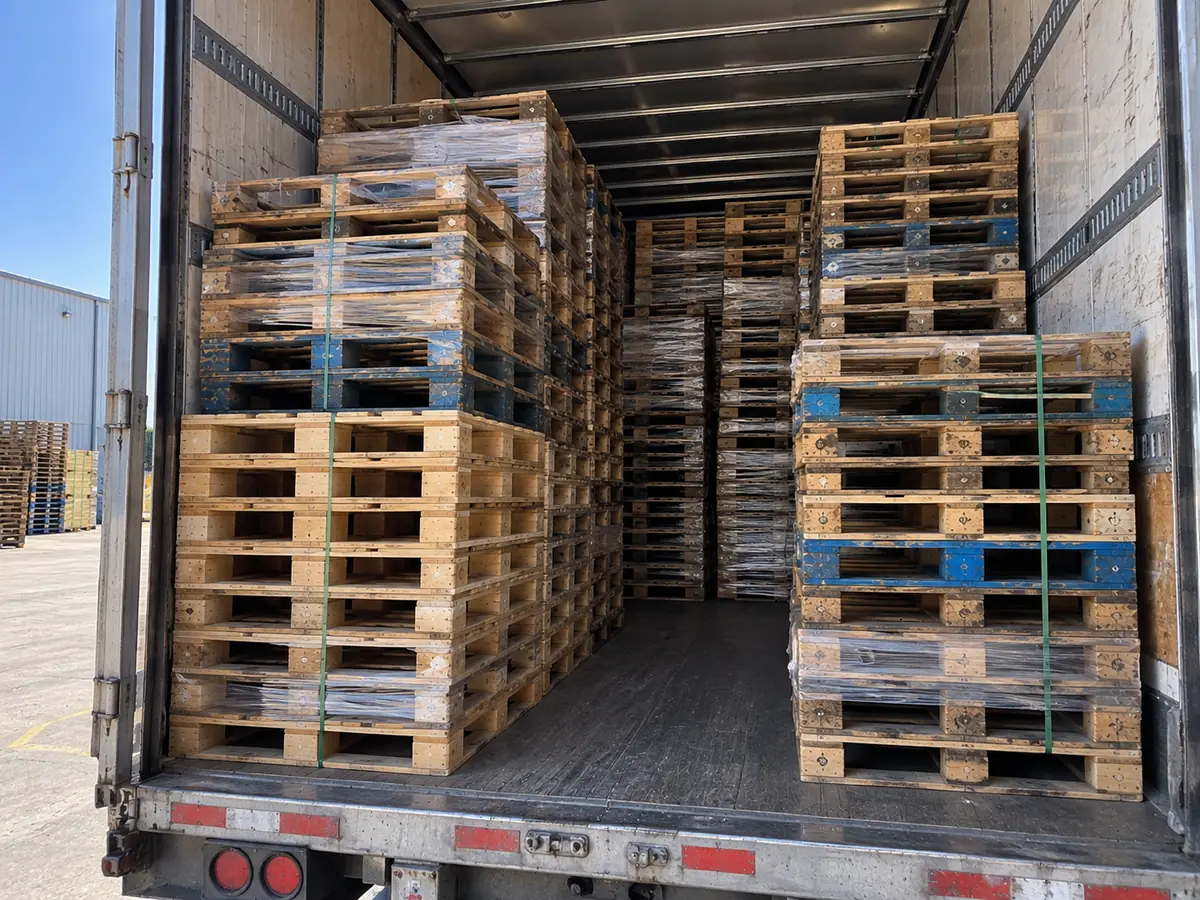
For steady, high volumes some suppliers will leave a trailer on site and swap it when full. Ask whether yours does.
Photos are enough
A rough count and a few photographs are usually enough for a supplier to give a first view.
How to get a pickup started
Send a count, a rough condition description and four photographs: the stack from the front, the stack from the side, a close-up of a typical pallet, and the dock or gate the truck will use. That is generally all a supplier needs to respond with a per-core price or a lot price and a collection arrangement.
The photographs matter more than the description. 'Mostly good' means something different on every dock in America. A photograph does not.
What affects the quote
Reusable cores are generally bought per unit. 48x40 GMA pallets in sound condition tend to command the most; other standard footprints less; odd sizes and heavily damaged pallets are usually quoted as a lot or removed for a fee. Plastic pallets are typically assessed separately. A genuine mix is often quoted as a lot rather than sorted on your dock. All pricing is by quote from the partner supplier.
The how to sell used pallets guide covers the things that tend to improve a quote: stacking uniformly, keeping footprints separated, keeping them dry, and not banding them.
Access, and what slows a truck down
Three things cause most delayed pickups. Stacks stored outdoors that have taken rain, because wet pallets weigh considerably more and are worth less. Stacks with no forklift access, which turns a short job into a long one. And a gate that needs a permit, a badge or a safety induction that nobody mentioned.
Mention all three in your request. They are all manageable with notice and awkward without it.
Retrieval, which is different
Retrieval is recovering your pallets from somewhere else: a customer's site, a distribution centre, a trade show. It is common with custom or branded pallets that are expensive enough to chase. Whether a partner supplier offers it varies. Clear identification on the pallet, such as a stencilled code or a branded mark, makes finding your assets at a third-party site far easier. See pallet grades for how condition is described.
Containers and equipment
For indoor accumulation, some suppliers can provide stillages or a roll-off. For high-volume docks, a dropped 53-foot trailer is often the right answer: your crew loads it as pallets come off, it is swapped when full, and nobody schedules anything.
At a glance
- Handled byPartner suppliers in our network
- How to startRequest a quote with a count, photos and location
- FrequencyOne-off, on-call or scheduled, depending on the supplier
- EquipmentVaries: dry van, flatbed, curtain-side, roll-off or trailer swap
- PricingBy quote; may be a payment, no charge or a fee depending on the load
- CoverageRequests from across the US; availability depends on partner suppliers
Next steps
Reference
Reference table
| Volume | Option to ask about | Equipment | Notes |
|---|---|---|---|
| Small | Drop-off or an existing nearby route | Your vehicle or a supplier's truck | Depends on the supplier |
| Moderate | Scheduled collection | 53' dry van or flatbed | Combine with delivery on one visit |
| High | Dropped trailer, swapped when full | 53' trailer on site | Removes scheduling entirely |
| Very high | Ask about continuous or multi-trailer arrangements | Varies | Depends on the supplier |
| One-off cleanout | Quoted dedicated trip | Whatever the load needs | Quoted from photographs |
| Factor | Effect | Why |
|---|---|---|
| Sorted by footprint | Raises | Sorting labour moves from the supplier's dock to yours |
| Kept dry / under cover | Raises | Wet stock needs drying before it can be graded |
| High volume, full loads | Raises | Handling and freight are per-load costs |
| Easy forklift access | Raises | A short load instead of a long one |
| Flexible timing | Raises | Fits a route that is already running |
| Mixed footprints | Lowers | Someone has to pay for the sorting |
| Rained on / outdoors | Lowers | Weight up, value down, mould risk |
| Banded stacks | Lowers | Banding has to be cut at the gate |
| Restricted access | Lowers | Smaller equipment, longer load time |
Applications
Where this gets used
Standing routes
The bread and butter. Distribution centres and food processors with steady pallet flow, collected on the same visit that delivers.
Trailer swap programmes
A 53-foot trailer is left on site, your crew loads it as pallets come off, and it is swapped when full. No booking, and the cores stay dry.
One-off cleanouts
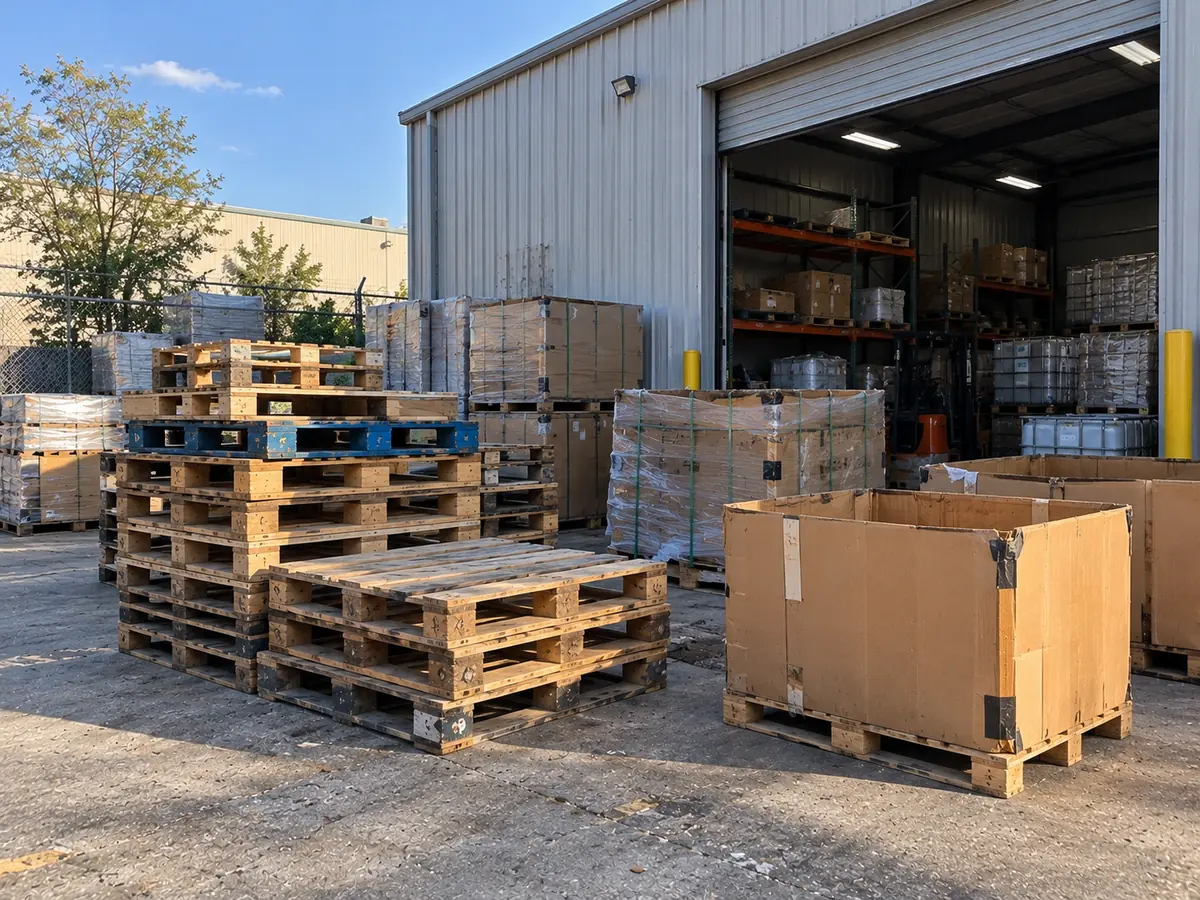
The corner of the yard that has accumulated a few hundred pallets nobody wanted to deal with. Quoted from photographs.
Retrieval from third parties
Recovering your branded or custom pallets from a customer's site, a distribution centre or a trade show. Whether a supplier offers it varies.
Construction and project sites
High one-way inbound, no storage, finite duration. Dedicated trips suit these best.
Plastic and mixed material
Some suppliers also take plastic pallets, collars, crates and clean untreated wood waste on the same trips.
Operations
Everything that decides whether a collection goes well
A failed collection costs everybody. It is almost never the pallets that cause one.
Access is the number one cause
Three things stop trucks. A yard a 53-foot trailer cannot turn in. A gate needing a permit, a badge or a safety induction nobody mentioned. And stacks jammed against a wall with no forklift access on any side.
All three are manageable with warning. This is why a good request includes a photograph of the dock or gate alongside the photographs of the pallets.
Sorting is worth more than you think
You do not need to grade; the supplier does that. You only need to separate footprints: 48x40 in one stack, everything else in another.
It is usually an hour or two of one person's time for a large load, and it tends to improve the quote more than almost anything else you can do.
Stack properly, and do not band
Uniform stacks, consistent height, squared up, on level ground, and as high as is safe for the condition. Leave forklift access on at least two sides.
Do not band the stacks. Banding has to be cut at the gate, which costs time and risks damage, and that time comes out of what you are offered.
Keep them dry
A rain-soaked pallet weighs a good deal more and is worth less, because it has to be stacked and dried before it can be graded, and some of it will have mould by the time it dries.
If a load has already been rained on, say so. A wet load can still have value; describing it as dry and delivering it wet damages the relationship. Why winter matters.
Count accurately
Count the stacks, count a representative stack, multiply. Do not estimate. A load arriving short of the stated count is the most common cause of a disputed invoice in this industry, and it is entirely avoidable.
Retrieval is a different service
Recovering your pallets from somebody else's site is common with branded or custom pallets expensive enough to chase. Clear identification on the pallet, such as a stencilled code or branded mark, makes finding your assets at a third-party site far easier.
Combine with delivery, where you can
Putting the delivery and the collection on the same truck visit is one of the largest cost reductions available to a pallet customer. New pallets in, used pallets out, one trip, one scheduling conversation.
Process
How it runs, step by step
Separate anything that is not yours
Pooled pallets (CHEP blue, PECO red, iGPS black) remain the pooler's property. Set them aside and contact the pooler.
Sort by footprint
48x40 in one stack, everything else in another. A small amount of work that tends to improve the quote.
Stack, do not band
Uniform height, squared up, forklift access on two sides. Banding costs time at the gate.
Photograph four things
Stack front, stack side, one typical pallet close up, and the dock or gate the truck will use.
Send count and location
An actual count, not an estimate, through the quote request form. A partner supplier follows up.
Decision rules
If this, then that
- If the load is predominantly broken, wet or contaminatedThen expect that a supplier may charge a service fee. It should be stated before dispatch.
- If the stacks are mixed footprintsThen expect a lot price rather than a per-unit price.
- If you generate high, steady volumesThen ask about a dropped trailer. Scheduling disappears and the cores stay dry.
- If you also buy palletsThen ask about combining both on one visit to remove a truck movement.
Avoid
Common mistakes
Describing instead of photographing
"Mostly good" means something different on every dock in America, calibrated against whatever that dock normally sees. A photograph is calibrated against nothing.
Forgetting the access photo
The dock or gate shot prevents more failed collections than the other three photographs combined.
Estimating the count
Quotes are per unit. A load short of its stated count is the commonest invoice dispute in the industry.
Storing outdoors to save space
The space saved is worth less than the value lost. Even a simple canopy tends to pay back.
Terms
Vocabulary for this page
- Trailer swap
- A 53-foot trailer left on site, loaded by your crew and exchanged when full. Removes scheduling and keeps cores under cover.
- Backhaul
- A return leg that would otherwise run empty. Freight fitting one can be priced against an empty mile.
- Lot price
- A single price for a mixed load rather than a per-unit rate. The honest way to quote genuinely mixed stock.
- Retrieval
- Recovering your own pallets from a third-party site.
- Core price
- What is offered per reusable pallet. It moves with market supply, so it is quoted rather than listed.
- Cleanout
- A one-off dedicated collection of accumulated stock, quoted from photographs.
The wider reference is in the pallet glossary.
Questions
Before you order
How fast can a pickup happen?
That depends on the partner supplier, its routes and your location. Timing is discussed in the supplier's follow-up. Giving a flexible window in your request generally helps.
Will broken pallets be taken?
Often, yes. Broken pallets are raw material for reclaimed lumber and mulch. They are worth less than reusable cores, but they do not belong in a dumpster. Whether a given supplier accepts them is part of the quote.
What if I am a long way from a supplier?
Requests come from across the US and availability depends on partner suppliers near you. Hauling low-value wood a long way rarely makes economic sense, so a closer supplier is usually the better answer. Submit the request and see who follows up.
What if the load turns out different from the photographs?
A supplier may re-quote before unloading. A load materially different from the description can reasonably get a revised number, and you can accept or decline it.
Can collection happen outside normal hours?
Some suppliers will collect early or late to avoid dock congestion. Give your preferred window in the request.
Are containers or stillages available?
Some suppliers provide them for indoor accumulation, and roll-offs where the volume justifies them. For high-volume docks a dropped trailer is often the better answer.
How far will a supplier travel for a cleanout?
That varies by supplier. Hauling low-value wood a long way rarely makes economic sense, so a closer supplier is usually the better answer. Requests come from across the US and availability depends on partner suppliers.
Ready to put a number on it?
Send the footprint, the grade and the volume. We'll come back with price per unit and the first window we can hold.