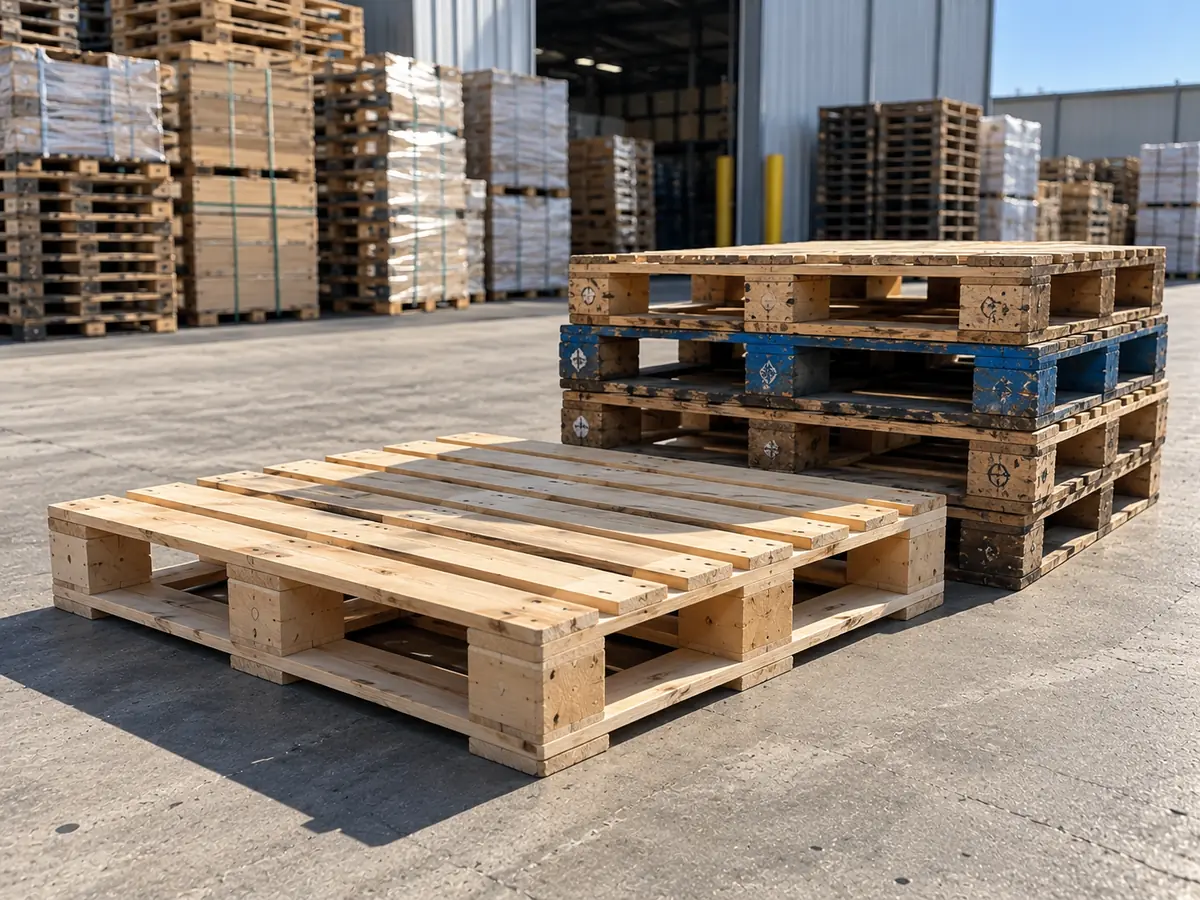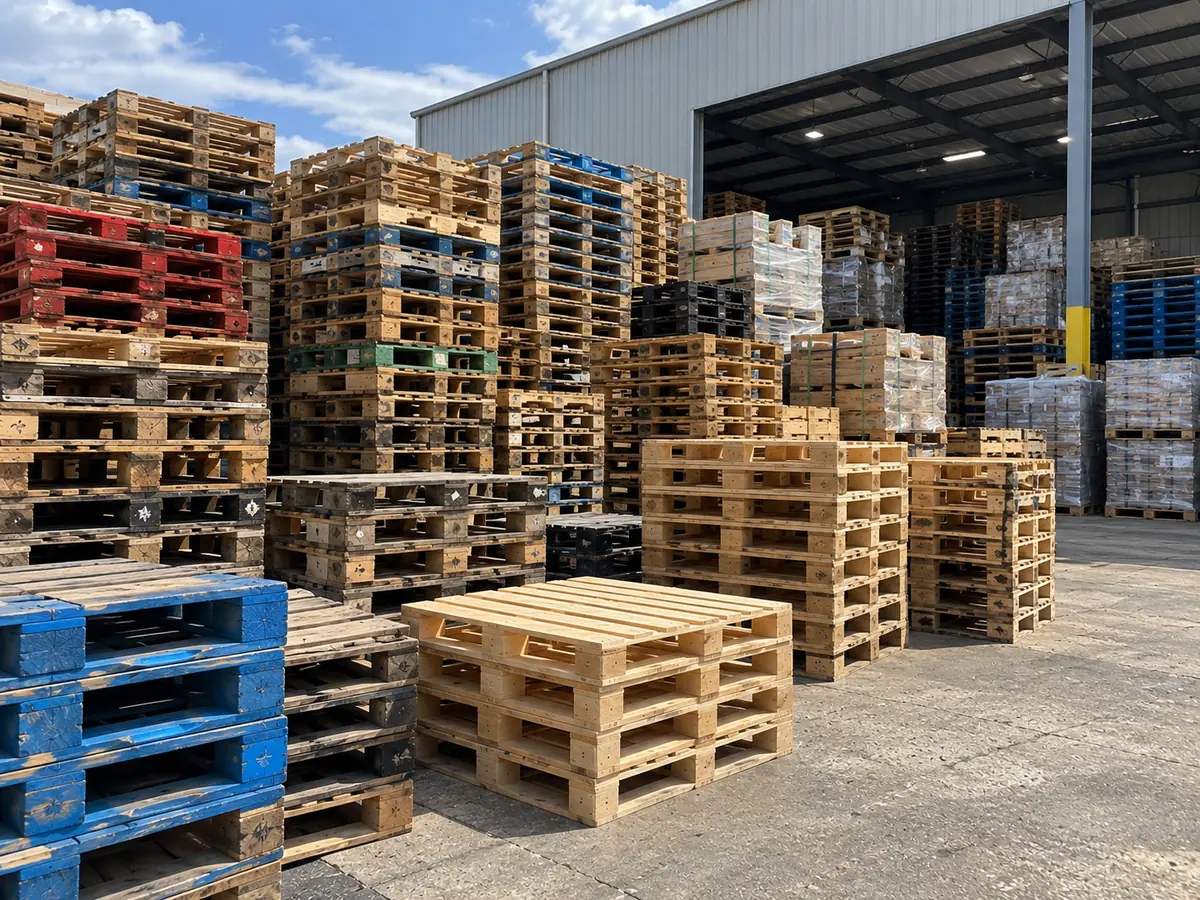
A dry softwood 48x40 pallet is far lighter than the same pallet after a couple of days of rain in an uncovered lot. A sizeable fraction of the pallet's mass arrives as water, and it changes almost everything downstream.
What the water does
Weight. Freight is often cubed out rather than weighted out with pallets, but not always. A trailer of wet pallets can weigh far more than the same trailer dry, and on a flatbed or a weight-restricted lane that starts to matter.
Strength. Wood loses strength as moisture content rises. Between normal service moisture and fibre saturation, compressive and bending strength fall substantially; commonly cited figures put the loss for a fully saturated member at a quarter or so versus the same member at service moisture, though values vary. A pallet rated for a given dynamic load when dry should not be assumed to hold that when soaked.
Fastener grip. Wet wood swells; when it dries again it shrinks, and shrinkage is what backs nails out. A pallet that gets wet and dries repeatedly loosens far faster than one kept under cover.
Mould. With elevated moisture, warmth and no airflow, mould establishes. On a pallet sitting outdoors it is cosmetically unpleasant. On a pallet sealed into a container for a long ocean transit it is a rejected shipment.
Why wet cores are worth less
Not out of meanness. A wet core has to be stacked and dried before it can be graded, which means storage space, handling and time. Some of it will have mould by the time it dries, and mould is a rejection rather than a cleaning job. And the extra weight makes the freight to collect it more expensive.
The discount is real and it is avoidable, which is the frustrating part. Sellers can lose a meaningful share of their core value to a corner of a lot that could have had a canopy over it.
The canopy calculation
Moving outbound pallet staging under an existing loading canopy needs no construction, just a decision about where stacks go. Sites that do it commonly find that the condition, and therefore the value, of their recovered cores improves.
If you do not have an existing canopy, the arithmetic is still usually favourable. Take your annual core revenue, estimate the share lost to wet stock, and compare with the cost of a simple covered bay.
Failing that: stack on dunnage so the bottom pallet is not sitting in standing water, keep stacks off the drip line of the building, and turn the stacks so the deck boards shed rather than pool.
Cold chain has its own version
Pallets coming out of refrigerated environments are wet before they ever see weather. Condensation forms as soon as a cold pallet hits warm humid air, and in summer that is a lot of water very quickly.
Sites with significant cold storage should treat every outbound pallet as wet and plan accordingly: covered staging, decent airflow, and frequent collections so pallets do not sit long enough to develop a problem. Frequency beats volume here. Several small collections beat one large collection of pallets that have been sitting for weeks.
How wet stock is handled
Responsible recyclers stack wet pallets in open-air rows with airflow between them, sometimes for a long while, before they reach a repair bench. They are not graded wet, because moisture masks defects: a damp stringer sounds different, a wet board looks sound when it is not, and moisture readings on a cold morning are not something you would want to grade against.
This is also why pallet inspection treats visible moisture as a reason to defer grading rather than a defect to grade around.
If you are buying in winter
Ask whether the stock has been under cover. Ask what the supplier's drying practice is. And if pallets arrive visibly wet on a delivery, say so at the time rather than after they have been put into a rack. Reputable suppliers would far rather swap a load than argue about a claim weeks later.