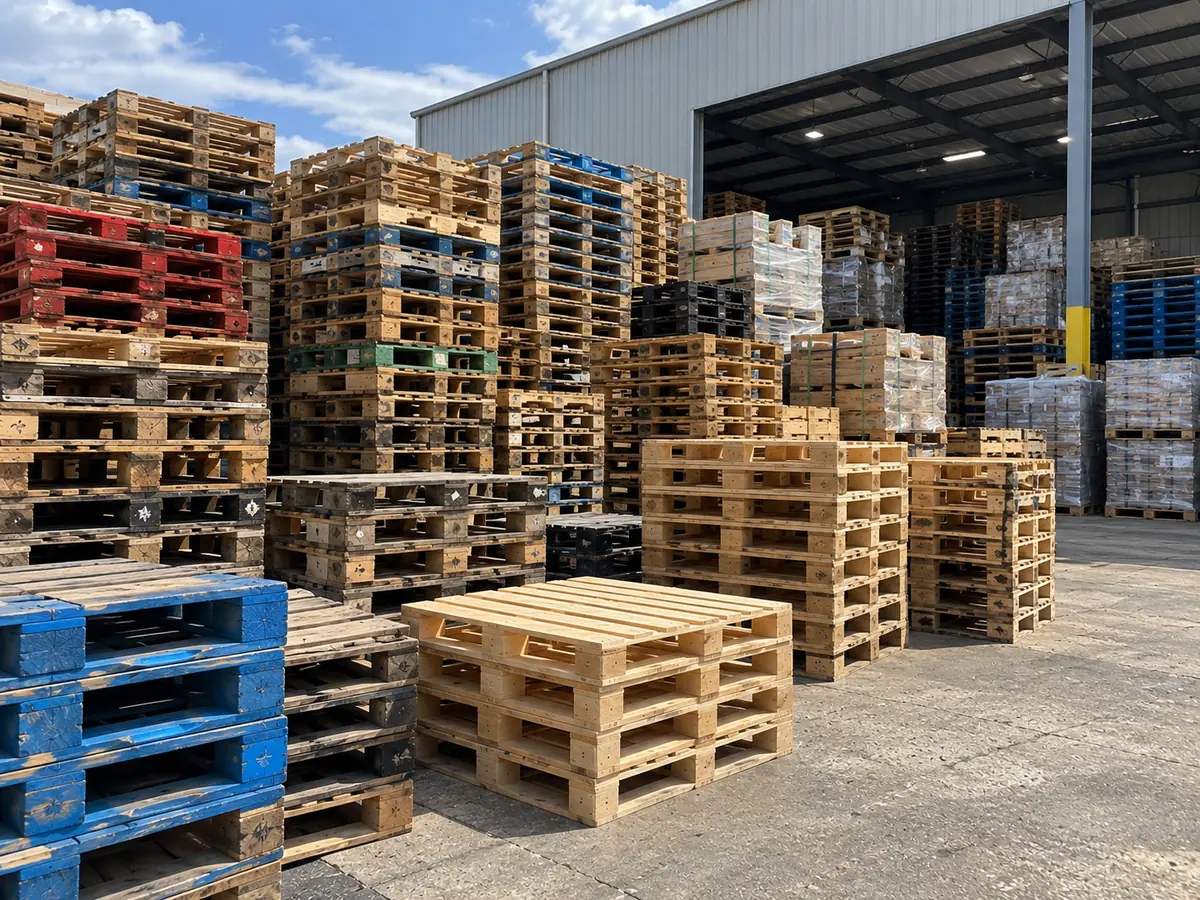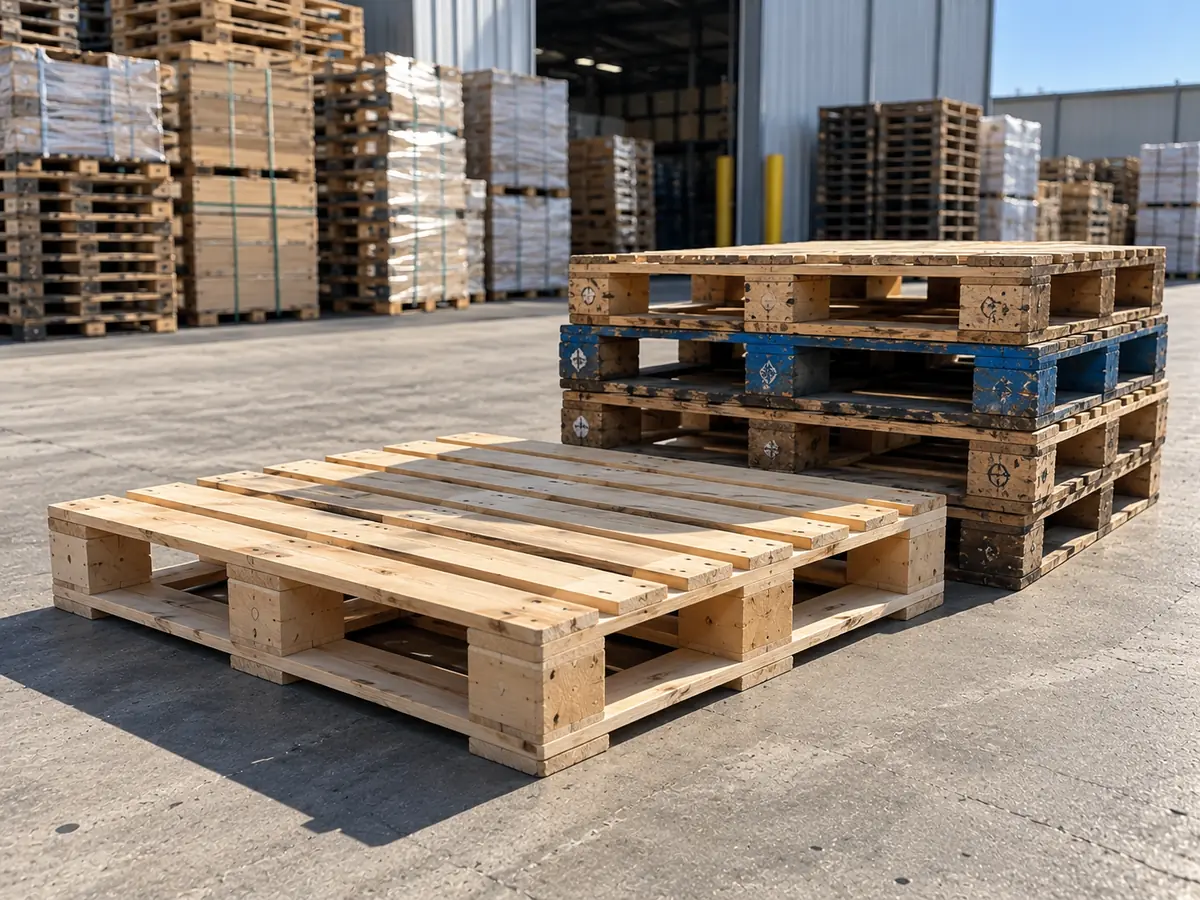
The same damage pattern turns up again and again. A shipper sends photographs of crushed bottom-layer cartons and asks whether the pallets were faulty. They were not. The pallets were 48 inches long and the product was 52 inches long, and the four inches hanging off each end did the rest.
What overhang actually does to a carton
A corrugated carton gets essentially all of its vertical strength from its corners and edges. When a carton sits fully on a deck board, the load path runs down through those corners into solid support. When it hangs past the pallet edge, the corner is in mid-air, and the load path has to bend. The bottom panel goes into flexure, the side wall buckles inward, and the carton begins to fail at a fraction of its rated compression.
Packaging testing consistently shows that unsupported overhang reduces stacking strength, and the loss increases with how much of the footprint is unsupported and where. Two inches on one edge is at the mild end. Four inches on two edges is at the severe end, and four inches is extremely common because it is exactly what you get when a 52-inch product meets a 48-inch pallet.
Why it compounds
The bottom layer of a unit load carries everything above it. In a load stacked eight high, the bottom cartons carry seven cartons' worth of weight, plus whatever gets stacked on top of the whole unit in a trailer.
So the layer that is weakened by overhang is precisely the layer under the most load. This is why overhang damage looks catastrophic rather than marginal: it does not produce slightly dented cartons here and there, it produces a collapsed bottom row and a leaning stack.
Measuring it honestly
Take a pallet out of your outbound staging area with a full load on it. Put a straight edge along the pallet edge and measure to the outermost point of the product. Do it on all four sides, because loads are rarely centred.
Anything over about half an inch is worth looking at. Anything over two inches is costing you money whether or not you have noticed it yet.
The other measurement worth taking is underhang, which is product that does not reach the pallet edge. Underhang wastes deck area and cube, and in a trailer it means the pallets touch before the loads do, so the loads shift. It is less damaging than overhang but it is not free.
The three fixes, in order of cost
1. Change the stacking pattern. Often the cheapest fix is free. A column stack and a pinwheel stack of the same cartons occupy different footprints. Before you buy anything, try the arrangement that fits.
2. Add a cap or a slip sheet. A plywood or reclaimed lumber top cap spreads load across the overhanging portion and can recover some of the lost strength. It is not elegant but it works.
3. Change the pallet. If the product genuinely does not fit a standard footprint, use one that does. A custom pallet built to the loaded footprint costs more than a standard recycled pallet, but if you are damaging cartons, the premium is quickly paid back.
The arithmetic nobody runs
Here is the calculation that usually ends the conversation.
Take your annual pallet volume. Multiply by the cost difference between the standard pallet you are using and the custom one that would fit. That is the cost of fixing it.
Now take your damage rate, the real one, including the claims your customers absorb without telling you. Multiply by the value of a damaged unit, and add the cost of the re-ship, the credit note and the phone calls.
In most cases, the second number is larger, often by a lot. Overhang damage is invisible in a budget because it lands in a claims line rather than a packaging line, and packaging gets optimised while claims get absorbed.
Specifying so it does not happen again
When you next specify a pallet, start from the product rather than from the catalogue. Measure the loaded footprint, add nothing, and find the pallet that matches it. If none exists, that is what a custom footprint is for, and it is much less exotic than most buyers assume.
And write the dimension down correctly: length first, width second, where length is the stringer direction. A very common specification error is a transposed pair of numbers, which produces a pallet that is technically correct and practically useless.