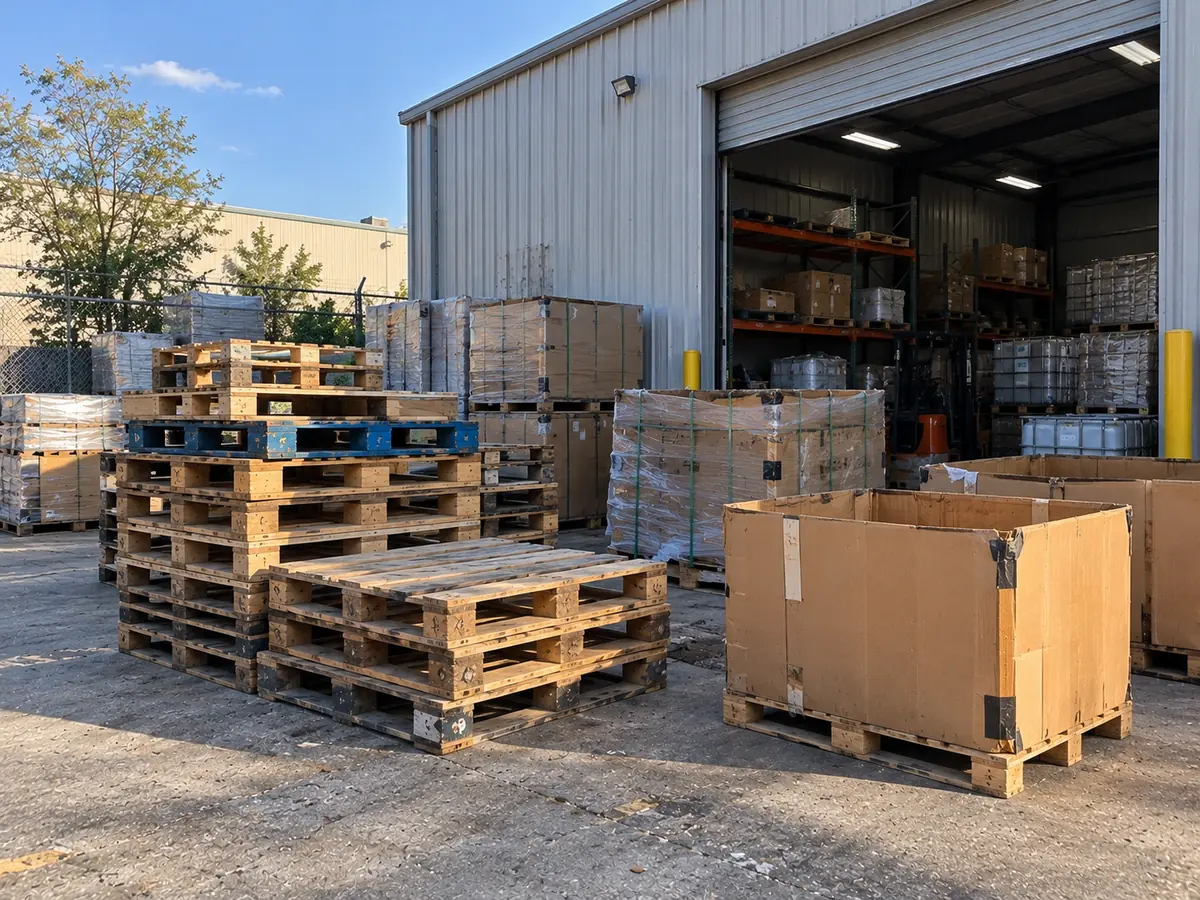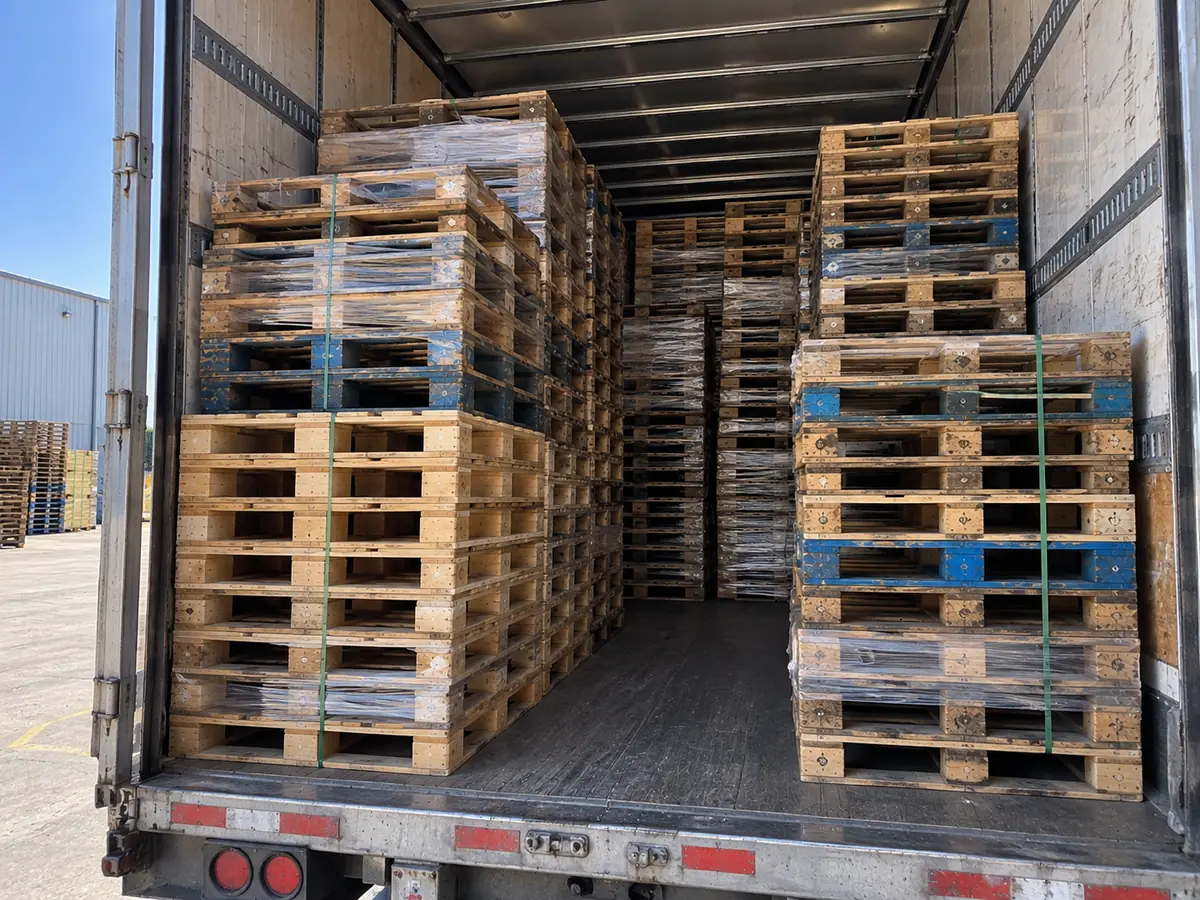
The most obviously wasteful pattern in pallet logistics is also the most common: a truck arrives with pallets, unloads, and leaves empty, while a different truck from a different company arrives the following week to take the used ones away.
Two trips. Two sets of miles. Two invoices, two scheduling conversations, two sets of gate paperwork. To move pallets in and pallets out of the same building.
Why it happens
Not because anyone decided it. It happens because purchasing and waste disposal sit in different parts of most organisations, are managed by different people, and are procured on different cycles.
Somebody buys pallets because operations need pallets. Somebody else contracts a waste hauler because there is a pile of pallets nobody wants. Neither conversation ever references the other, and the pile of pallets is filed under waste rather than under materials, which is the root of it.
What combining can save
Freight. Pallets are low value and high cube, so freight is a large share of delivered cost. A round trip that carries a load in both directions costs meaningfully less per unit than two one-way trips, and a supplier that runs both legs can price it accordingly.
The disposal invoice. Once the same supplier takes the cores, the waste hauling line for pallets can disappear entirely, and the cores may become a credit instead. Whether and how much depends on the supplier and the quote.
Emissions. Fewer miles, less fuel. It is among the largest single carbon reductions available to most pallet buyers and it costs little to implement.
Scheduling. One booking, one gate arrival, one set of paperwork. Sites underestimate how much administrative time a second recurring truck consumes until it stops.
What it requires
Almost nothing, which is the frustrating part. The supplier has to do both jobs, and your staging has to be arranged so the driver can unload and reload on the same visit.
That second point is the only real operational change: outbound cores staged where the truck will be, not at the other end of the building. A little thought about site layout, once.
When it does not work
Volumes that are badly mismatched. If a site takes in a large number of pallets and generates only a handful of cores, there is no meaningful backload. Combining still saves the disposal trip but the freight benefit is small.
Timing that does not line up. Some sites accumulate cores in bursts, after a seasonal peak or on a quarterly cleanout. A standing combined route does not fit that; a dropped trailer usually does.
Sites with no room. If a truck cannot stand long enough to unload and reload, it cannot be done. Genuinely tight urban docks sometimes cannot.
The trailer alternative
For sites that generate cores in high volume, the better answer is often a dropped trailer rather than a combined visit. A trailer is left on site, the crew loads it as pallets come off, and it is swapped when full.
That removes scheduling almost entirely, because the trailer is always there. It also means cores go into a covered space rather than an exposed outdoor area, which is worth more than most sites expect.
Ask for it explicitly
Buyers regularly go months without realising the collection could ride on the delivery, because nobody in their organisation had connected the two sides.
If you are buying pallets from anybody, the question is one sentence: *can the same truck take our used ones away?* If the answer is no, that is worth knowing before you renew. Availability depends on partner suppliers in your area; request a quote and mention that you want delivery and collection together. More on freight in freight and logistics.