Here is something that is obvious once you have scheduled trucks and invisible before: the cost of moving freight is not really about the loaded direction. It is about what the truck does afterwards.
The shape of a regional lane
Picture a standing route. A truck goes to a neighbouring city on a Tuesday with a delivery, loaded and straightforward.
Then it comes back. Unless somebody in that city has something to send the other way, it comes back empty, burning the same fuel, paying the same driver, covering the same miles, earning nothing.
That return leg is already a cost. It has been committed the moment the outbound load was accepted. Anything a carrier can put on it is revenue against a cost that exists regardless, which is why it can be priced at a fraction of what the same movement would cost as a dedicated trip.
Which direction is which
It varies by lane and it varies by week, and that is why backhaul rates are rarely published.
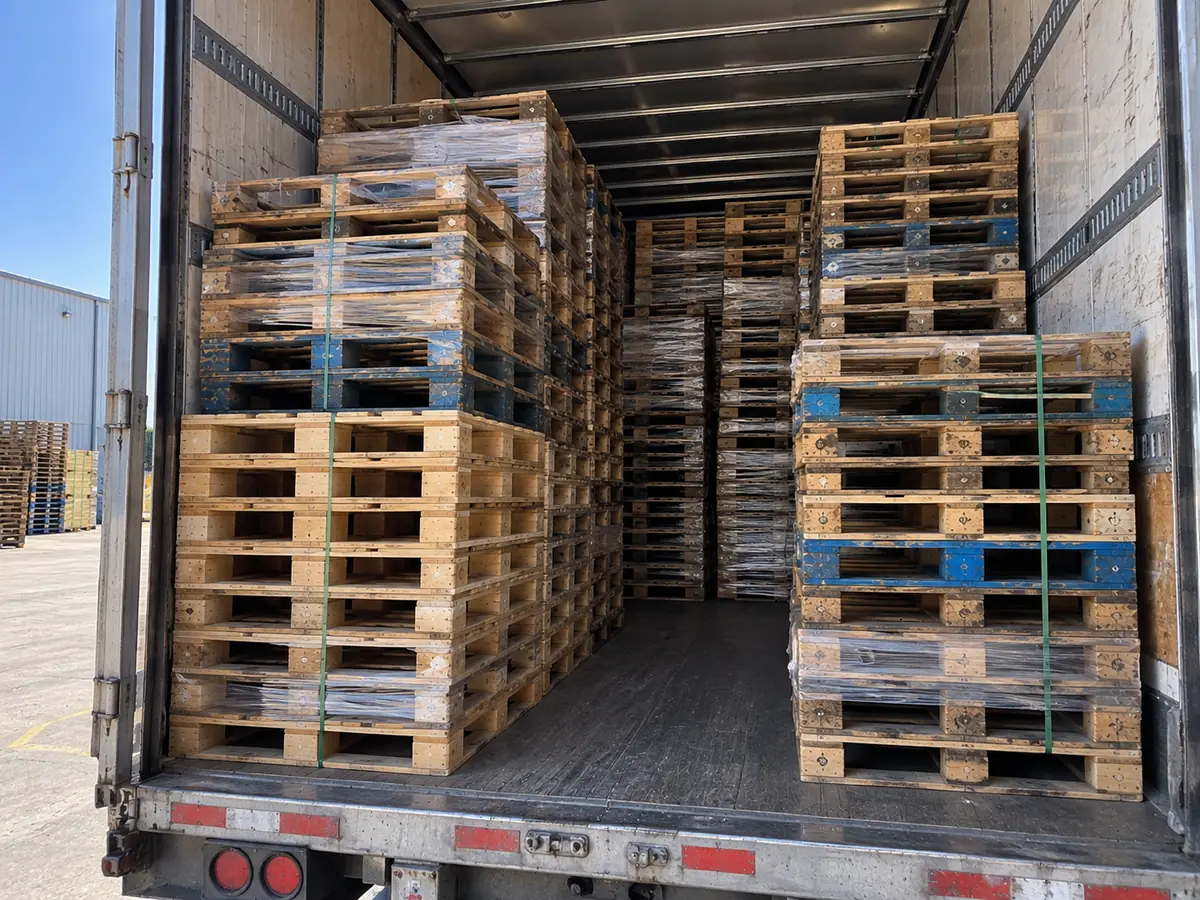
Outbound legs are generally loaded, with graded pallets going out to buyers. Inbound legs are loaded when a truck is collecting cores and empty when it is not. So the capacity that exists on any given week depends entirely on what collections are booked, and that changes constantly.
Which means the only way to find out is to ask what is running the week you need something moved. Buyers who ask regularly tend to get better rates. Buyers who never ask pay market.
What fits
Almost anything that is not perishable, not hazardous and not time-critical to the hour.
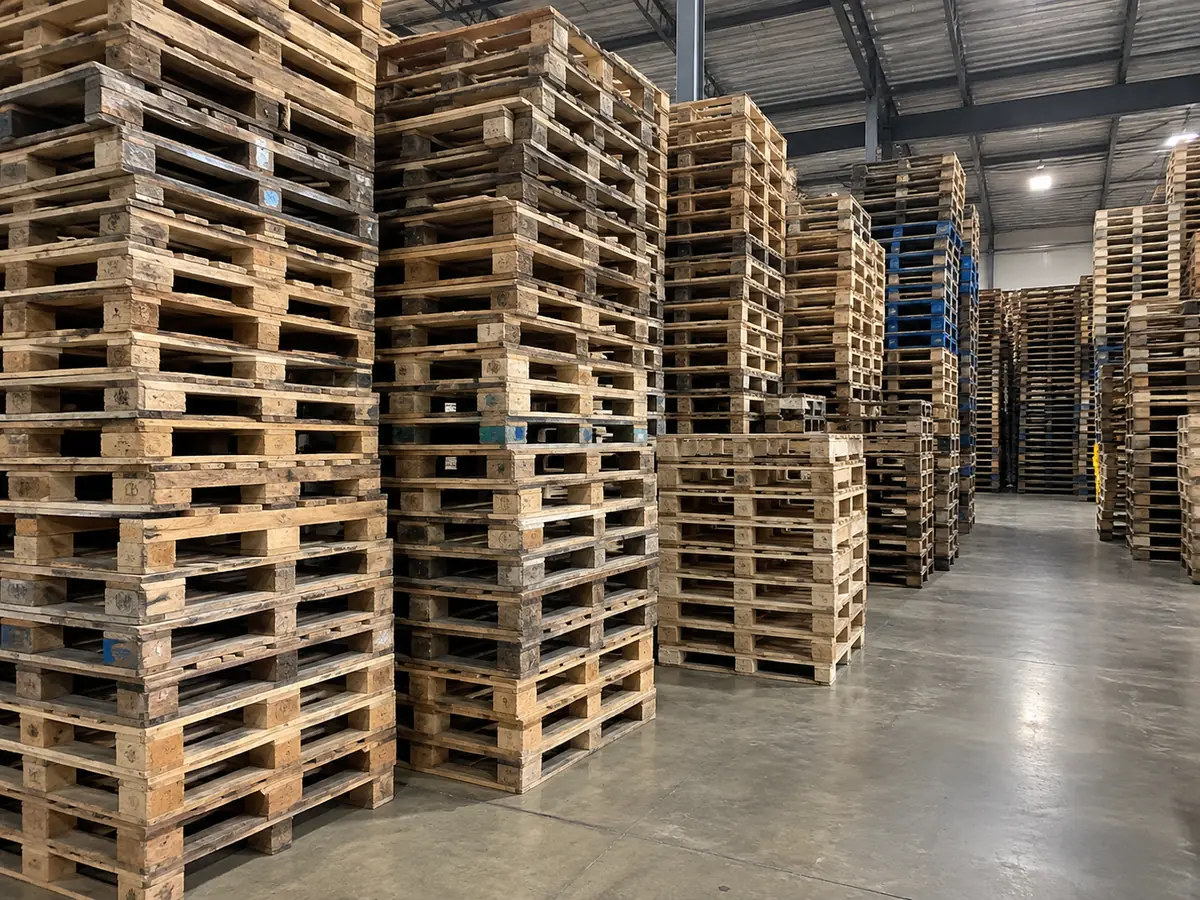
The natural fit is pallets and wood packaging, obviously. But building materials, machinery, packaging supplies and bulk empty totes also move this way. If it fits a dry van or a flatbed and it is going roughly where a truck is already going, it fits.
The one thing that does not work is a hard time window. Backhaul is opportunistic by nature: the truck goes when the outbound leg is done, not when you would prefer. If you need a two-hour window, you need a dedicated trip and you should expect to pay for one.
The core collection version
The most common backhaul in the pallet trade is the simplest: the delivery truck takes your used pallets away on the same visit.
That is a backhaul in the purest sense, because the return leg that was going to be empty is now loaded with material a recycler wants to buy. It is why combining delivery and collection can save so much. The full argument.
Why it matters more for pallets than most goods
Pallets are a low-value, high-cube commodity. Freight is a larger share of delivered cost than for almost anything else that moves on a truck. That means the difference between good and bad freight utilisation shows up in the price of the product in a way it simply does not for higher-value goods.
It is also why long-haul pallet orders rarely make sense. Past a certain distance, the freight component stops making sense against the value of the pallets, and hauling low-value wood across the country is bad economics and worse carbon. Sourcing from a supplier closer to the delivery point usually wins. Why distance matters.
How to ask
Literally: "What lanes are you running this week, and is there backhaul capacity toward my location?"
Do it a week or two ahead rather than on the day. Say what the freight is, what it weighs, whether it needs a dock or can be side-loaded, and how flexible the window is. Flexibility is the currency here: a buyer who can take Tuesday or Thursday will always be served better than one who needs Wednesday at ten.
To start, request a quote; a partner supplier in the network can follow up on what is running near you.