The requirement is a single sentence: the wood must reach a core temperature of 56°C and hold it for 30 continuous minutes. Everything else about heat treatment is the engineering of making that reliably true at the worst point in a large stack of pallets.
Why the full cycle is long
Almost all of the time is spent getting heat into the middle of things.
A stringer in the centre of a tightly stacked load is a long way from moving air, both physically and thermally. Wood is a poor conductor, and the moisture in it absorbs a great deal of energy changing phase before the temperature moves at all.
So the cycle is: a long ramp while the chamber comes up and heat works inward, a hold once the coldest monitored point has reached temperature, and then a controlled cooldown. The 30-minute hold is a small fraction of the total.
Stack geometry is the variable nobody sees
This is where facilities differ most, and it is invisible from outside.
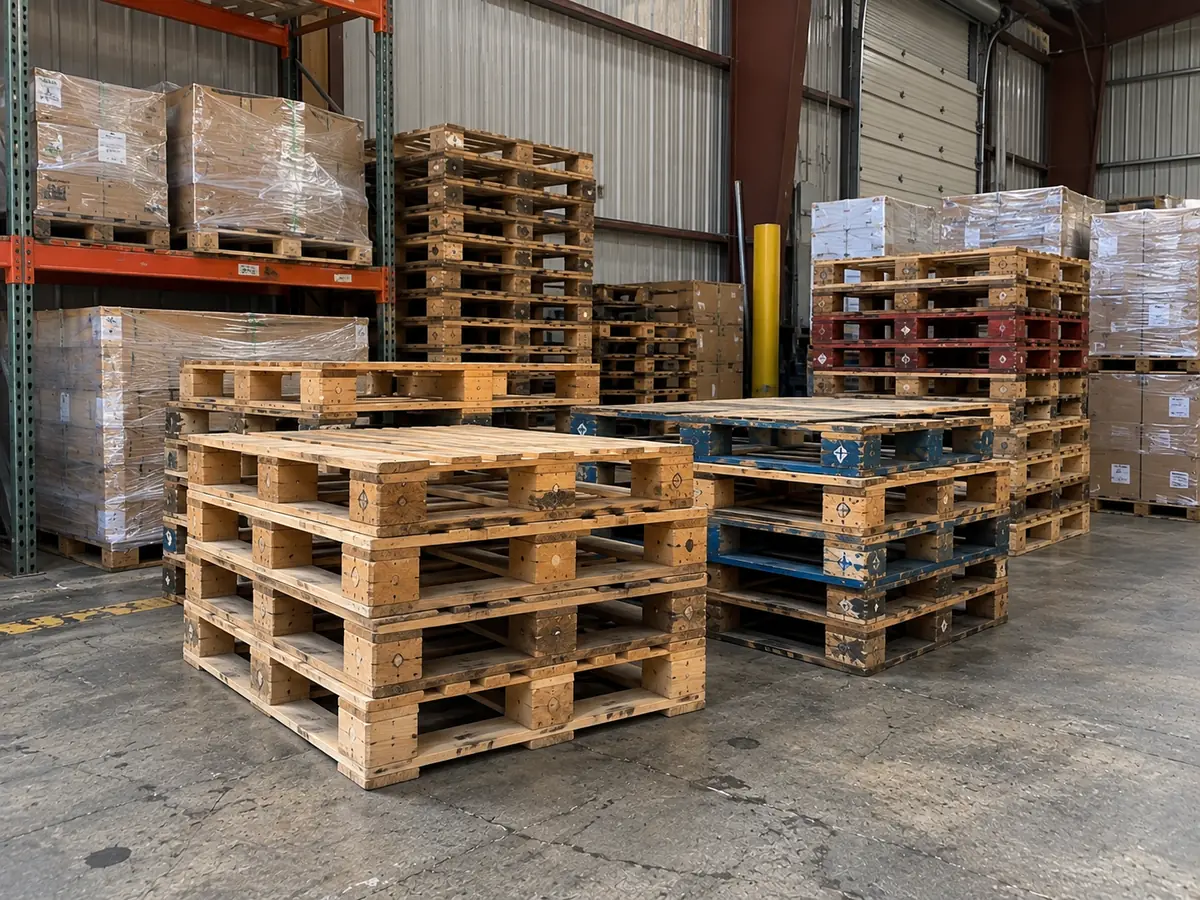
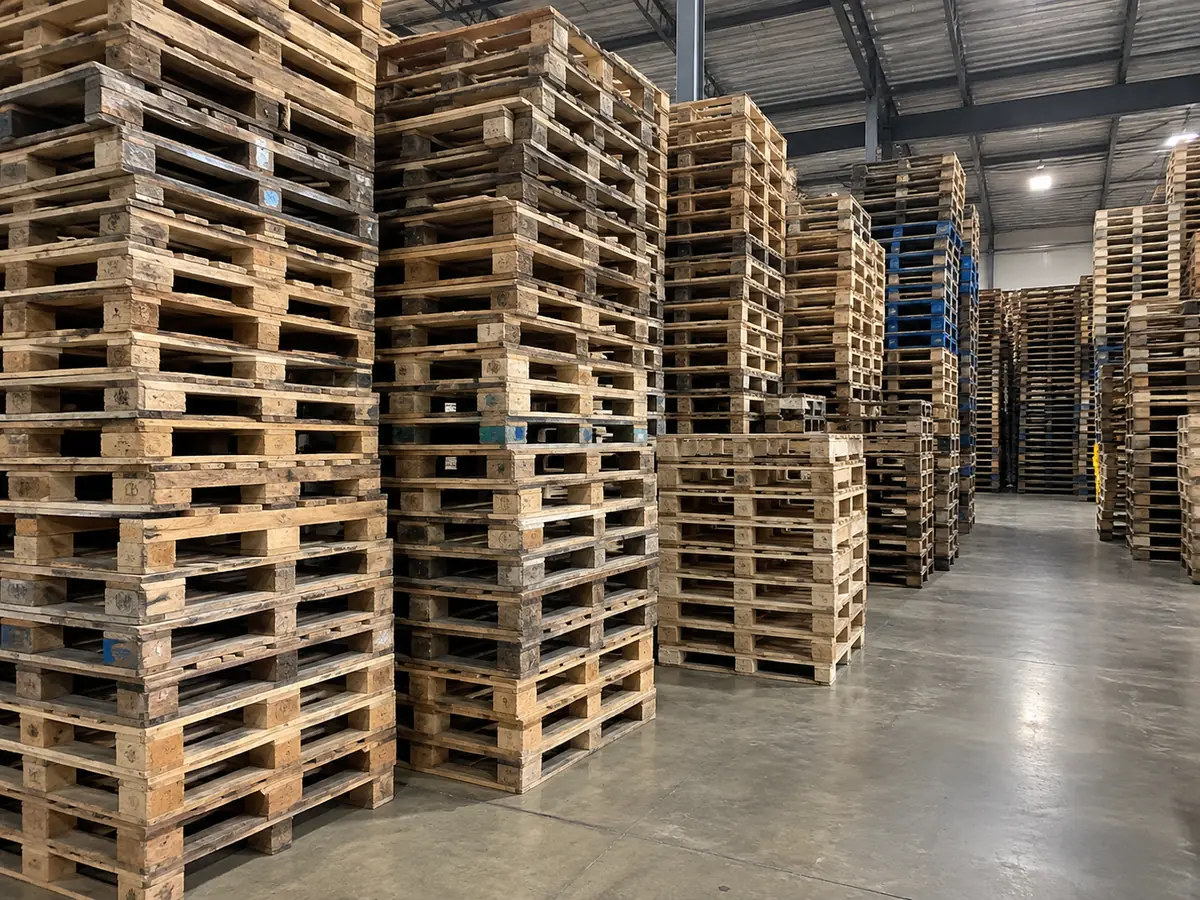
Pallets have to be stacked so air can move through the load. Stacked too tightly and the centre becomes a dead zone that will not reach temperature in any reasonable time. Stacked too loosely and the chamber is heating air instead of wood, which costs fuel and cycle time.
Orientation matters too. Pallets stacked face to face present a large flat surface to the airflow and shield everything behind them. Stacked with the fork openings aligned to the air path, the same load heats considerably faster.
None of this is in the standard. All of it affects how long a compliant cycle takes.
Thermocouple placement
The monitoring probes go into the core of sample pieces at the least favourable positions in the load, typically the geometric centre and a low corner away from the air path.
The whole point is to measure the worst case. A probe placed near an inlet will show 56°C long before the centre of the load gets there, and a facility monitoring only the easy positions will produce compliant-looking records for non-compliant loads.
This is the part of a heat treatment programme that an inspector examines hardest, and it is the right thing to examine.
The mark goes on afterwards
Always. This is a common compliance failure in the industry and it is entirely avoidable.
A facility that stamps blanks and then treats them cannot demonstrate that any particular pallet went through a chamber. The standard requires the mark to be applied after treatment for exactly that reason, and inspectors look for evidence of it.
In practice it means a marking station on the outbound side of the chamber, and a discipline that unmarked stock never leaves the treatment area.
The records
A well-run facility keeps a batch record for every cycle: date, time, load identification, chamber, target and achieved temperatures, the time-temperature trace from every probe, hold duration, operator.
If a shipment is queried at a border, the value of the record is not that it exists, but that it can be found quickly. Buyers who need treatment documentation should ask the partner supplier what they can provide.
What treatment does not do
It does not dry the wood. A pallet can complete a fully compliant cycle at a high moisture content, go into a sealed container, and grow mould across a long ocean transit. The shipment gets rejected and the pallet was legally perfect throughout.
If your product is moisture-sensitive or your transit is long, you need KD-HT (kiln dried *and* heat treated) and you have to ask for it by name. The full explanation, and the expensive version of the story.
Repairs invalidate the mark
A treated pallet repaired with untreated components is no longer compliant, because the new wood has not been through a cycle. This catches people who are repairing export pallets in-house and assuming the original stamp still applies.
It does not. The pallet needs to be re-treated and re-stamped, which is far cheaper than a rejected container.
Treating customer-owned packaging
Some treatment facilities also treat customer-owned wood packaging (pallets, crates, collars, dunnage, blocking) as a separate batch. It is common for buyers who bought untreated packaging domestically and then won an export order.
Chamber scheduling is the least flexible part of any treatment operation, so advance notice helps. To ask whether a partner supplier offers this, request a quote and describe the packaging.