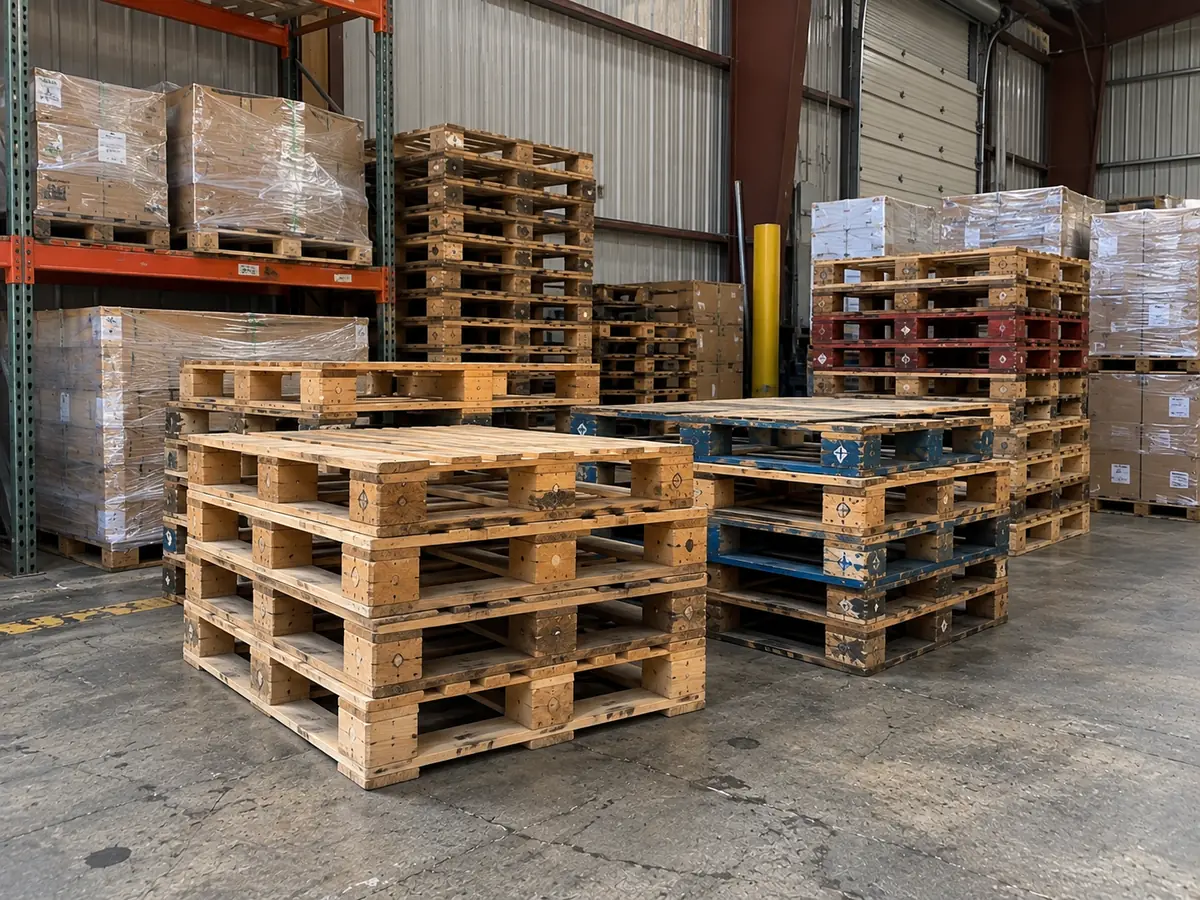
Woodworkers regularly go looking for a single board wide enough to make a small tabletop without a glue joint. Eight inches of oak, four feet long, flat. It exists, but it is scarce, and nobody can promise one on demand.
Here is why.
Pallets used to be built differently
A pallet built in the 1970s was built from what the mill had. Deck boards came in the widths the log gave up, and a seven or eight inch board was simply a board. Nobody was optimising material yield to the last percentage point, because lumber was comparatively cheap and labour was comparatively expensive, and putting a few wide boards on a deck was faster than putting many narrow ones.
In later decades that inverted. Lumber costs rose, automated nailing made board count almost irrelevant to assembly time, and pallet specification became a genuine engineering exercise. The optimum turned out to be more, narrower boards: better load distribution, less material, lower weight, and a much better yield from the log because narrow boards can be cut around defects that would reject a wide one.
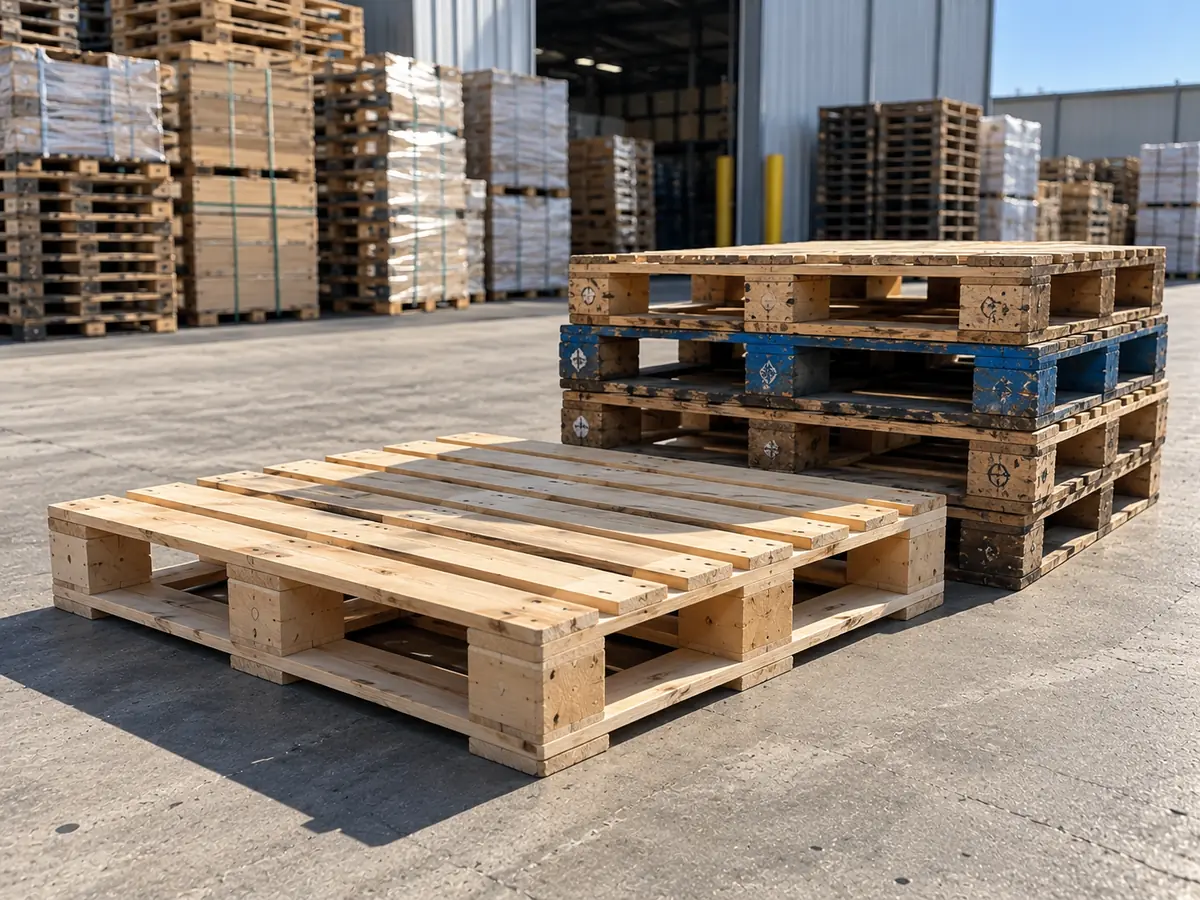
So a modern 48x40 has a larger number of narrower top boards, while older pallets often had fewer, much wider ones.
Which means the wide boards are old
Every wide oak board that comes off a dismantler was in a pallet built long ago. That pallet has been in service, been repaired, been through several owners, and has finally failed somewhere that led it to teardown.
There is a finite population of them and it only goes down.
What that wood is actually like
Wonderful, mostly. It has been through its entire moisture cycle: milled green, dried in service, absorbed and released humidity through decades of seasons. What you get is dimensionally settled stock that tends to move less after you glue it up. Newly dried hardwood can find a new equilibrium in your shop and cup after you thought you were finished.
It also has a surface you cannot buy: banding marks, forklift scars, nail shadow, and occasionally the ghost of a stencil from a company that stopped existing long ago.
The trade-offs are real. Nail holes throughout. Checking at the ends. Occasional embedded grit that will ruin a blade. And the boards are short, typically 36 to 48 inches, because that is what a pallet deck is.
Working with it
Assume metal until proven otherwise. Even properly de-nailed and magnet-swept stock can hide a staple, so run a detector over anything going near a planer. A missed staple costs more than the board.
Skim, do not thickness. A 3/4 inch board has very little tolerance before it stops being useful. Take the minimum off. Much of the character lives in the top couple of millimetres.
Let it acclimate anyway. Even settled wood will move a little between outdoor storage and a heated shop. A week indoors before you cut costs nothing.
Plan around the length. Four feet is the constraint on everything. Design pieces that want short components, such as small tables, benches, boxes and cladding, rather than fighting it.
Glue-ups beat single boards for anything structural. A wide single board is beautiful and it is also the piece most likely to cup. For a work surface, rip and re-glue with alternating grain.
The safety question, properly answered
Reclaimed pallet wood is only as safe as the pallet it came from. Look for the HT stamp. Heat treatment is exactly what it sounds like, heat, so the wood is chemically untreated.
Avoid MB-stamped pallets (methyl bromide fumigation), anything stained or oily, anything with visible mould, and anything with an unidentifiable residue. If you buy reclaimed pallet lumber anywhere, from anybody, check the stamp on the pallet it came from and walk away from MB. More on reclaimed lumber here.
The stringers nobody asks for
Worth knowing: the best value in reclaimed pallet stock is often stringers. Roughly 1-3/8 by 3-1/2 inches, long, straight, dry, and largely ignored because they are not pretty.
Rip the nail line off one edge and you have clean stock for frames, legs, shelving carcasses, garden structures and jigs. Demand for them is low, so they tend to be cheap. If you build anything at all, ask about stringers.
And if you want the wide oak
Ask early and be flexible on length and quantity. Wide oak turns up unpredictably. To enquire, request a quote and say what you are looking for; a partner supplier will follow up on what is available.