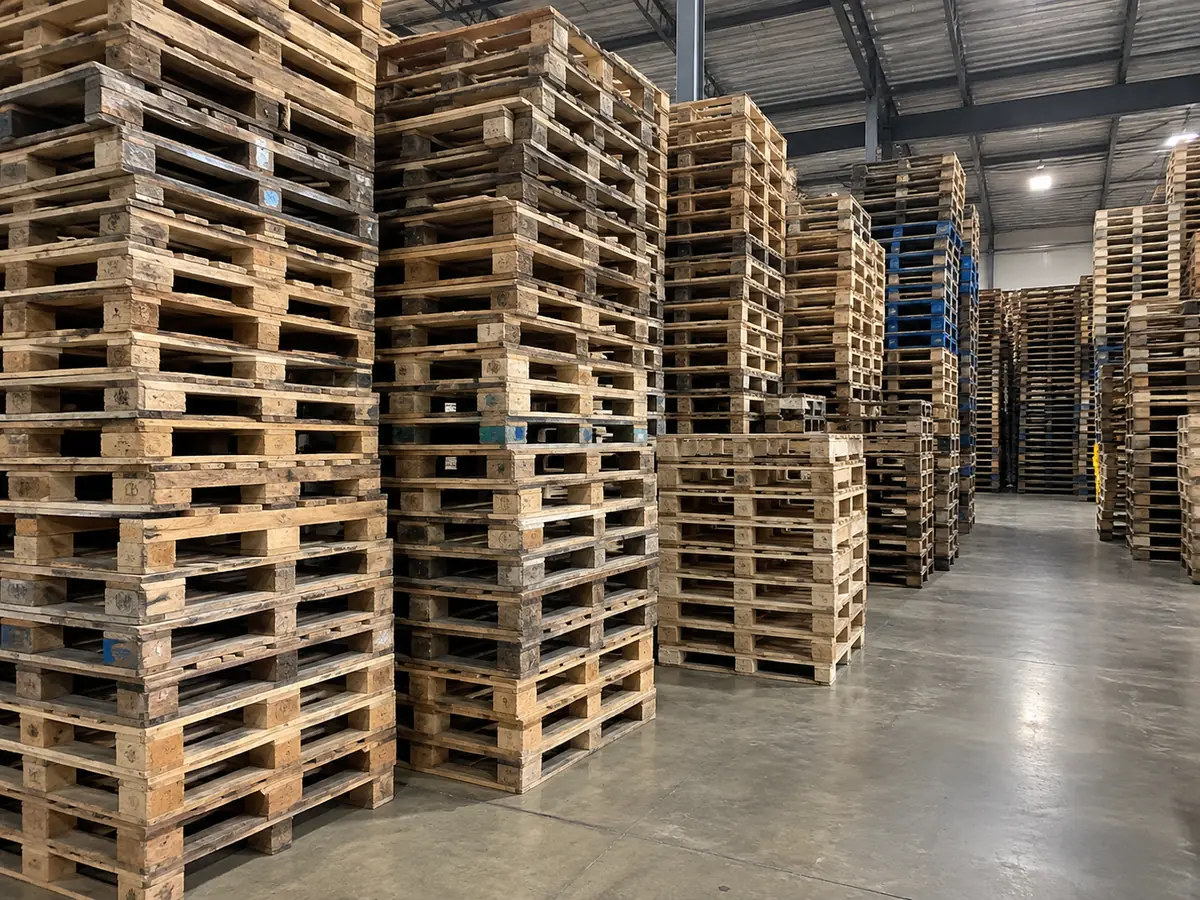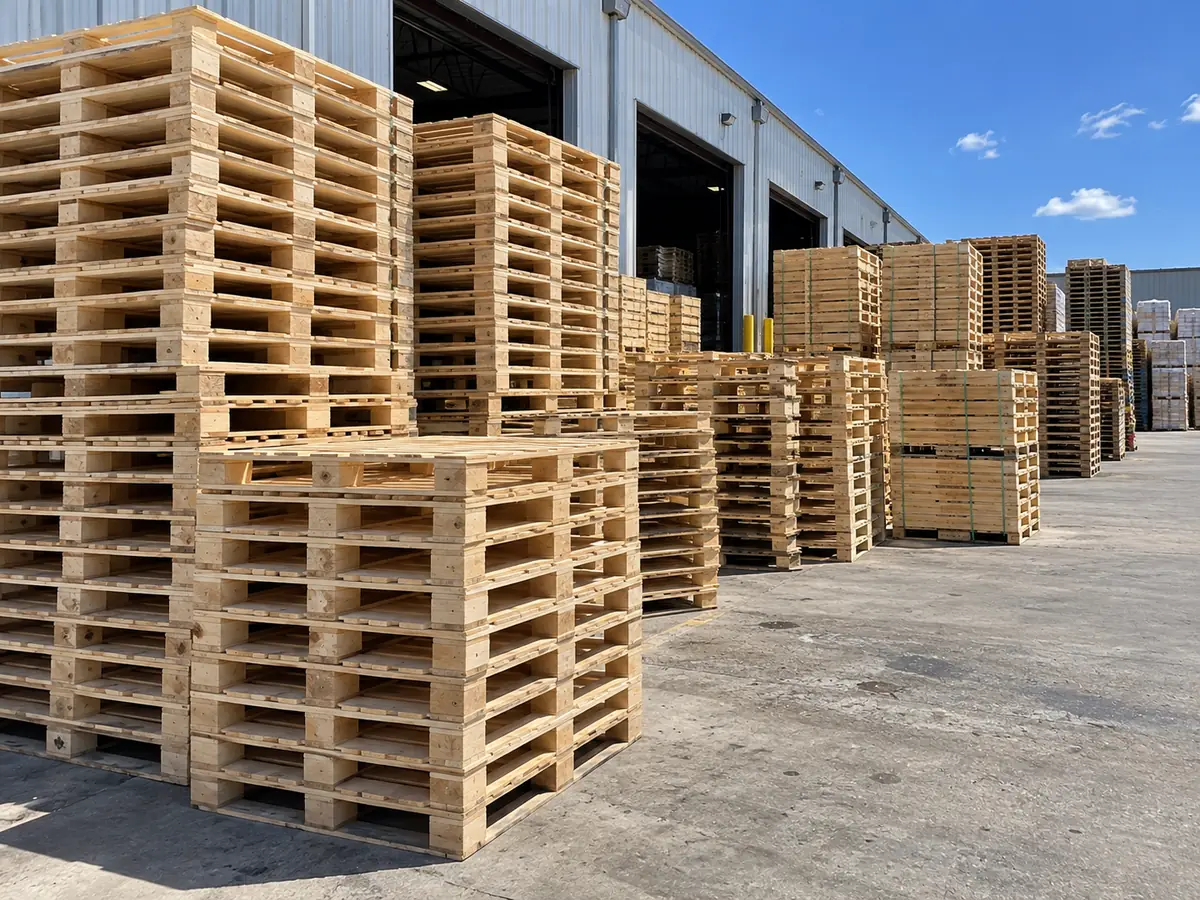
Agreements that go wrong tend to go wrong in predictable ways. This list is written from the buyer's side of the table: nine questions worth putting to any pallet supplier, including the partner suppliers in our network, before you sign anything.
1. What grading standard applies, and can I see it?
There is no enforced national grading standard for recycled pallets in the United States. "Grade A" is whatever the supplier says it is. This is the single largest quality risk in the category and it is entirely solvable by asking one question.
Ask for the standard in writing. Good suppliers can describe what they check; see how pallets are inspected for what a thorough inspection typically covers. If a supplier cannot produce a standard, what you are buying is their current mood.
Then get the grade you are buying named explicitly in the agreement, including the sub-grade. "Grade A" and "Premium Grade A, no replaced boards" are different products at different prices.
2. How is supply secured?
In a tight core market the question is not price, it is availability. A supplier with stock set aside for your footprint and grade will deliver when it matters. A supplier buying on the spot market to fill your order may not, or will, at a price nobody agreed to.
Ask how the supplier secures stock for your account and get the answer into the document.
3. How does price escalate, and against what?
Recycled pallet prices track core supply, which is volatile. Any honest multi-year agreement has an escalation mechanism. The question is whether it is defined or discretionary.
A defined mechanism references something external and checkable, such as a published index or a review cadence with notice. A discretionary one says "prices subject to change" and means the supplier will tell you in an email you receive on a Friday.
Ask for notice periods too. Reasonable notice is part of a fair mechanism; immediate repricing is not.
4. Is freight in the price or beside it?
Pallets are low value and high cube, so freight is a large share of delivered cost. A delivered price that bundles freight is simpler but hides movement. If diesel moves, you cannot see whether the product price or the freight price changed.
Asking for product and freight quoted separately makes any later conversation about an increase much shorter.
Also ask whether delivery and collection can share a trip. If your site is on a route the supplier already runs, there may be value in it for you.
5. What is the substitution policy?
Sooner or later your footprint will be short. What happens then? Does the supplier substitute a different footprint, a different grade, a different construction, and do they tell you before or after the truck leaves?
Get it written down. "Nearest equivalent, confirmed in writing before dispatch" is the answer you want. "Supplier may substitute at its discretion" is how a facility ends up with a pile of wrong-size pallets and a rack system that fits 48x40.
6. Who takes the cores back?
If you buy pallets and dispose of them separately, you are paying for two truck movements to do one truck's work. Combining delivery and collection on a single visit is among the largest operational savings available to many pallet buyers.
Ask whether the supplier buys cores, on what basis they are priced, and whether collection can ride on the delivery. Ask whether core value offsets the invoice or arrives as a separate payment. Both are fine, but finance will want to know.
7. What documentation comes with it?
If anybody in your organisation has a Scope 3 obligation, packaging waste will eventually land on their desk. Weight tickets per load and a clear description of where material goes are much easier to collect as you go than to reconstruct after the fact.
Ask what documentation the supplier provides and what method sits behind any recycling claim. A percentage with no method behind it is not evidence. See sustainability.
8. What happens on a quality failure?
Not if. When. A load will arrive wet, or short, or one grade lower than ordered.
Ask what the process is: who you contact, what evidence is needed, how a replacement is arranged, and whether a failed load is collected or left on your dock. Make sure the reporting window is reasonable and written down.
9. How do I leave?
The clause nobody reads. Notice period, minimum term, any volume commitment with a shortfall charge, and what happens to any stock set aside for you and any pallets of yours the supplier is holding.
A supplier confident in its service should not need to lock you in. A customer serving out a notice period is not going to come back.
The pattern
Eight of these nine questions are not about price. That is deliberate. Price is the easiest thing to compare and the least predictive of whether the arrangement works. Two suppliers quoting close to each other can deliver completely different outcomes depending on how they answer the other eight.
Print the list. Put it to every supplier you speak to. When you request a quote, a partner supplier will follow up, and these are the questions to ask it.